
Something Blue — Delftware ceramics and the women who made them
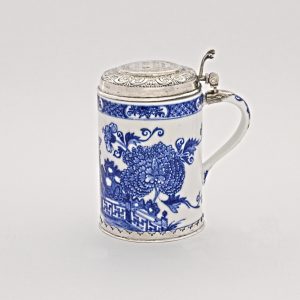
Transcript
Ben L. Miller
Hello, and welcome to Curious Objects, brought to you by the magazine Antiques. I’m Ben Miller. This is the podcast about art, decorative arts, and antiques, the stories behind them, and what they can reveal to us about ourselves and people who came before us.
In this episode, we are diving into the world of blue and white. And of course, I am talking about Delftware. The iconic 17th and 18th century ceramic produced in the Netherlands, especially eponymous Delft, during the Dutch Golden Age. So these are instantly recognizable pieces ranging from everyday tableware all the way up to elevated luxury items, plates, bowls, jugs, vases. It’s the Dutch answer to Chinese porcelain, and the spiritual ancestor to the blue willow pattern that, as far as I can tell, pretty much all grandparents everywhere use. So these objects were not just a symbol of status, although they were a symbol of status, they were not just a nod to the explosion of global trade, but also a testament to the powerful and often overlooked women who built an industry shaped a culture. Our curious object for today is a puzzle jug, and we’ll talk about what that means. My guest is Genevieve Wheeler-Brown. She is the author of the new book, Beyond Blue and White, The Hidden History of Delftware and the Women Behind the Iconic Ceramic. It’s both a really helpful general history of Delftware, but also a close look at the surprisingly central role that women played in the Dutch ceramic industry. Genevieve, welcome to Curious Objects.
Genevieve Wheeler-Brown
Hi, Ben. It’s great to be with you guys. So first, congratulations on the book. Great achievement. There is so much that I’m excited to ask you about. But before we get to that, as you know, I have some rapid fire questions for you. Are you ready? All right, let’s do this.
Ben L. Miller
Okay, Genevieve, what was the first object or artwork that you remember falling in love with?
Genevieve Wheeler-Brown
That’s got to be, um, let’s see, that’s got to be the Whistler’s Peacock Room at the Freer in Washington, D.C., where I grew up. I think everyone falls in love with that room when they walk into it. It’s just everything. It’s architecture, design, ceramics, all in conversation. I mean, it’s mesmerizing.
Ben L. Miller
What’s the most exciting bidding war that you ever witnessed at Christie’s?
Genevieve Wheeler-Brown
Oh my gosh, that would have to be, oh my, it was so much fun. It was, um, Leonardo da Vinci’s, um, it was called the Codex Hammer at the time. And it was the highest, I mean, I have this thing, you know, I love decorative arts, but I have to say books and manuscripts. That’s the second for me. And this was, this was phenomenal. Yeah. And it, it fetched the highest price ever at the time for a manuscript. So you remember what that was. Oh, and it was bought by, um, yeah, that was Bill Gates. Bill Gates bought it, yeah, put it in his library in Seattle, which was actually built by a friend of the podcast, Ken Rendell.
Ben L. Miller
Oh, wow. Oh my goodness. That’s amazing. What artist or craftsperson or movement or style do you think is overrated?
Genevieve Wheeler-Brown
That’s a tough one because you kind of fall in love with all of them at one time or another. Gosh, there must be one that really gets under your skin though. No, I don’t know, I’ve never… maybe it’s just a person. Uh, yeah, I… yeah, Art Deco I love. I mean, I love the concept of it, but I’ve never fallen in love with it and that’s, I don’t know, I have to look at… I have to maybe… when something like that touches you like that, maybe that’s an invitation that you need to dig deeper. So I’ll leave it at that.
Ben L. Miller
Wow. I mean, that’s a little bit of a weasel answer, but I guess I’ll let you get away with it. I mean, to be fair, Art Deco is so highly rated that even if it’s very good, it could still be overrated.
What is the most valuable object or artwork that you’ve ever touched?
Genevieve Wheeler-Brown
Ooh, I am really fortunate to have touched several, and I would have to say it’s, ah, it’s a close tie between a Stradivari violin and a Fabergé egg. And both were at Christie’s and that was just sublime, both sublime. But, um, yeah, the Fabergé egg was fascinating. I had to take it actually over to the Museum of Natural History because we needed to test. There was an ivory-like substance in it, a component of it. And we actually discovered, working with the Museum of Natural History, that it was, in fact… um, it was a woolly mammoth tusk, not elephant. Oh, wow. That they used, that they dug up in Siberia. So wow. It was fascinating. That’s fantastic. That’ll be a good curious object for another interview, I think.
Ben L. Miller
Oh my gosh, yes. What movie has the most interesting depiction of material culture?
Genevieve Wheeler-Brown
Um, so for me, more is definitely more. So I go big in this thing. So it would definitely be, again, um, something like Sofia Coppola’s Marie Antoinette. But I love old movies. So maybe Auntie Mame, any of those amazing, yeah, grand, yeah… yeah, and that’s what I haven’t heard before. I like it. Oh my gosh. I love Auntie Mame. I aspire… yeah, yes. It’s an admirable way of calling.
What’s your favorite museum to visit? Ooh, again, I think it’s very, um, environmental. So, I mean, starting, yeah, having started with, you know, love of the Peacock Room, I’m definitely drawn to environments, um, that incorporate both fine and decorative arts. So that easily falls between, say, the Frick or the Gardner in Boston. Um, but, you know, I was just at Jan Six’s home in Amsterdam, which everyone can go to. You just have to sign up in advance. And that is phenomenal. Like between the Rembrandts and, hey, the man has a collection of puzzle jugs. So that’s what I was there. Extremely apropos of today’s conversation.
So what was the last object or artwork that you saw that gave you shivers? So… it there would be sort of the shivers in the way that it’s just mesmerizing, um, transcendence is definitely the Rothko Room at the Phillips Collection in Washington, DC. Um, just being able to sit alone in a small space like that, you know, it’s so close proximity. And, I mean, we just don’t have anything like that in New York. Yeah. Yeah, that’s… and that immersive experience. I mean, I’m not even a huge Rothko fan necessarily, but the time that I’ve spent in the Rothko Chapel in Houston has just been transformational.
Although, you know, after the recent flooding, unfortunately, I think that is permanently gone. Yeah. That’s… I’m sad to hear that. But everybody, yeah, everyone should take the opportunity to go down to the Phillips and experience that.
What’s the ugliest object that you’ve ever seen, but you secretly love? So that is definitely, I mean, I think I still have PTSD from those Martin Brothers birds. And, like, in studying ceramics, you see it and then you never forget it. But again, is that a sign? Like when something, you can’t forget something like that? Um, that’s a good thing, right? Yeah, it really sticks with you. Did you handle those at Christie’s or was that just during your education? No, I just remember studying them and I just leaned into it, you know, like that is truly never… but I mean they were hugely popular, so go figure.
No, amazing. What’s one question about an object that you’ve never quite been able to answer but wish that you could? So those would be definitely tied to, you know, my journey into Delftware, which, um, which is really about, um, looking at, you know, the Delftware that was commissioned by Mary, Queen Mary II. And, um, you know, did she ever… I mean, she was princess, you know, of Orange before she was queen of England, but did she ever go to Delft itself? Did she ever go to a pottery? I mean, these are, I mean, I had lots of questions, but that was one of them, you know, looking at that. Or did she really just work through intermediaries? I can’t imagine.
So, interesting. Well, let’s go from questions that we can’t answer to questions that you definitely can’t answer. We’ll be right back with Genevieve Wheeler-Brown. But first, I always like to just take a minute to say thank you for listening. I’m always interested to hear your thoughts, listeners, ah, topics that you’d like for me to cover, guests that you’d like to hear from, something you’d like to tell me about, ah, an episode you listen to any of that you can reach me on Instagram at @objectiveinterestnyc or over email at curiousobjectspodcast@gmail.com , and of course if you’d like to support the work we’re doing, the simplest thing you can do that has a big impact is to go into your podcast app and give Curious Objects a five-star rating. And if you want, you can share a few words about why you like the podcast so that other people can find the show. If you haven’t done that yet, you can do it right now in your podcast app without even pausing the show. And while you’re there, make sure you are subscribed to Curious Objects so you get new episodes in your feed automatically. And thanks to all of you who have heard an episode and thought, maybe I know someone who’d be interested in this one and told that person about it. Word of mouth really is the best way for Curious Objects to grow.
Okay, let’s get back to Blue and White. Now, Genevieve, I have to say this book really challenged my expectations. When I found out that you had written this book about women and Delftware, I’ll admit I kind of assumed that it would be a few token stories about exceptional women who are involved in this male-dominated trade. But actually, right out of the gate, you make it clear that women were really deeply ingrained in every level of the Dutch ceramics industry. And you do share some stories with us about exceptional women. But the bigger takeaway from the book is, at least for me, that it actually wasn’t that exceptional for Dutch women to be involved and active in the trade. That, in fact, it was quite normal, which in itself was incredibly abnormal for the time.
So, I mean, do I remember right that something like 30% of Dutch potteries were owned by women? Yeah. No, you’re exactly right, Ben. It was, um, one in five of the names. So basically, the owners of the potteries were registered with the Guild of St. Luke in Delft. And so that’s the group, of course, that’s monitoring and overseeing the production of art. And, ah, the owners had to register and prove their master tests. And if you look at the list of all of the names of all of those owners from the 17th through the 18th century, one in five are women. So that says a lot because if one in five were registered primarily, and a lot of the time as widows taking over for their husbands who were the primary name listed, that means that women were really all along partners and then also sliding into those roles as owners as well. But there also were women starting their own potteries. So, um, yeah, it was much more prevalent across the board.
So, I mean, I think it’s crazy to think that 20, mean, today, obviously, we would look at ah an industry with 20 percent female participation and think that’s horribly imbalanced and male dominated. But in the context of the time, 20% really was quite extraordinary. And, you know, my clients, when we talk about silver are often shocked to learn about how many women were involved in the English silver trade. Who I’ve often been puzzled by why you don’t see equivalent representation in other craft industries. And, you know, you’re making the argument that in Holland, at least, women were playing a very meaningful role in the production of Delftware. And I want to dig into this with you, and we’re going to get to our curious object in a moment, because that’s a really interesting example of what we’re talking about.
Why do you think women found such a powerful foothold in these two specific industries and locations? Well, let’s see. Well, Delft was also very powerful. It was like it was one of the Dutch East India Company’s central locations. So it was a powerful center urban. It was at the time. It’s a small town now. Back then, no, this was a very important city. Um, but the success of women in that environment was like Amsterdam or the other, you know, major cities of the time. Of the time, I mean, it was based on, there were three sort of three components that were tied to their success and they were, you know, their legal rights, their education, and just the necessity of the situation in the Dutch Republic, which is, I mean, the legal rights system, it’s unique. You know, women could inherit equally as their brothers out of the gate, always. And the Guild of St. Luke, as we mentioned earlier, allowed widows to sort of slide into the, into, you know, move, pivot into the role of owner at the death of their husbands without taking a master’s test. So that’s immediate. So the business continued without a hiccup. Um, I mean, women had, they were educated, they were girls. Girls were taught, you know, not just reading and arithmetic, but ah financial literacy, which was something that blew the English mind.
Yeah, this is crazy. I mean, you, in the book, you quote this report from the East and the English East India Company, and they’re trying to figure out why it is that their Dutch counterparts are so successful. And one of the factors that they point to, yeah, they were obsessed. They were obsessed.
Yeah. I mean, this is hugely competitive. They’re desperate to try to get any advantage or cast off any disadvantage they can. And one of the factors that they point to is the education of the daughters of Dutch families.
So they really are looking at this even in the 17th century and thinking, gosh, there’s actually economic benefit to educating women. Crazy as that sounds.
Yeah, and I love the wording, which was that it’s not just that they were taught, but it was the love, the love of math and reading that they, that the English noticed. You know, that it was, it was like just so ingrained in a young, you know, a boy and a young girl. Um, life. And I mean, and that was reflected in the literacy rates. I mean, they had 70% and they, so they used to, so historians use the, you know, the ability to sign your name in legal documents as sort of a baseline of literacy.
So in Amsterdam in the 1650s, 70% of men could sign their names, you know, and in registers, and 50% of women, which was incredibly high, given that it was about 35% across the board in the rest of Europe. So you had incredible literacy.
Um, but there’s… and overshadowing all of this, though, was this necessity, you know, for women to be in business, um, because a city like Delft, um, really had more women than men in it at the time.
So in the 17th century, 18th century too, yeah, there were many, many more women than men, and that, which is because the men had gone off, or a portion of the men had gone off with the Dutch East India Company on these international, you know, trade missions. So, and they all died.
Well, yeah, I mean, it’s crazy. And the numbers are crazy. Yeah, they called it the Indianish Lech, the Indian Leek.
So you have these incredible numbers like, you know, of, you know, ah, something like of the 8,000 men that went over from Delft as sailors in the 17th century, only, you know, 6,000 returned. And then the military, the soldiers that accompanied the ships, um, you know, and to protect the goods and then to basically, you know, enforce law when they arrived in Asia.
Um, that’s even worse. Of the 2,000 soldiers that went over on these ships to, you know, protect and pick up the porcelain, only 600 returned. Wow. Wow.
Um, so that’s pretty grim, um, which meant that back at home in Delft, self-sufficiency wasn’t, um, wasn’t really a choice in these businesses that the women were running. It was, it was a necessity.
Yeah. Yeah, well, that’s some really amazing context.
And so let’s back up for a minute and talk a little more broadly about Delftware. And I think a lot of listeners are going to be familiar with Delftware. They know these famous blue and white patterns and forms and styles.
But our curious object for today is a puzzle jug. And for listeners who may not know what a puzzle jug is, and whose imaginations are running absolutely wild right now as they think about what that could possibly mean, tell me what a puzzle jug is and why it was the original viral party trick.
Oh my gosh. So, so the puzzle jug, the Delftware puzzle jugs are, they’re tin glazed earthenware to start, which is, which is, you know, the soft material, which is great. But the puzzle jug itself is really a piece of material culture. It’s a decorative art where wit meets craft, and it’s really, it’s part drinking vessel. Of course, it’s a part practical joke. And it’s just like, ah, it’s just a part engineering marvel if you think about it, you know, in soft earthenware.
Um, it looks, and you, you know, if you saw, you know, this lovely blue and white puzzle jug at a distance, it sort of looks at first glance to be like, is it a pitcher? Is it a plain jug? But then when you get closer, you’ll notice that it has multiple spouts around the rim. Sort of odd, right? It has a pierced neck, right? A pierced neck.
Okay. So which obviously kind of flaunts the fact that it’s of its, you know, undrinkability, because if you were to try to drink it like a regular jug, if you lifted it by its long handle on the side of the body, um, liquid would literally spill everywhere.
So yeah, these puzzle jugs were really the life of the party in 17th and 18th century Europe. And they were made across Europe. They were usually ceramic, but they could be other metals, technically.
Um, the oldest ceramic puzzle jug that we know of dates from around 1300, and it’s French, and it’s known as the Exeter puzzle jug. And it was found in a drain in Exeter in England, and, um, it’s now in a collection.
But basically, the puzzle jug is a logic puzzle and just a fun. It’s, you know, disguised as a piece of pottery. Um, so basically, you know, this fantastic jug would be brought out at the dinner table, you know, probably at this jug in particular, which is very, you know, it’s, you know, a fine example with beautiful painting, um, and in, you know, a delicately, you know, pierced neck.
Um, would have been brought out at a, you know, a sumptuous Dutch 18th century table covered with, you know, white Dutch linen. Um, and basically the guest would have to determine, you know, figure out the trick. And the trick was hidden in the design of the puzzle jug, um, because the puzzle jug had concealed internal channels. It had a hollow handle. It had secret holes, sometimes placed under the handle, but the guest would have to figure out and find the hole and figure out the exact, you know, configuration of which spout to cover, which hole to cover, and then sip from one of the spouts. Otherwise, the wine, they would be wearing the wine.
So it was like a full… so, yeah, it was, it was, it was a lot of fun. And I’m sure a lot of linen napkins were sacrificed in the 17th and 18th century, yeah, playing with these things.
Well, obviously, it would be way more fun if the guest failed and spilled all over themselves.
Absolutely. We’re hoping it was a white wine, not red wine.
Yeah. Yeah. Especially given how expensive fine clothes were at the time.
Um, walk me through the life of this particular puzzle jug. Let’s just start at the very beginning with the clay.
Sure. And talk me through its life all the way up through the shop window and into the buyer’s hands.
So, um, so the puzzle jug, um, it is, it’s, I mean, it’s the masterwork of, there are maybe 30 to 50 people working in that pottery. And it would start with the clay, the clay being brought up to the, ah, using, well, let’s see, there’s, well, starting with the, in the pottery is the earth treader. And the earth treader is literally, um, softening the clay with his feet.
And so then the clay would be brought to, then next to the potter who would, you know, bring up, using probably like three to four pounds of clay for something like a puzzle jug, you know, bringing up, you know, the mini, the small spouts for the rim, then bringing up the body, um, creating those secret channels, forming the handles, um, which is really fantastic.
And then, you know, cutting, then then cutting everything from the pierced neck to, you know, making that secret hole. And then the piece would go to, um, go into the kiln for its first firing.
And remember, it’s, it’s earthenware clay. It’s that buff clay that comes out light tan.
Um, so the piece would come out of the kiln. And at that point, the person known as the geather would dip it in that white glaze, which is, which is filled with tin, and that creates that opaque white layer to make it appear like Chinese porcelain.
So remember, so it’s layered, you have that buff, that buff body covered with a white tin glaze. Then it would be hand, off, handed off to the painter who would then, you know, sit down at their bench with their hand. They would usually make their own brushes, you know, dipping that cobalt slip to work with their, to create the, you know, the images across the body.
And the cobalt slip starts as this gray, it’s a gray material, which is painted when, ah, when put into the kiln, then turns into that vibrant cobalt. So it’s this, ah, chemical transformation that it undergoes in the kiln.
But, but before, the last step, before it goes into the kiln for the second time, is then it has this lead, this clear, ah, transparent lead glaze, which then the whole body is covered in, which gives it that final sugary, um, sheen.
So it’s, it’s the Delftware is a series of layers and many steps, um, quite labor intensive. But the end result is that it closely resembled Chinese porcelain as a result.
Well, and this, so this particular jug was made in a specific manufacturing that, you know, because the jug is marked, right?
Exactly.
So this particular jug has at the base, you see the letters which sent me on my path. You know, this was, this was the piece that I saw, just, you know, it opened the door to many questions.
Were the initials GVS.
And the initials GVS on the base of this particular puzzle jug represented the owner of the pottery. And her name was Hertrid Verstella. And so she was the owner of the old Moreshead pottery in the seventeen-sixties in Delft.
Um, so, and this piece is really special as well because hidden in the foliage is the date, 1769. So this is the end of her, like, towards the end of her career, and it’s hidden on the side of the body.
Um, and we don’t really know where the piece went next, but I would imagine that it was, you know, carefully wrapped in straw. And it was placed into a handmade container made by a member of a pottery. Each pottery had someone to make their own crates for them, their boxes.
I’ve always wondered about that because, you know, today we, it’s so nerve-wracking to pack valuable ceramics, and we have the advantage of, you know, bubble wrap and packing peanuts. So these pieces had to be really carefully tended to.
Yeah, absolutely. It’s everything is, I mean, it’s absolutely the same, the same, the same issues, the same concerns. You know, they’re great. You know, they’re, they’re great. Man, there are, you know, documents, you know, discussing, ah, breakage in transit, you know, ah, you know, discussions between, you know, buyer and seller. It’s, you know, it’s, it’s really the same, same market.
So this puzzle jug, you know, may have stayed in the Dutch Republic, but it could have traveled far. I mean, it could have been put on a boat because the potteries were right on the canals. And then it could have set off, you know, through the canals to the rivers, to the sea, maybe to Europe or England.
But if it stayed in the Dutch Republic 1769, it was about to be a very dangerous time. Because this was the end of the Dutch Republic. I mean, this was towards the end of it. It was the end of the Dutch Golden Age, 1769.
And that last part of the 18th was, it was a time of revolution, not just the French or the American, also the Dutch themselves were in revolution.
Um, the French invaded shortly after this, um, and the Dutch East India Company dissolved by the 1790s.
Um, but the jug, I don’t know, maybe it was hidden, um, in this period because we don’t know where it is through the 1800s.
But then miraculously, it reappears, of all places, in the United States by 1920 when it’s in the collection of William Randolph Hearst.
The William Randolph Hearst.
Yes, the, I mean, exactly. And his, I mean, his collection, he had actually many pieces of, of, there I mean, well, his collections are encyclopedic, but he did have a selection of Dutch Delftware. Um, it appealed to him.
And I would love to know, you know, where was this piece located? Was it, you know, in New York? Was it, you know, in the castle? Where, you know, what, you know, how did he, you know, did he bring it out at one of his sumptuous dinners?
You know, I hope, and I mean, that made the silver there was incredible. So, yeah. Wow.
And so, where, where was it, where has it been then since, since William Randolph Hearst?
But then, yeah, so it was purchased, um, by really an incredible and overlooked network of women who had, who were starting a museum.
And these, the museum co-founders were Alice Vanderbilt, who was Mrs. Cornelius Vanderbilt II, along with her, um, colleague, well, another, you know, legend of New York society, ah, Mrs. J.P. Bront Morgan.
Um, and then the puzzle jug becomes a part of their Dutch Delftware collection at their museum, which they started, which was called the Van Cortlandt House Museum, is called to this day the Van Cortlandt House Museum in the Bronx.
And that’s where it lived. And that’s how you ended up encountering it.
And I want to hear about your experience of it because, you know, I think there can sometimes be a moment when you look at something with fresh eyes and maybe you’ve seen things like it before in passing. Maybe you’ve even looked closely at things like it before, but this time for some reason, something is different and you find yourself captivated by this object.
And it’s something that honestly happens to me all the time, whether it’s at a museum or in a sale room. And it sounds like something similar happened to you with blue and white ceramic and with this piece.
So tell me about that.
Sure. Yeah, it’s, I absolutely agree. There’s so, I mean, so many things that are hidden in plain sight.
So, um, so I’m an art advisor as well as a writer. And I spend a considerable amount of time, you know, speaking to collectors, you know, receiving, you know, emails from lawyers.
Um, but on this one occasion, I was invited to come and help with the reinstallation of this collection of Dutch Delftware that’s in Manhattan that belongs to the National Society of Colonial Dames.
And it had been, um, it had been sort of lovingly stored, you know, in their original cases in an upper room. Um, but, you know, with a hundred years, you know, the panels, you know, it’s, it had become bowed.
And so when, um, the organization just needed, we needed to put together a plan, you know, for the conservation of their, you know, of their display.
So I was brought in, you know, stepping into the room, you know, being surrounded by over 75 pieces of Dutch Delftware, and then seeing, you know, taking a step back and then realizing, because the pieces had been put, had been put into the cases, but then sort of visually, you could start to put them back in chronological order and then by type and then by use.
And then you could see although these pieces had been reorganized, they were actually, what they had in common was that they were telling the story of the history of Dutch Delftware.
So, so you could just set, and so in the middle of this group, you know, hidden behind, you know, these giant, you know, there’s everything, there was everything from, you know, utilitarian pieces, you know, large, you know, large dishes, chargers, bowls, but then just works, you know, sculptural works.
Um, but this puzzle jug was hidden sort of behind, you know, behind these chargers, and it was, yeah, it sent me on my path, a path that led to writing this amazing book.
So what a, what a serendipitous event. I believe in serendipity. I absolutely do.
Yeah. It’s hard to be in this business and not. Everyone has their stories about these chance encounters that lead to incredible discoveries, coincidences, revelations. It really is one of the things I love about the antiques field.
And so, just for my sake and for listeners who maybe like Delftware or are vaguely interested in it, but haven’t yet fallen in love in the way that you did and have—talk to me about the seduction of blue and white, of that tin glaze and cobalt, the colors and the forms. I mean, what is it that makes these pieces so powerful to you? And do you think it’s the same? Is it hitting a lover like you in the same way that it hit Dutch aristocrats in the 17th century, or is it hitting you differently?
You know, it’s interesting because it’s like you’ve been, you’ve probably seen so many objects from so many different cultures and time periods and styles. But it’s interesting that Delftware seems to be universal and sort of has this timeless obsession—that it’s the perennial decorative art that, from its inception, struck a chord.
And so, yeah, the question—it’s a great question because it’s really as layered as the objects themselves.
Because, right, is it the allure of the colors themselves? You know, is it that deep, rich cobalt? I mean, it was fun just doing research on the history of color for this book because there are some great quotes from Goethe, who said, basically—and I love this—that with blue, we have no power against it. It’s magnetic and draws us in like a force. And I just love that quote from him.
At the same time, Sir Isaac Newton wanted to talk about white. He was digging into color, and he describes whiteness as the color of light. Again, these colors are mesmerizing. They both have this incredible pull, which is why both were used in Chinese porcelain and Dutch Delftware. It’s that eternal sort of combination.
But is blue and white, you know, that soothing, powerful association that we have with sky and clouds or sea and foam? Or is it those exotic origins? Does Delftware remind us of Chinese porcelain and that sort of longing we have for the faraway place, the intangible?
As it evolved, Delftware became a symbol of refined taste, available from utilitarian wares to the untouchable pieces for aristocrats, like tulip vases and towers. But Delftware also became incredibly adaptable to changing fashions. You see it come back again and again, and it remains relevant and desirable for centuries.
What’s also interesting is the personal bond people have with Delftware. A lot of people come up to me and want to share a story, a piece that was in their family. They’ll bring pieces from home when I do talks to share them, because it’s tangible—it really is the emotional, tangible work of art.
And then, just finally, when you walk into a room of Delftware, of blue and white, something in your brain just lights up. I know that feeling very well. I feel it. I think a lot of listeners will relate to that too. And I think that’s a beautiful note to end on.
Genevieve, thank you so much for joining me. The book is out now from Pegasus: Beyond Blue and White: The Hidden History of Delftware and the Women Behind the Iconic Ceramic.
Ah, Genevieve Wheeler-Brown, thank you.
Thank you for sharing that story with us.
Thank you, Ben, so much. This has been such a pleasure.
Today’s episode was edited by Julian Minerva. Support from the Magazine Antiques editorial team includes senior editor Sarah Stafford-Turner, managing editor Christine Hildebrand, and editorial assistant Irvashi Alele.