
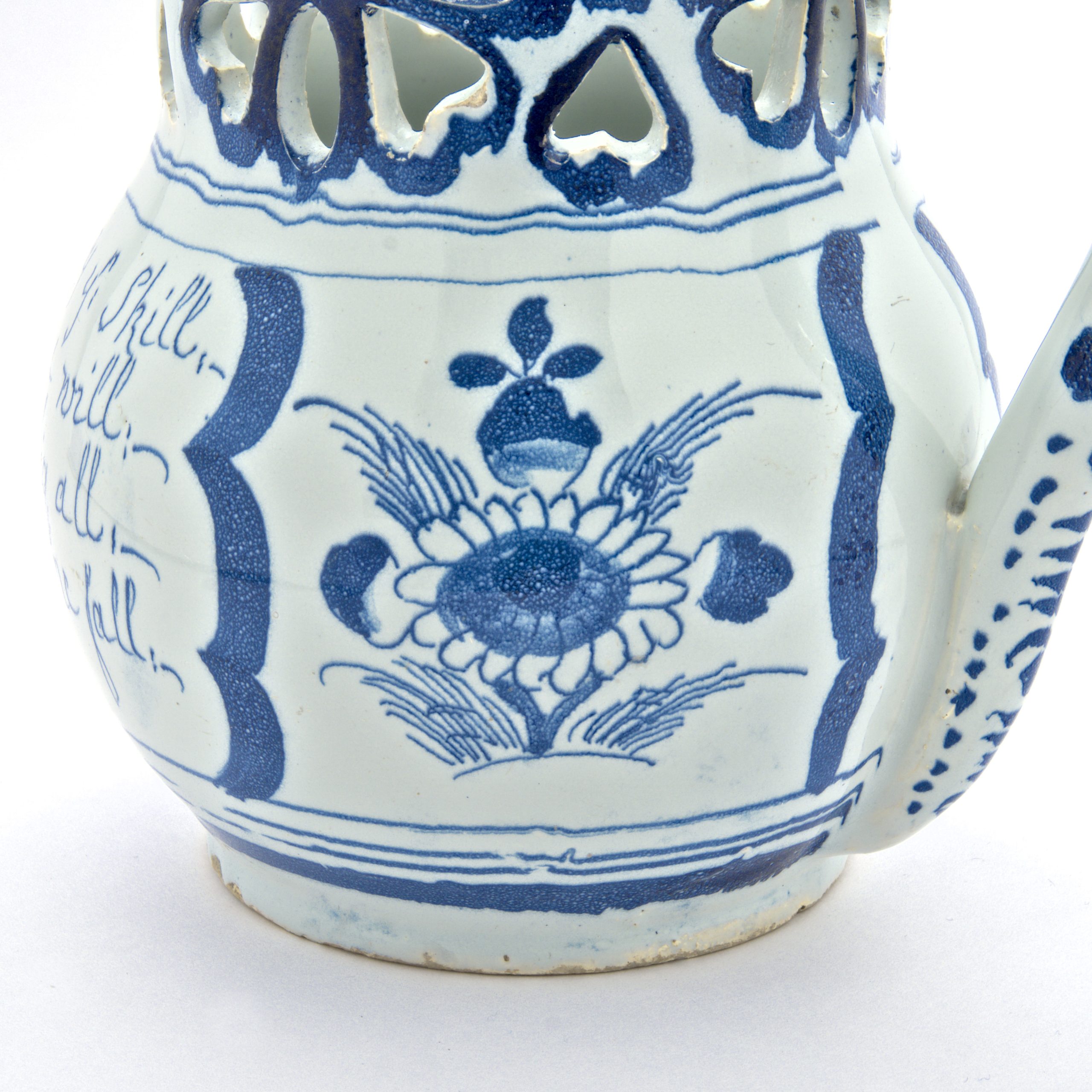
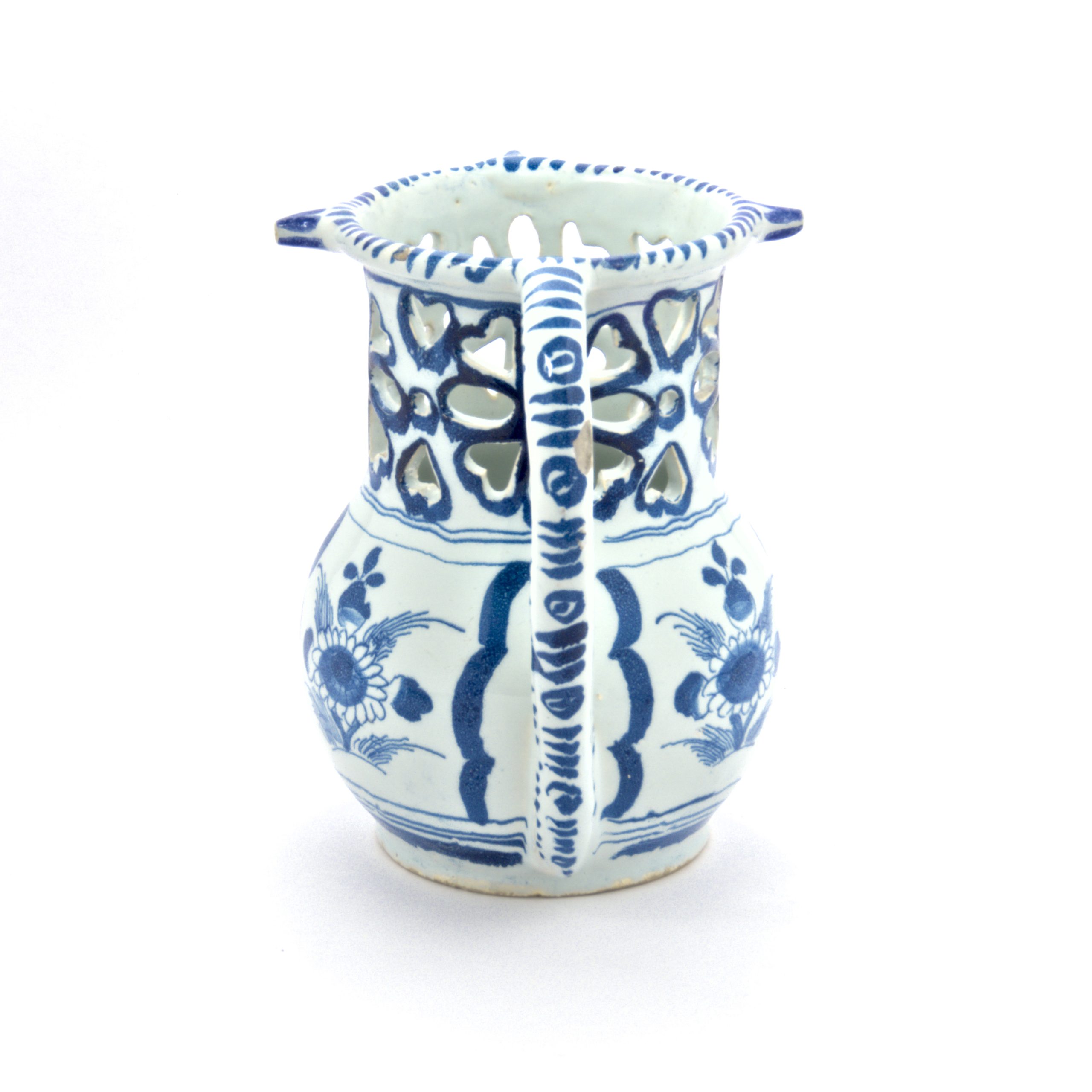
Puzzle Jug, c. 1760
$2,200
Likely Liverpool, England
Tin-glazed earthenware
Height: 7 in.
Care to make a wager?
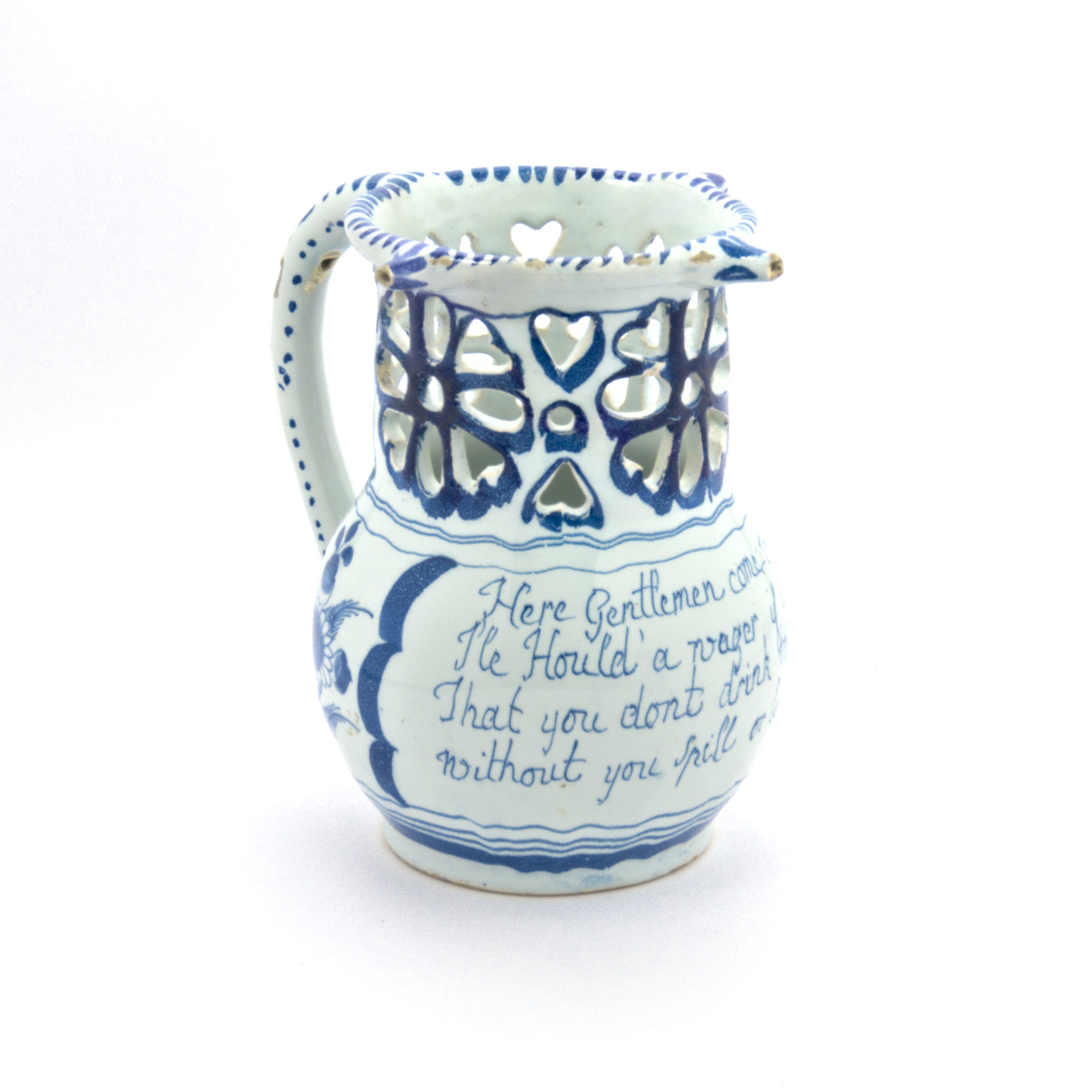
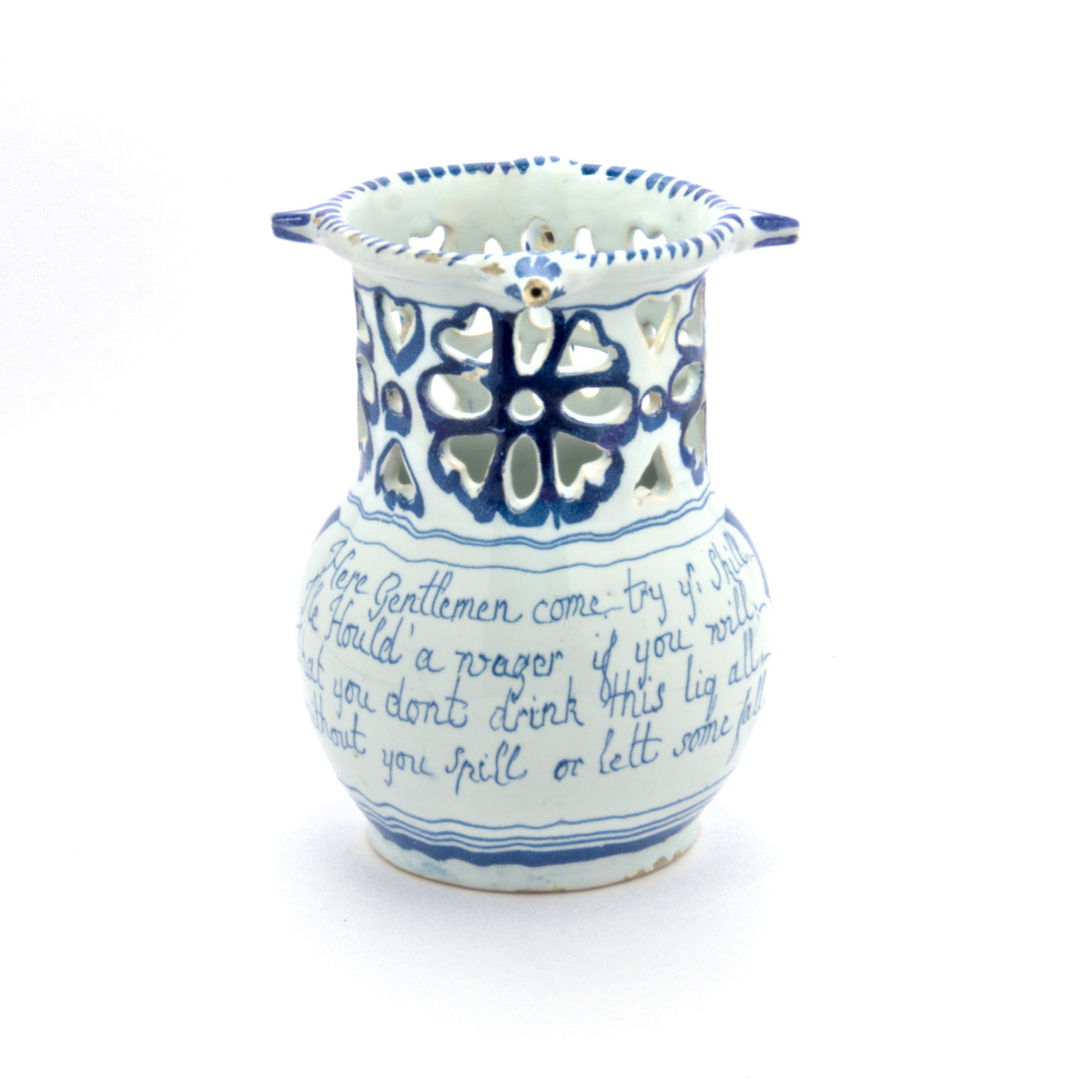
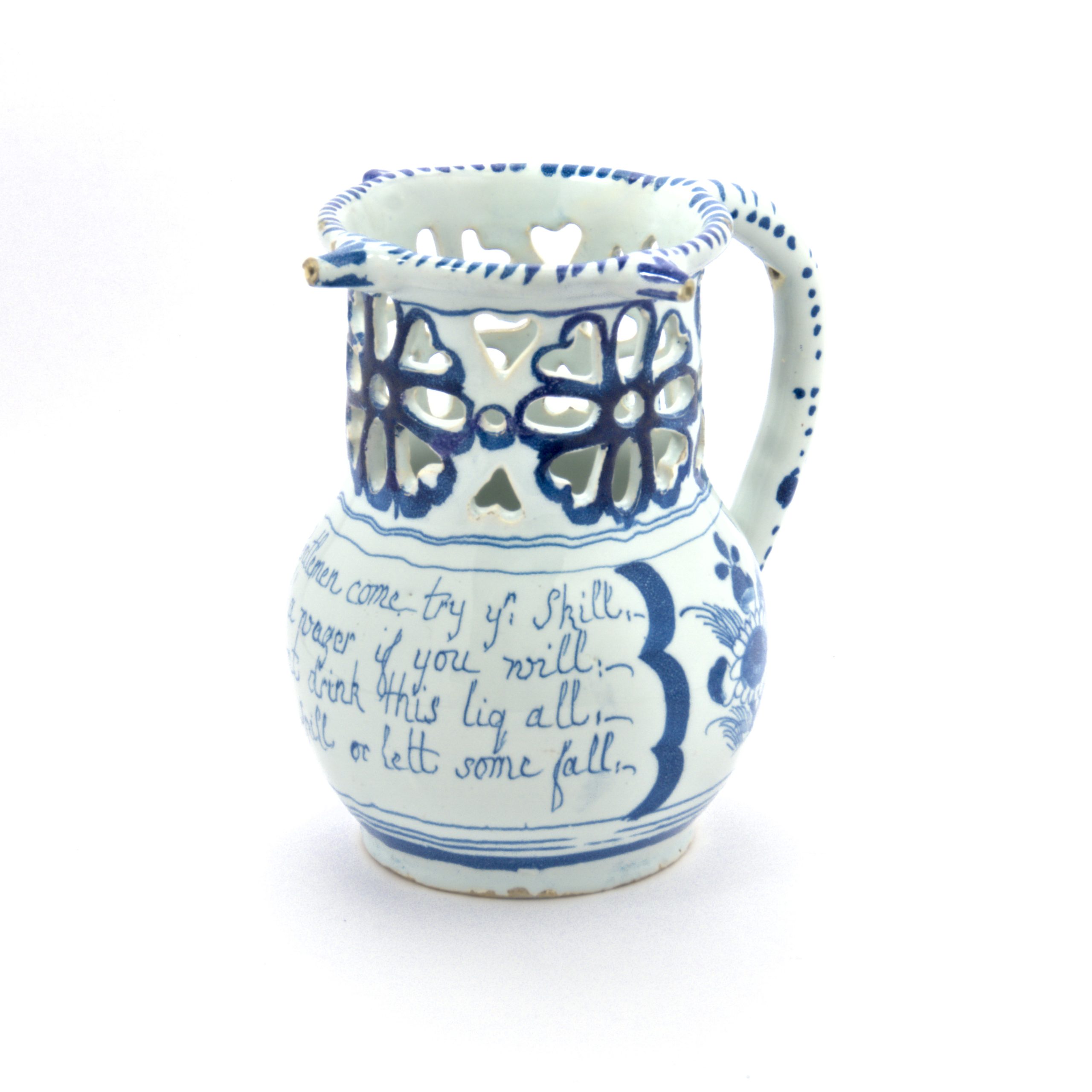
Here Gentlemen come try yr Skill
Ile Hould a wager if you will
That you don't drink this liq all
without you spill or lett some fall.
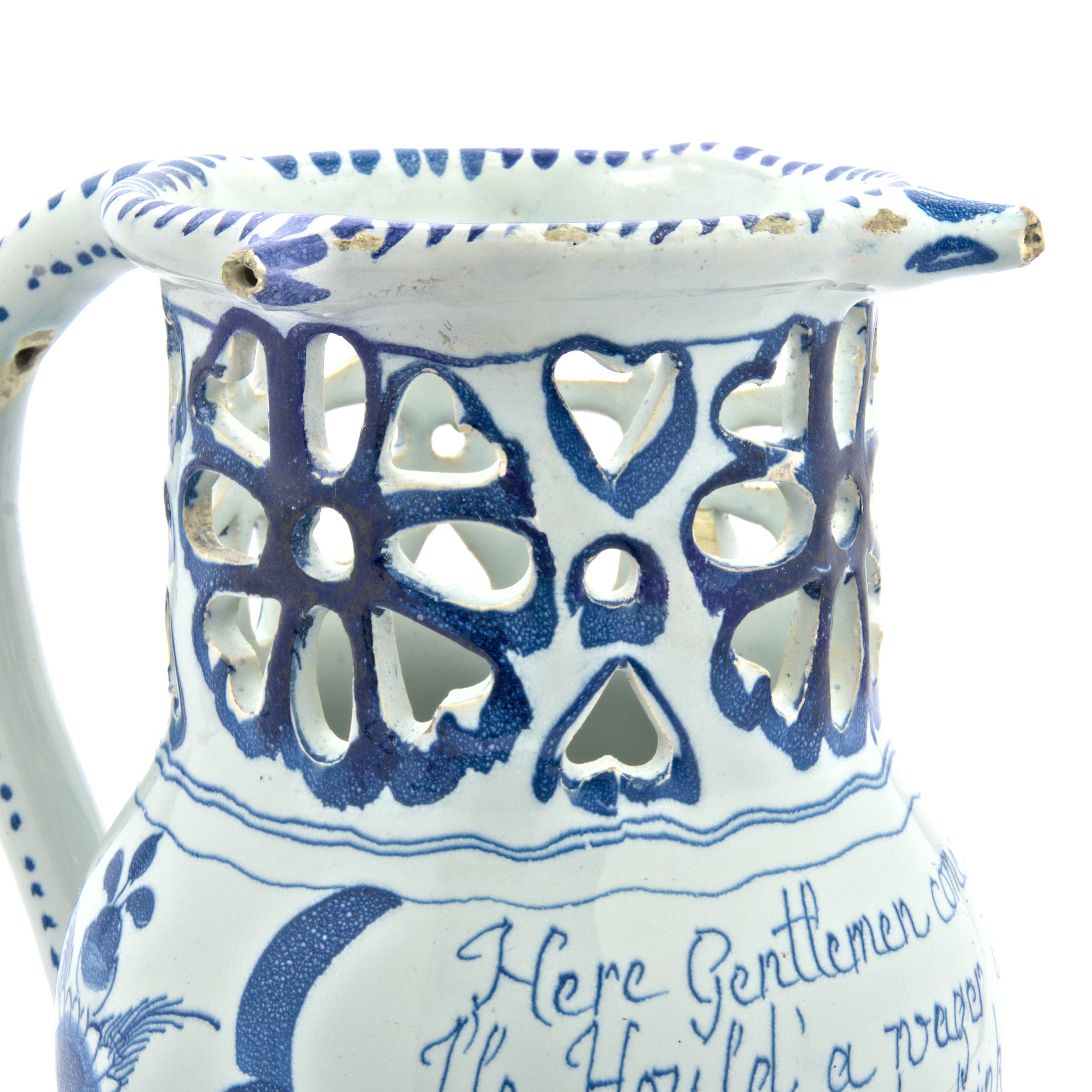
Painted in blue across its belly, the verse is an open challenge. Tip it like an ordinary pitcher and the ale pours out through the pierced neck (and down your shirt). But there's a trick. A hidden channel runs up through the hollow handle and around the rim to three small nozzles. To drink, the challenger must find the right spout, sip from it like a straw, and cover every other opening with his fingers, including a tiny hole tucked beneath the handle. Regulars know the trick, while the newcomer buys the next round.
Trick drinking vessels were beloved in England as early as the famed 13th-century Exeter puzzle jug (though that one was imported from France). In the 18th century, they found their most sociable form in tin-glazed earthenware, or delftware. This was England's answer to Dutch Delft and ultimately to Chinese porcelain. Liverpool's potteries appear to have made most of the English examples, and this particular rhyme is closely tied to them. Liverpool was also a great Atlantic port, and jugs like this (perhaps even this one) regularly crossed to the American colonies as well.
Few survive in good order. Tin glaze chips easily, the pierced necks and slender nozzles snapped with use, and a jug passed around a tavern table was prone to injury. Three centuries later, this one is still ready for new bets.
Comparable jugs bearing the same verse are in the Metropolitan Museum of Art and the Victoria and Albert Museum (c.f. Michael Archer, Delftware: The Tin-Glazed Earthenware of the British Isles, 1997, no. D.6).
Provenance:
Peter S. Ely
Mark & Marjorie Allen, Putnam Valley, New York, 1986
Care to make a wager?
Here Gentlemen come try yr Skill
Ile Hould a wager if you will
That you don’t drink this liq all
without you spill or lett some fall.
Painted in blue across its belly, the verse is an open challenge. Tip it like an ordinary pitcher and the ale pours out through the pierced neck (and down your shirt). But there’s a trick. A hidden channel runs up through the hollow handle and around the rim to three small nozzles. To drink, the challenger must find the right spout, sip from it like a straw, and cover every other opening with his fingers, including a tiny hole tucked beneath the handle. Regulars know the trick, while the newcomer buys the next round.
Trick drinking vessels were beloved in England as early as the famed 13th-century Exeter puzzle jug (though that one was imported from France). In the 18th century, they found their most sociable form in tin-glazed earthenware, or delftware. This was England’s answer to Dutch Delft and ultimately to Chinese porcelain. Liverpool’s potteries appear to have made most of the English examples, and this particular rhyme is closely tied to them. Liverpool was also a great Atlantic port, and jugs like this (perhaps even this one) regularly crossed to the American colonies as well.
Few survive in good order. Tin glaze chips easily, the pierced necks and slender nozzles snapped with use, and a jug passed around a tavern table was prone to injury. Three centuries later, this one is still ready for new bets.
Comparable jugs bearing the same verse are in the Metropolitan Museum of Art and the Victoria and Albert Museum (c.f. Michael Archer, Delftware: The Tin-Glazed Earthenware of the British Isles, 1997, no. D.6).
Provenance:
Peter S. Ely
Mark & Marjorie Allen, Putnam Valley, New York, 1986
-
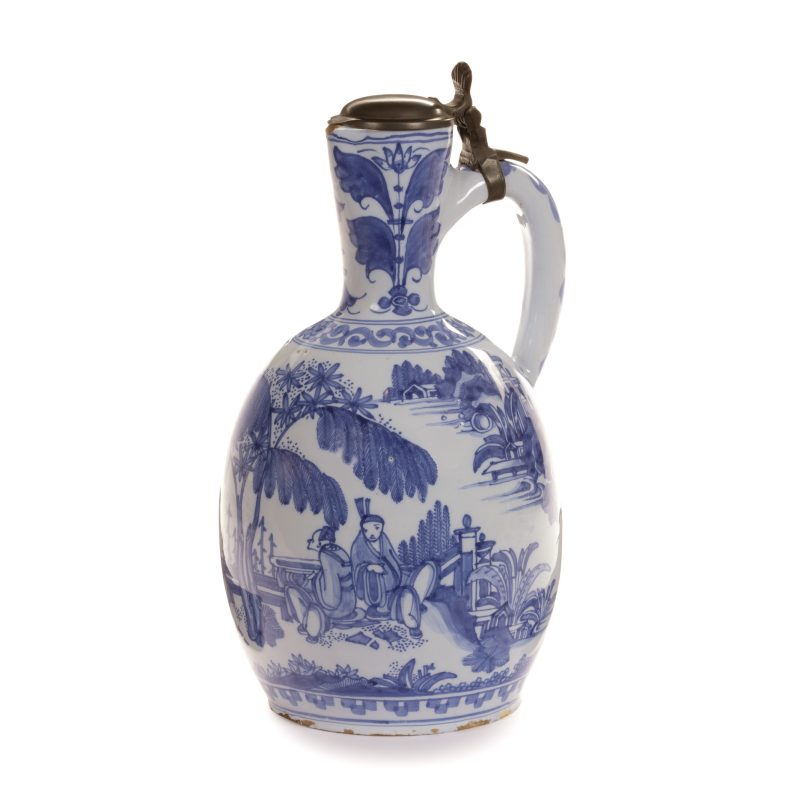 Delftware Jug
Discover the Object →
Delftware Jug
Discover the Object →
-
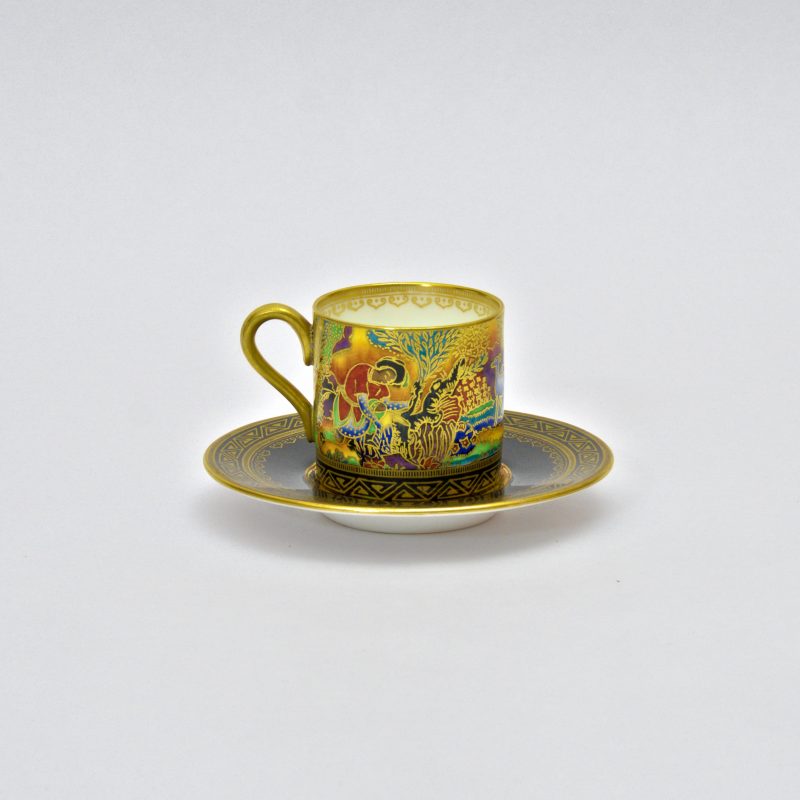 “Fairyland Lustre” Coffee Cup and Saucer, c. 1920
Discover the Object →
“Fairyland Lustre” Coffee Cup and Saucer, c. 1920
Discover the Object →
-
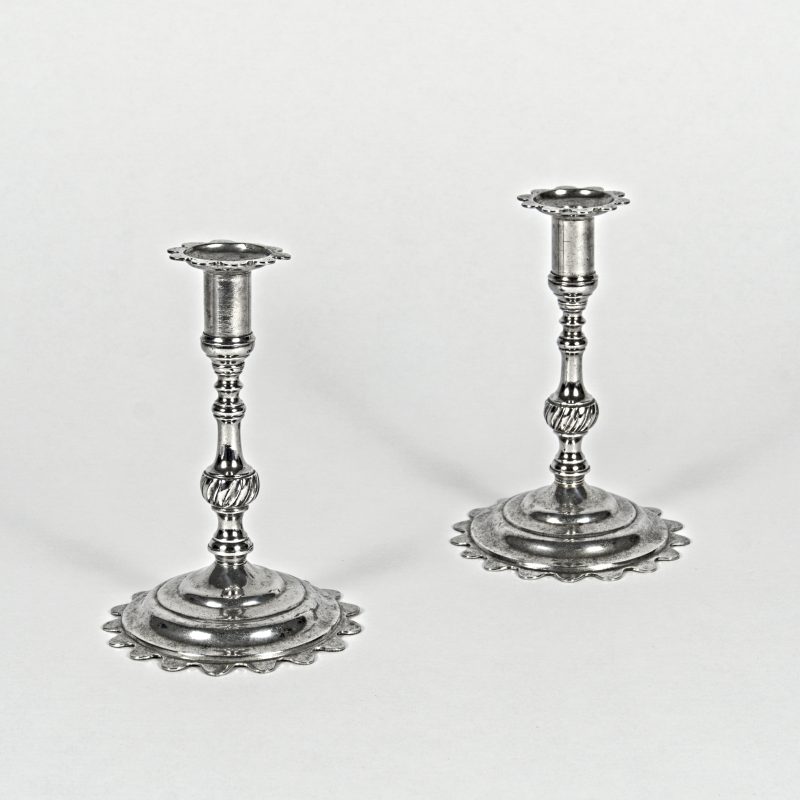 Pair of Steel Tapersticks, c. 1780
Discover the Object →
Pair of Steel Tapersticks, c. 1780
Discover the Object →
Reviews
There are no reviews yet.