
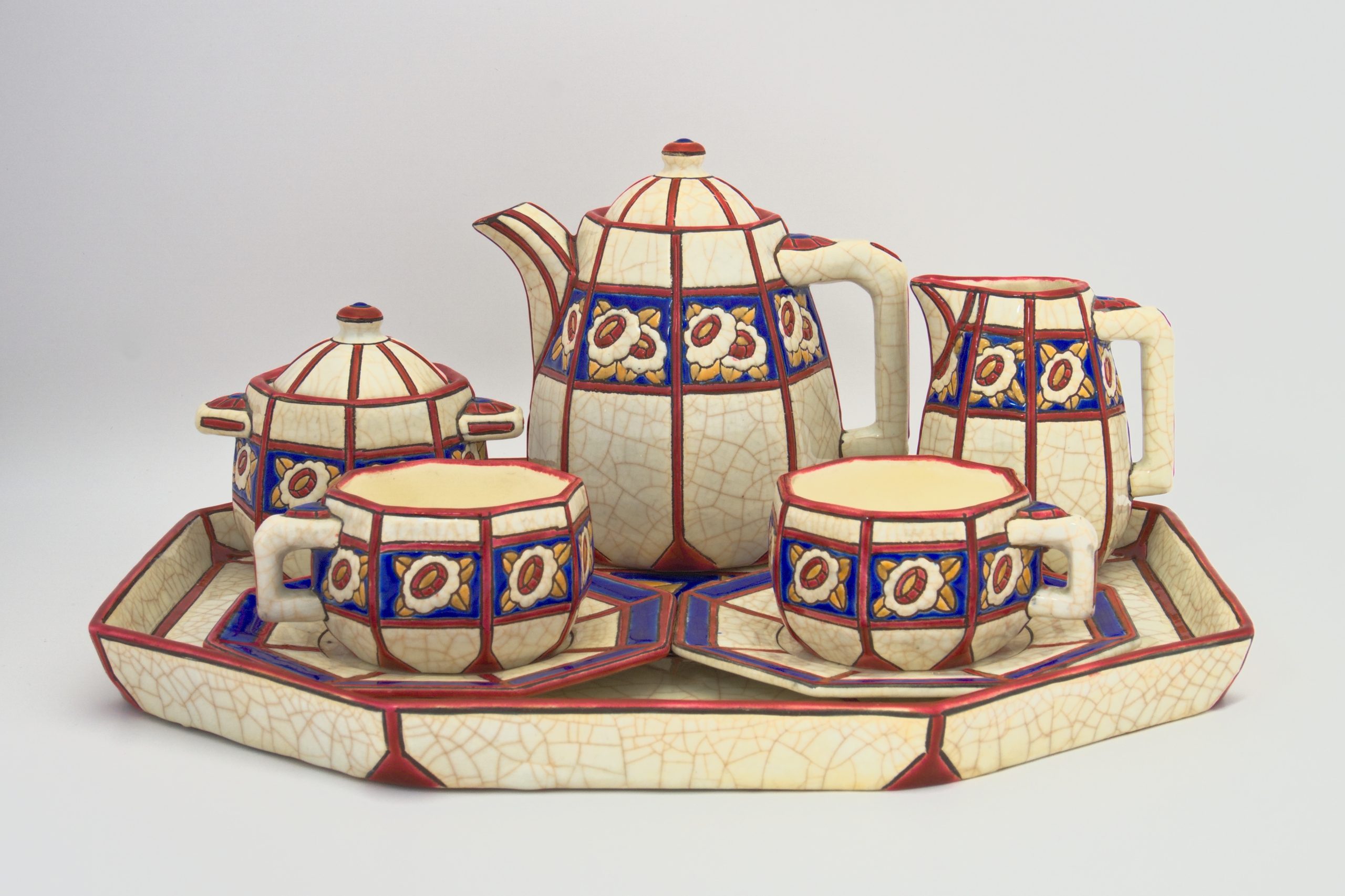
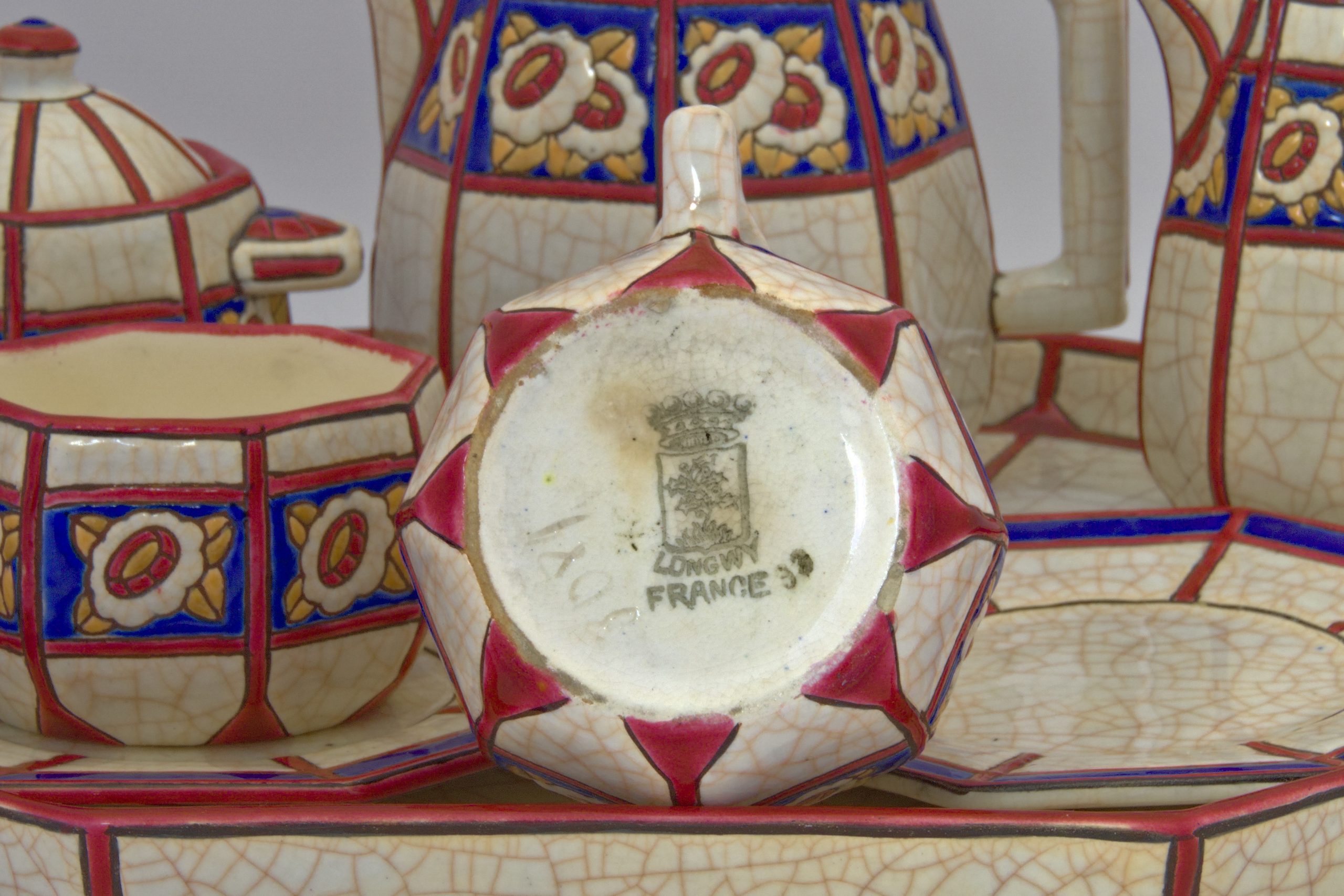
French Ceramic Tea Service, c. 1920
$2,600
Longwy Pottery
Longwy, France
Length of tray: 13½ in.; height of teapot: 5½ in.
By the 1920s, the Manufacture des Émaux de Longwy had moved away from its Napoleonic roots to become a standard-bearer for the Art Deco movement. This tea service, with its stylized floral motifs and bold primary colors, illustrates the factory's unique "cloisonné on ceramic" technique. The signature crackle glaze provides a sophisticated, aged texture that contrasts beautifully with the crisp, geometric framing lines.
This service is a quintessential example of the émaux cloisonnés (cloisonné enamels) that made Longwy famous. Unlike traditional metal cloisonné, which uses wire filaments to separate colors, Longwy potters used a black manganese line printed or painted onto the clay to create "cells" that were then filled by hand with thick, jewel-toned enamels.
The factory, founded in 1798 in a former Carmelite convent, built its reputation on high-quality tablewares, even earning the patronage of Napoleon. In the late 19th century Longwy began experimenting with enameling techniques to compete with the influx of Japanese and Chinese cloisonné wares. By 1920, when this set was produced, the factory had fully embraced the burgeoning Art Deco style. The cream-colored ground, accented by rich red framing lines and vibrant blue and yellow floral bursts, reflects the decade’s shift toward bold, graphic ornamentation.
A defining feature of this set is the deliberate craquelé or "cracked" effect in the glaze. This faux-crazing was intended to give the ceramic a sense of depth and a tactile quality that mimicked the appearance of antique ivory or ancient pottery.
By the 1920s, the Manufacture des Émaux de Longwy had moved away from its Napoleonic roots to become a standard-bearer for the Art Deco movement. This tea service, with its stylized floral motifs and bold primary colors, illustrates the factory’s unique “cloisonné on ceramic” technique. The signature crackle glaze provides a sophisticated, aged texture that contrasts beautifully with the crisp, geometric framing lines.
This service is a quintessential example of the émaux cloisonnés (cloisonné enamels) that made Longwy famous. Unlike traditional metal cloisonné, which uses wire filaments to separate colors, Longwy potters used a black manganese line printed or painted onto the clay to create “cells” that were then filled by hand with thick, jewel-toned enamels.
The factory, founded in 1798 in a former Carmelite convent, built its reputation on high-quality tablewares, even earning the patronage of Napoleon. In the late 19th century Longwy began experimenting with enameling techniques to compete with the influx of Japanese and Chinese cloisonné wares. By 1920, when this set was produced, the factory had fully embraced the burgeoning Art Deco style. The cream-colored ground, accented by rich red framing lines and vibrant blue and yellow floral bursts, reflects the decade’s shift toward bold, graphic ornamentation.
A defining feature of this set is the deliberate craquelé or “cracked” effect in the glaze. This faux-crazing was intended to give the ceramic a sense of depth and a tactile quality that mimicked the appearance of antique ivory or ancient pottery.
-
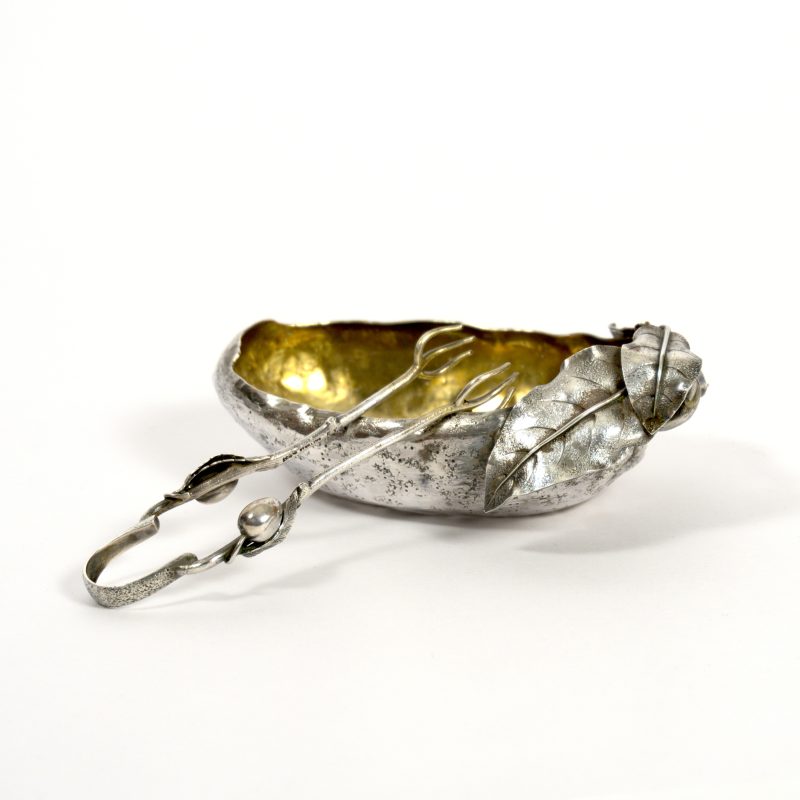 Silver Olive Dish and Tongs, 1884
Discover the Object →
Silver Olive Dish and Tongs, 1884
Discover the Object →
-
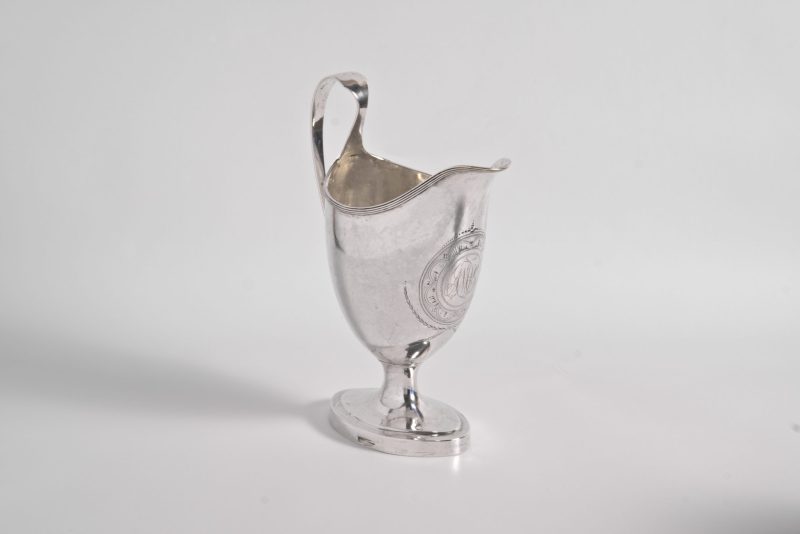 Silver Cream Pitcher, c. 1800
Discover the Object →
Silver Cream Pitcher, c. 1800
Discover the Object →
-
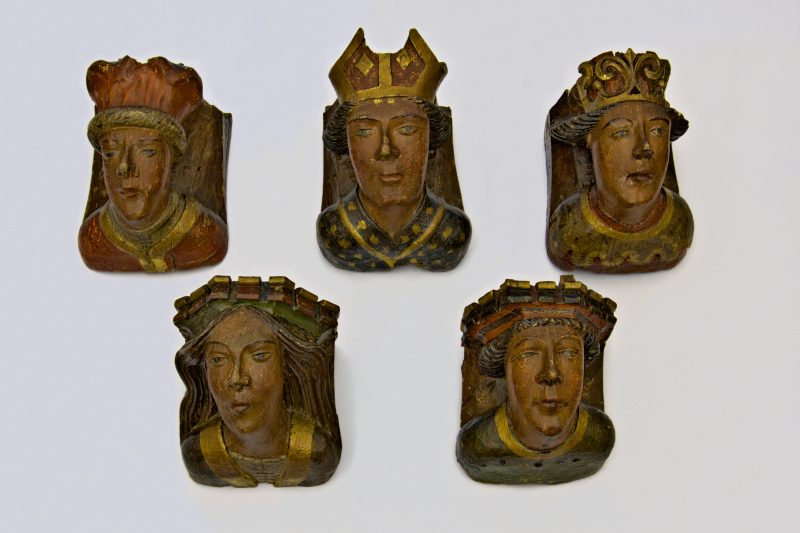 Set of Five Medieval Corbels, c. 1450-1500
Discover the Object →
Set of Five Medieval Corbels, c. 1450-1500
Discover the Object →
Reviews
There are no reviews yet.