
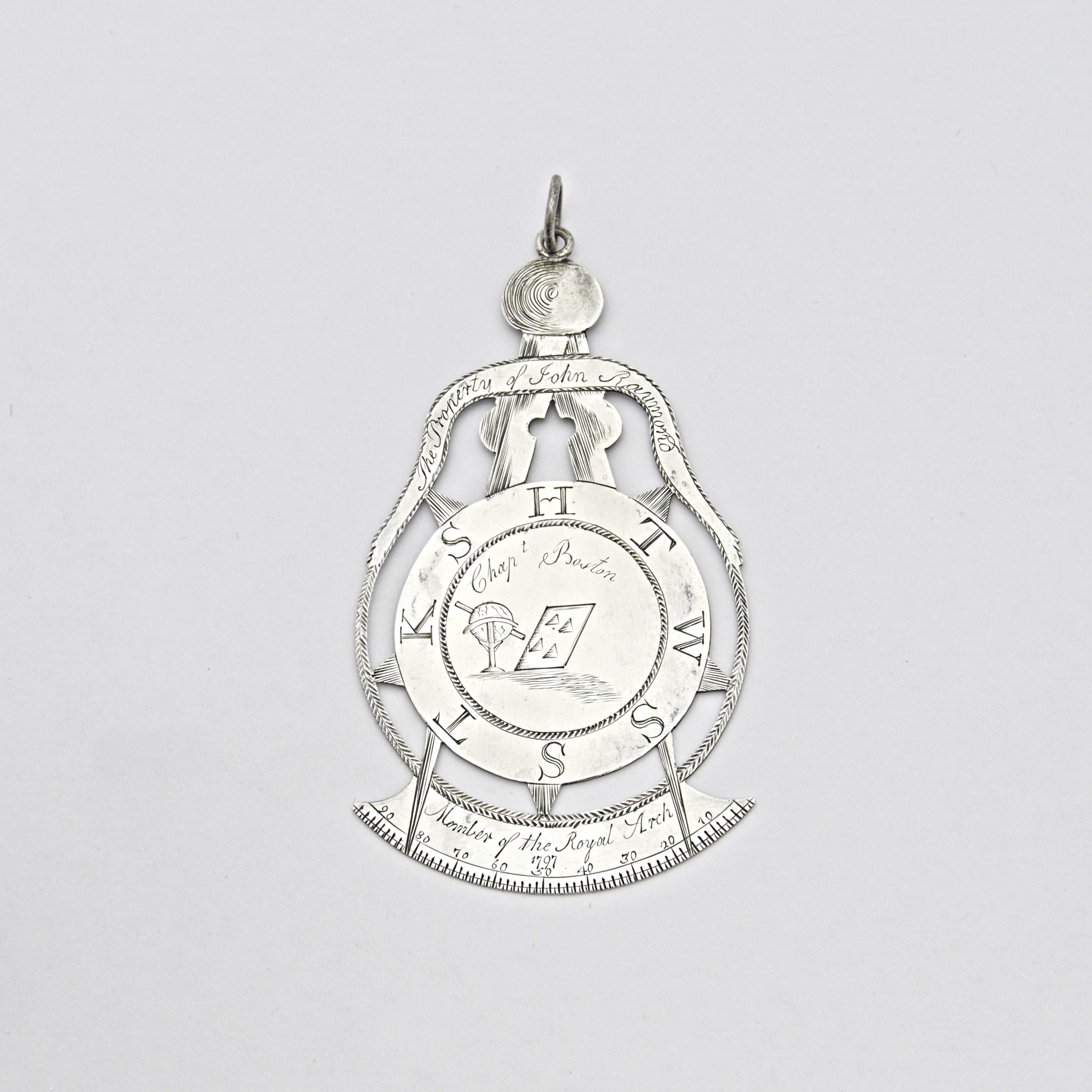
The Raymond Mark Jewel, c. 1800
Boston, attr. Paul Revere
Silver
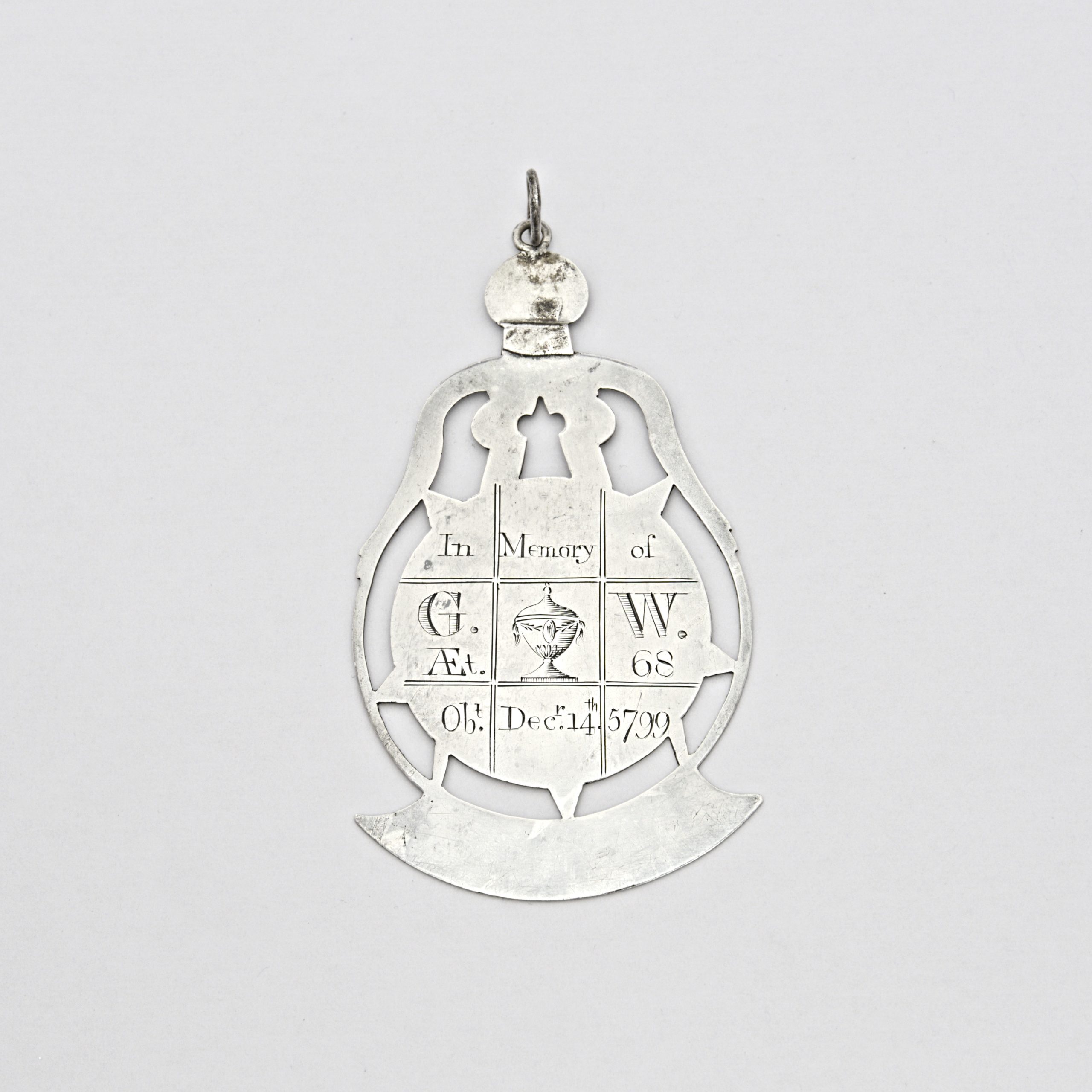
Engraved with Masonic icons and cyphers, on the reverse with a memorial on the death of George Washington, and in script, "The Property of John Raymond", and below, "Member of the Royal Arch".
The John Raymond pendant is a significant artifact of early American Freemasonry, linking the decorative arts of post-Revolutionary Boston with the political and social elite of the era. The piece serves as a "Mark Jewel," a specialized token of the Mark Master Mason degree. Beyond its ritualistic function, the pendant acts as a genealogical bridge, connecting the tragedy of the Battle of Lexington with the burgeoning craftsmanship of Paul Revere’s workshop.
The provenance of this pendant is tied to the "shot heard 'round the world." John Raymond, the shopkeeper of 20 Ann Street, was the son of the elder John Raymond, a man whose death became a rallying cry for the American cause. On April 19, 1775, during the British retreat from Concord, the elder Raymond was at Munroe Tavern in Lexington. When British troops occupied the tavern, Raymond attempted to flee but was shot and killed by the King's soldiers. For the younger John Raymond, owning a piece of high-status Masonic jewelry was not merely a sign of fraternal belonging; it was a statement of his status within a new American middle class that had been paid for with his father’s blood.
This type of pendant is known as a Mark Jewel, the official regalia for the Mark Master Mason degree. This degree is an extension of the Fellowcraft stage and focuses on the integrity of the craftsman. The letters H.T.W.S.S.T.K.S. arranged in a circle on the jewel represent one of the most guarded mnemonics in the fraternity. They stand for: "Hiram, The Widow’s Son, Sent To King Solomon." This refers to Hiram Abiff, the legendary architect of Solomon's Temple, who is a central figure in Masonic allegory. In the Mark degree, a brother chooses a personal "Mark"—a unique symbol used to identify his work—which is then engraved into the center of the circle.
The reverse side of the pendant features a memorial to George Washington. Following Washington’s death in December 1799, a wave of "Washingtonia" swept the United States. Freemasons, in particular, viewed Washington as their "First Brother."
The attribution of this piece to Paul Revere is supported by a preponderance of evidence involving geography, fraternity, and style. John Raymond’s shop at 20 Ann Street (now North Street) was a short walk from Revere’s own workshop and residence. Revere was a prominent Mason, serving as Grand Master of the Grand Lodge of Massachusetts. Both men were members of the Royal Arch, the body that oversees the Mark Master degree. While Masonic silver was not permitted to be stamped with a maker's mark, the quality and style of the manufacture and engraving are consistent with Revere's work from the period. Finally, as the son of a Revolutionary martyr, Raymond would have naturally sought out Revere to commemorate his status.
In the late 18th century, a Mark Jewel was more than a trinket; it was a "passport" within the Masonic world. It signaled that the bearer was a man of trade who had achieved a specific level of mastery. For a Boston shopkeeper like Raymond, wearing a jewel crafted by a man of Revere’s stature served to validate his professional integrity through the "Mark" tradition, cement his connection to the Revolutionary elite, and honor the fallen General Washington, thereby aligning Raymond's personal identity with the national identity.
The John Raymond pendant is a multifaceted diamond of American history. It captures the intersection of craftsmanship, fraternal ritual, and the lingering echoes of the Revolutionary War, standing as one of the more intimate examples of Paul Revere’s work—a personal commission for a neighbor and "Brother" that transformed silver and script into a legacy of American independence.
Engraved with Masonic icons and cyphers, on the reverse with a memorial on the death of George Washington, and in script, “The Property of John Raymond”, and below, “Member of the Royal Arch”.
The John Raymond pendant is a significant artifact of early American Freemasonry, linking the decorative arts of post-Revolutionary Boston with the political and social elite of the era. The piece serves as a “Mark Jewel,” a specialized token of the Mark Master Mason degree. Beyond its ritualistic function, the pendant acts as a genealogical bridge, connecting the tragedy of the Battle of Lexington with the burgeoning craftsmanship of Paul Revere’s workshop.
The provenance of this pendant is tied to the “shot heard ’round the world.” John Raymond, the shopkeeper of 20 Ann Street, was the son of the elder John Raymond, a man whose death became a rallying cry for the American cause. On April 19, 1775, during the British retreat from Concord, the elder Raymond was at Munroe Tavern in Lexington. When British troops occupied the tavern, Raymond attempted to flee but was shot and killed by the King’s soldiers. For the younger John Raymond, owning a piece of high-status Masonic jewelry was not merely a sign of fraternal belonging; it was a statement of his status within a new American middle class that had been paid for with his father’s blood.
This type of pendant is known as a Mark Jewel, the official regalia for the Mark Master Mason degree. This degree is an extension of the Fellowcraft stage and focuses on the integrity of the craftsman. The letters H.T.W.S.S.T.K.S. arranged in a circle on the jewel represent one of the most guarded mnemonics in the fraternity. They stand for: “Hiram, The Widow’s Son, Sent To King Solomon.” This refers to Hiram Abiff, the legendary architect of Solomon’s Temple, who is a central figure in Masonic allegory. In the Mark degree, a brother chooses a personal “Mark”—a unique symbol used to identify his work—which is then engraved into the center of the circle.
The reverse side of the pendant features a memorial to George Washington. Following Washington’s death in December 1799, a wave of “Washingtonia” swept the United States. Freemasons, in particular, viewed Washington as their “First Brother.”
The attribution of this piece to Paul Revere is supported by a preponderance of evidence involving geography, fraternity, and style. John Raymond’s shop at 20 Ann Street (now North Street) was a short walk from Revere’s own workshop and residence. Revere was a prominent Mason, serving as Grand Master of the Grand Lodge of Massachusetts. Both men were members of the Royal Arch, the body that oversees the Mark Master degree. While Masonic silver was not permitted to be stamped with a maker’s mark, the quality and style of the manufacture and engraving are consistent with Revere’s work from the period. Finally, as the son of a Revolutionary martyr, Raymond would have naturally sought out Revere to commemorate his status.
In the late 18th century, a Mark Jewel was more than a trinket; it was a “passport” within the Masonic world. It signaled that the bearer was a man of trade who had achieved a specific level of mastery. For a Boston shopkeeper like Raymond, wearing a jewel crafted by a man of Revere’s stature served to validate his professional integrity through the “Mark” tradition, cement his connection to the Revolutionary elite, and honor the fallen General Washington, thereby aligning Raymond’s personal identity with the national identity.
The John Raymond pendant is a multifaceted diamond of American history. It captures the intersection of craftsmanship, fraternal ritual, and the lingering echoes of the Revolutionary War, standing as one of the more intimate examples of Paul Revere’s work—a personal commission for a neighbor and “Brother” that transformed silver and script into a legacy of American independence.
-
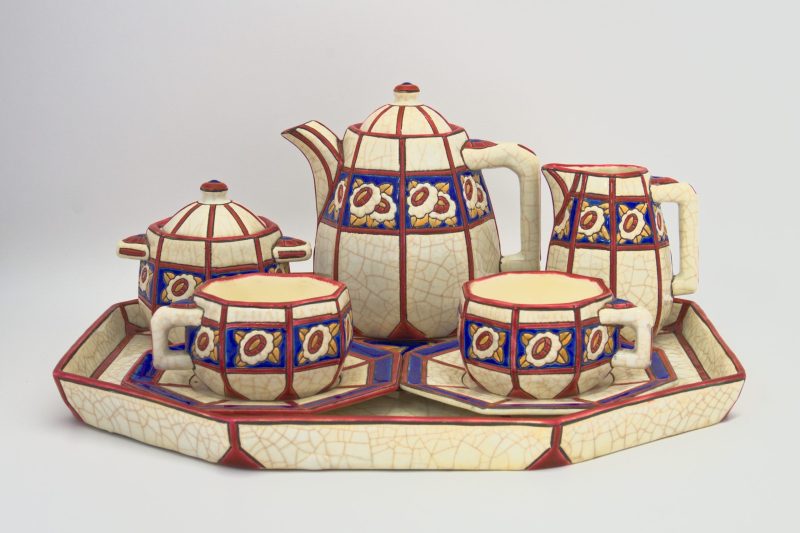 French Ceramic Tea Service, c. 1920
Discover the Object →
French Ceramic Tea Service, c. 1920
Discover the Object →
-
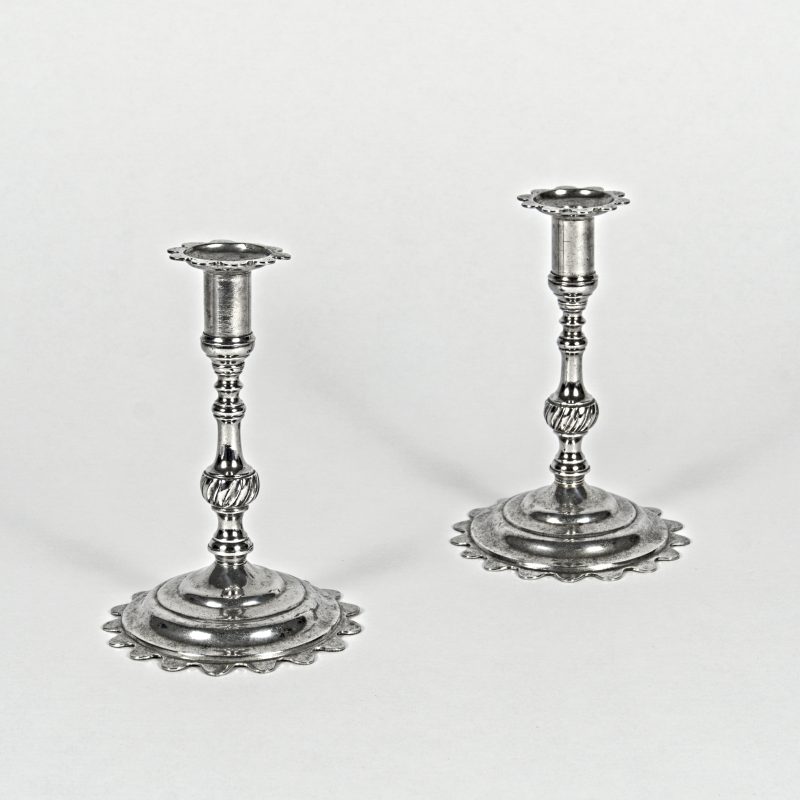 Pair of Steel Tapersticks, c. 1780
Discover the Object →
Pair of Steel Tapersticks, c. 1780
Discover the Object →
-
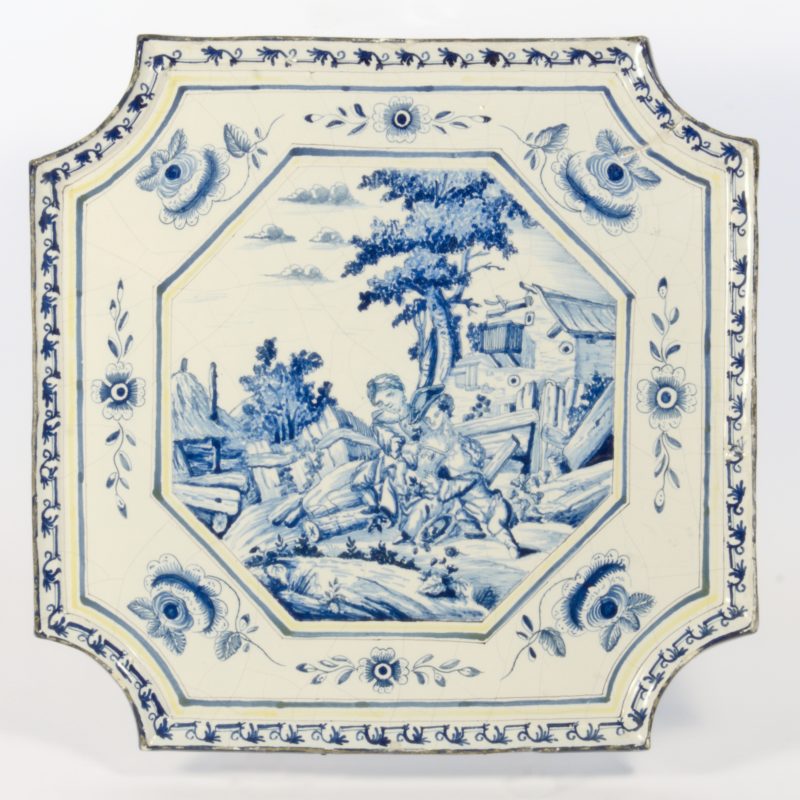 Delftware Plaque, c. 1885
Discover the Object →
Delftware Plaque, c. 1885
Discover the Object →
Reviews
There are no reviews yet.