
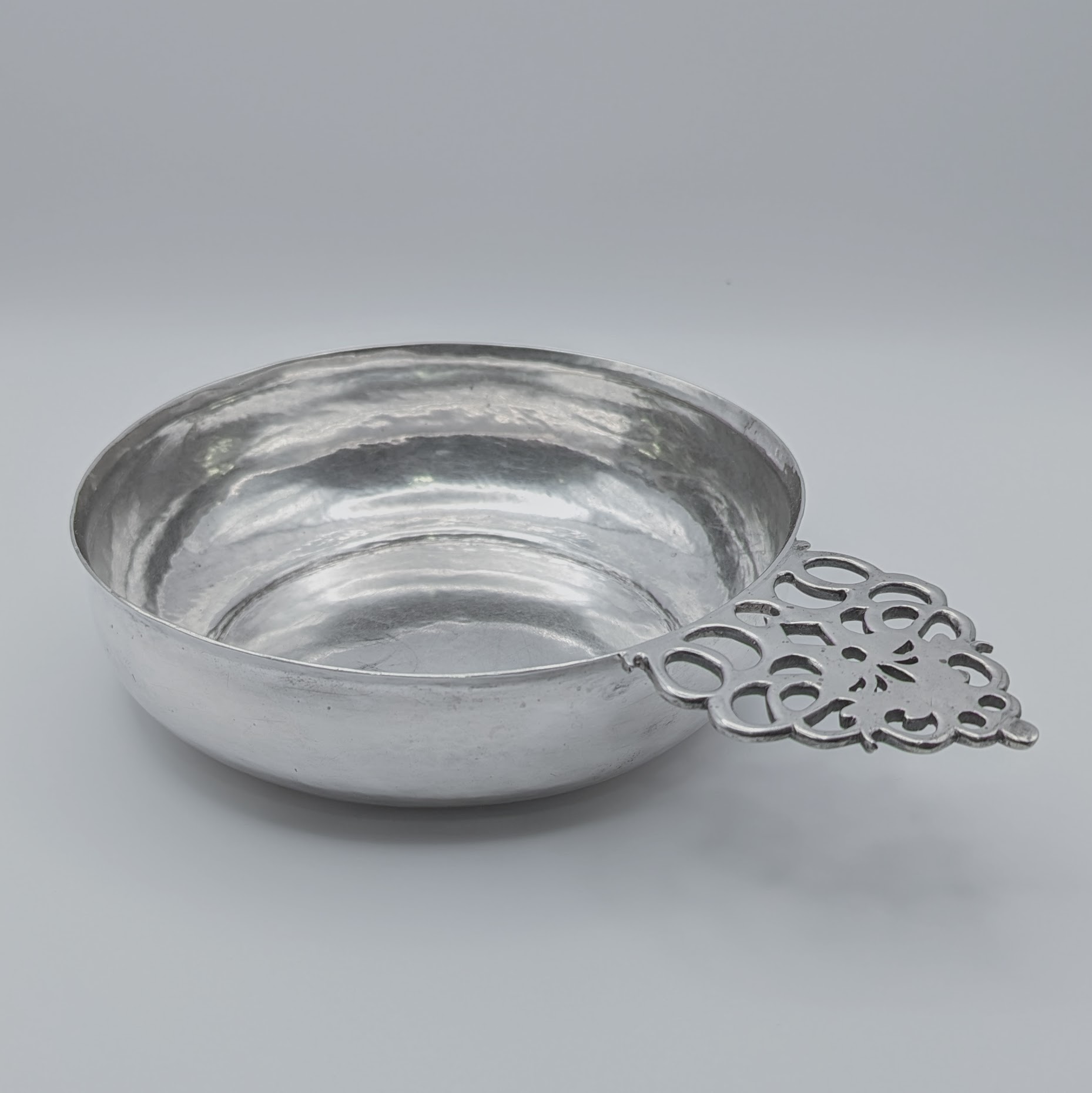
Silver Porringer, c. 1730
New York, by Henricus Boelen
Length across handle: 8 1⁄8 in.; weight: 9 oz. 10 dwt.
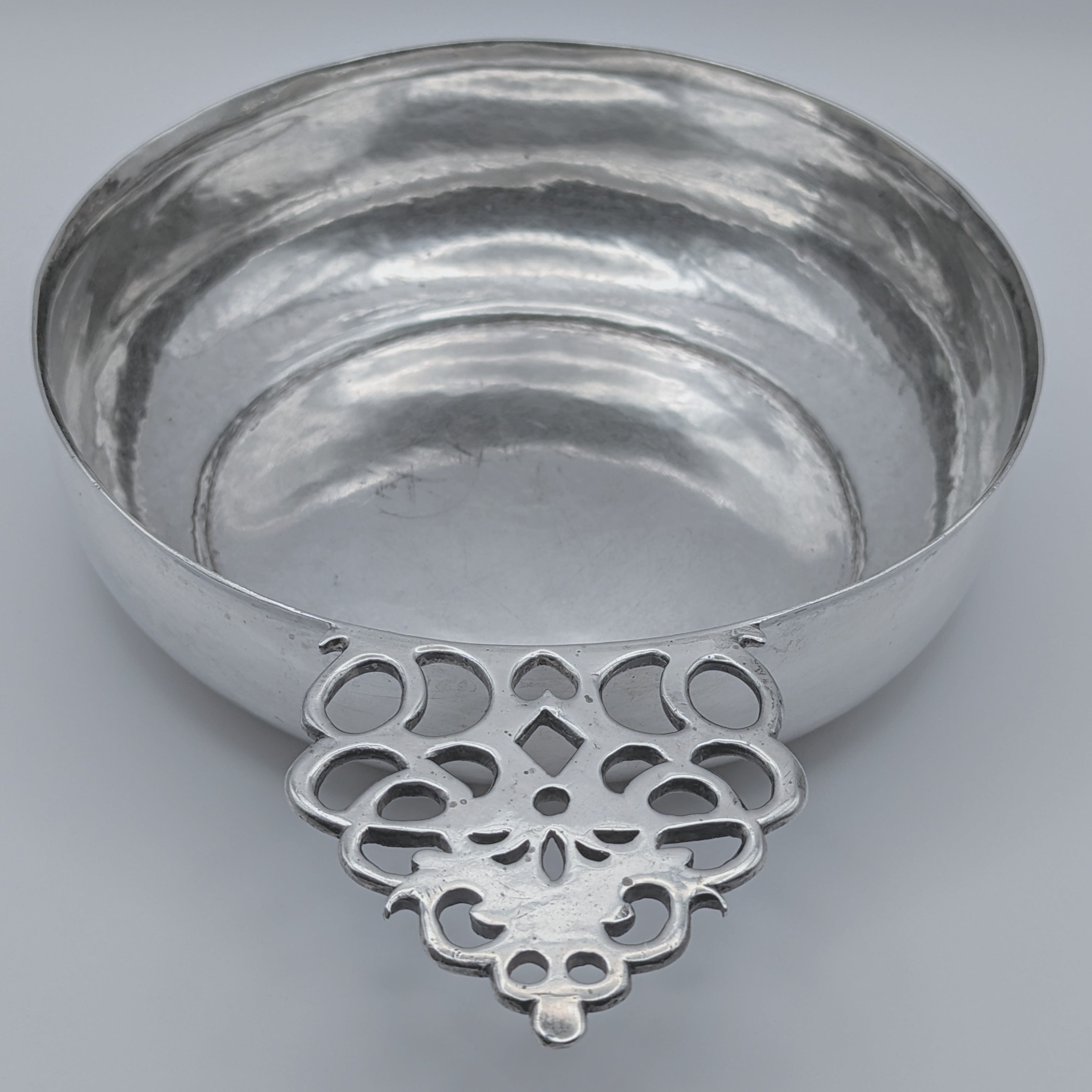
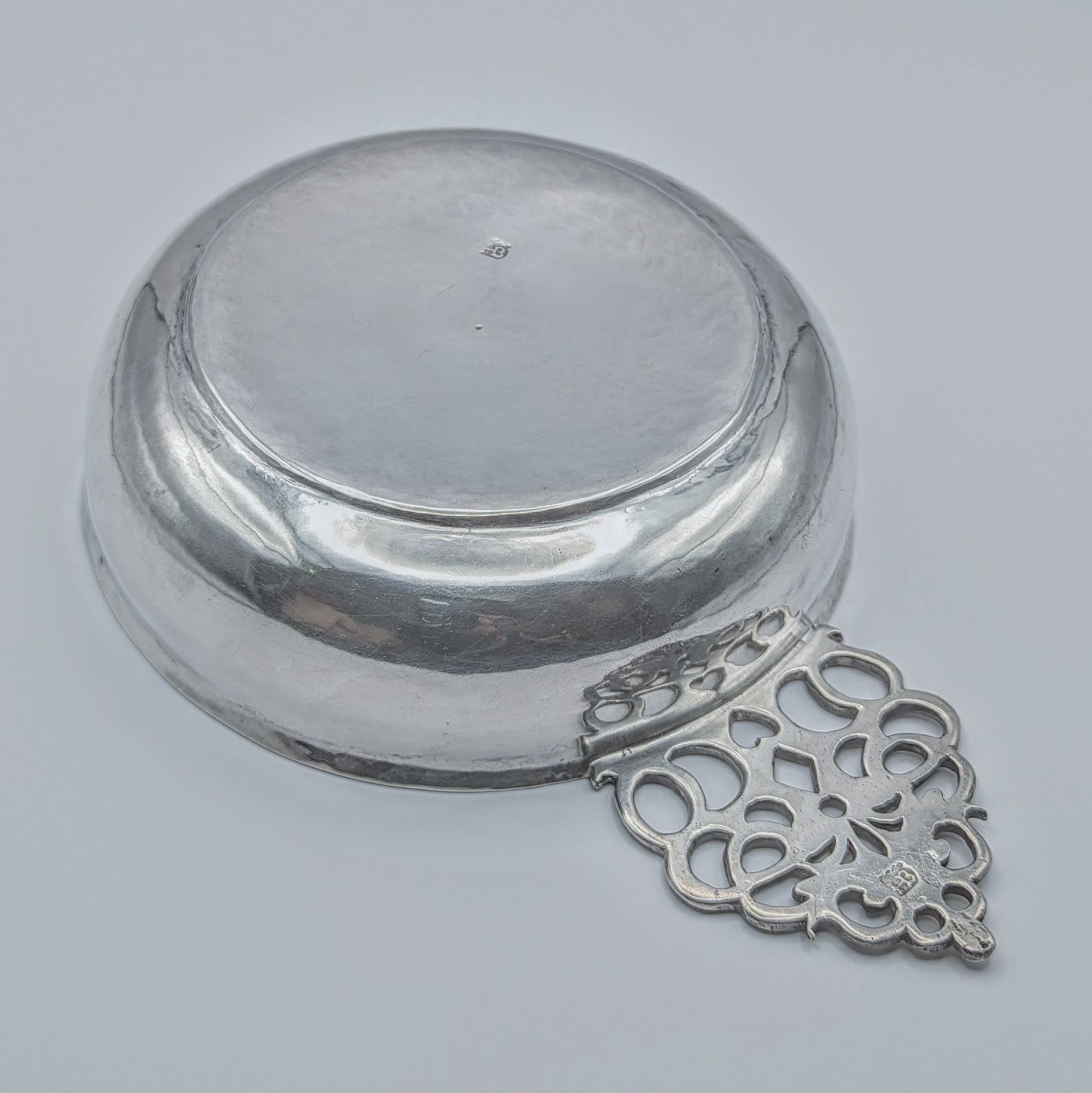
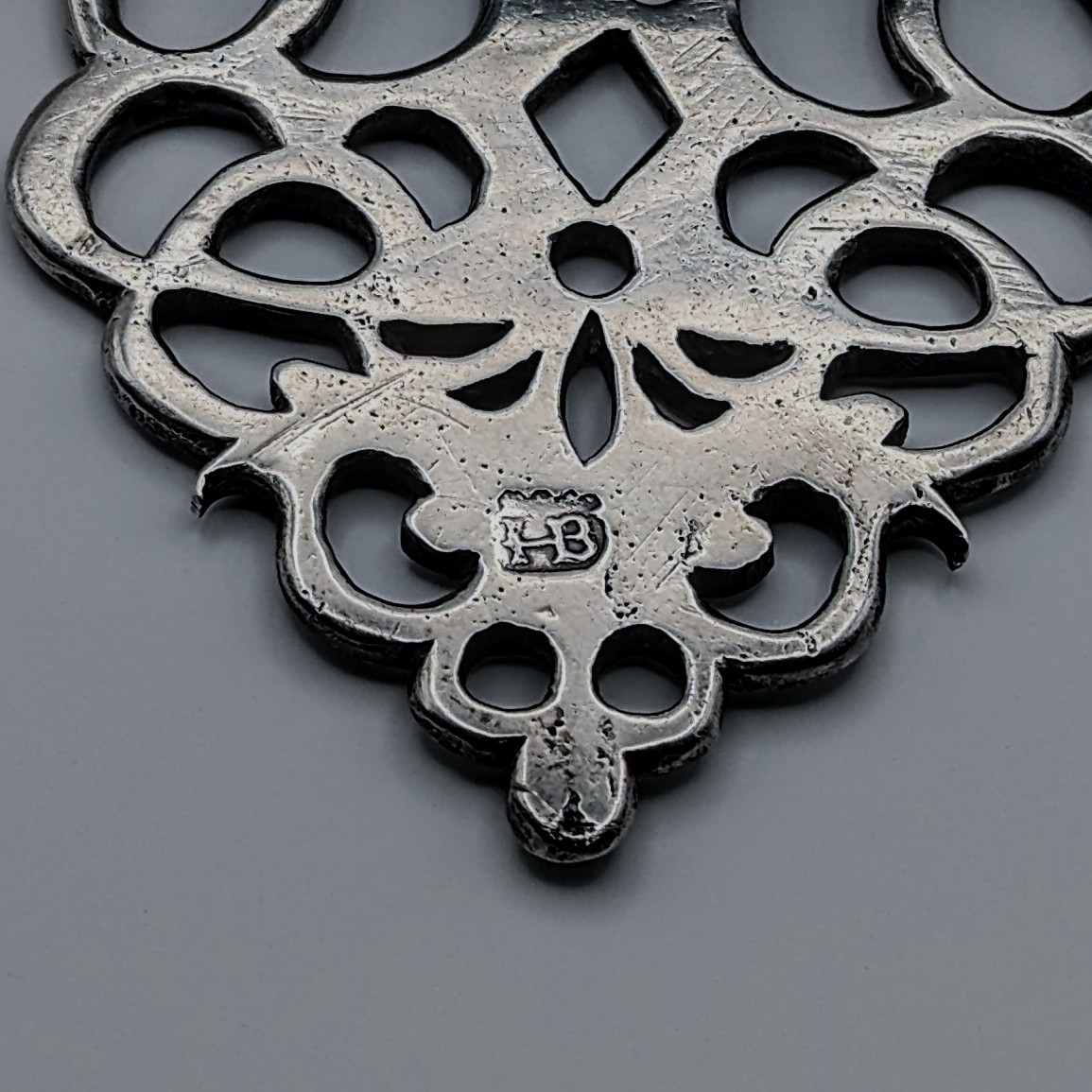
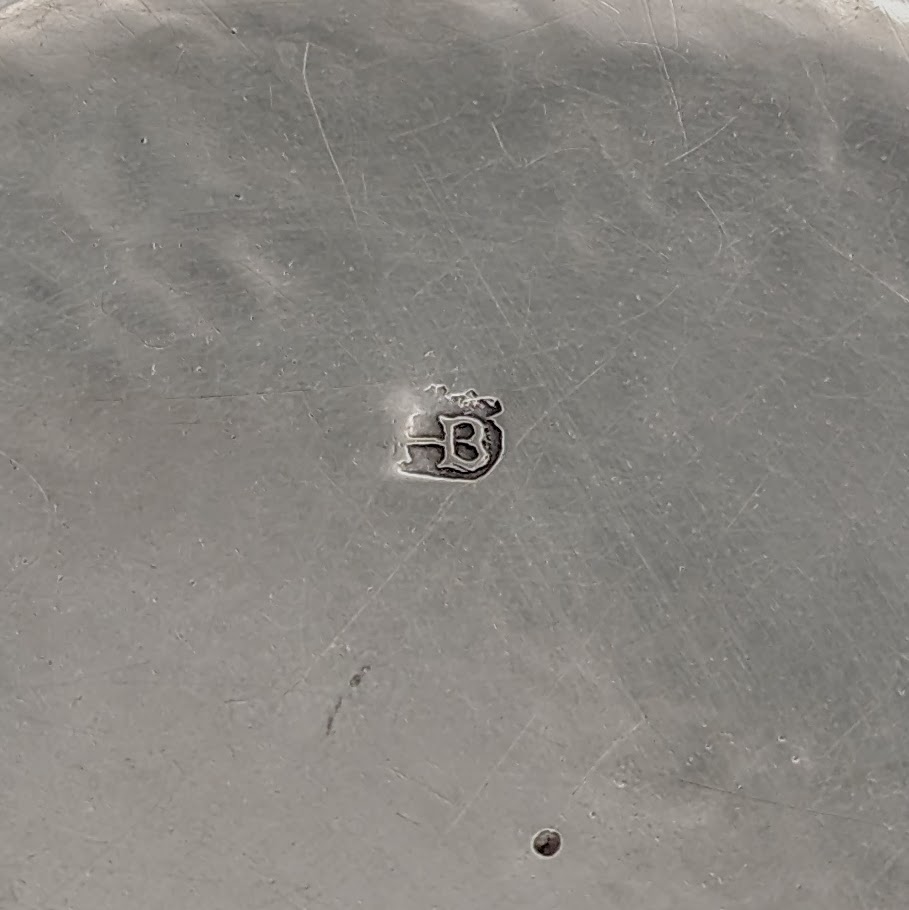
Typical early American porringer form, with slightly flaring lip and pierced handle. Marked beneath the handle and on the underside of the body with HB conjoined in a trilobed shield.
Provenance:
Heritage Auction, 16 May 2024, lot 74125
Condition:
In excellent overall condition, with no repairs or alterations. Fantastic color and patina, original planishing hammer marks still visible, marks well struck and crisp.
As one might expect, the early generations of New York City silversmithing were dominated by Dutch immigrant families. Henricus Boelen (b. 1697) entered the trade after apprenticing to his immigrant father, Jacob. On Jacob's death in 1729, Henricus inherited his father's shop and accelerated his own practice. Many surviving Boelen pieces are unambiguously Dutch forms (e.g. a tall beaker at the Brooklyn Museum; a two-handled bowl in the Winterthur collection). Between the 17th and mid-18th centuries, these strong Dutch influences gradually acquiesced to the English sway over New York culture, resulting in a hybrid, peculiarly American, and even more peculiarly New York style.
Porringers like this one grew out of an Anglo-Dutch form known as a skillet. These small footed bowl-like dishes were used to heat food before serving. Their covers were effectively miniature porringers, and by the middle of the 17th century, English silversmiths had discovered that enlarging these covers made them into effective all-purpose serving dishes. Today the English, for completely ahistorical reasons, call these vessels "bleeding bowls", while in America they are known as porringers. Porringers became a staple of early American silver, widely produced throughout the 18th century and frequently reproduced ever since.
Without a monogram we have no indication who the original owner of this piece might have been. In all likelihood, it was used as an all-purpose general eating and drinking vessel. Silver in early 18th-century New York was rare enough that even well-to-do families might have had only a piece or two, and the ability to use one piece for multiple purposes was therefore extremely appealing.
The handle of this porringer, with its pentagonal shape and distinctive piercing, is a rare and unusually attractive design. Important to note is that no damage has occurred at the joint between handle and body. That joint is frequently the victim of abuse and subsequent repair. The subtle flaring lip of the bowl is another unusual feature and may suggest that Boelen's customer had a specific interest in drinking, not just eating, from the piece.
Today Boelen is recognized as one of the most important and accomplished silversmiths of early 18th-century New York. His probated will of 1755, which survives in the New York State Archives, suggests a considerable estate including enslaved people (it would not have been uncommon for a New York silversmith of the time to utilize enslaved labor in his shop). Surviving pieces in pristine condition are very rare on the private market.
New York, by Henricus Boelen
Length across handle: 8 1⁄8 in.; weight: 9 oz. 10 dwt.
Typical early American porringer form, with slightly flaring lip and pierced handle. Marked beneath the handle and on the underside of the body with HB conjoined in a trilobed shield.
Provenance:
Heritage Auction, 16 May 2024, lot 74125
Condition:
In excellent overall condition, with no repairs or alterations. Fantastic color and patina, original planishing hammer marks still visible, marks well struck and crisp.
As one might expect, the early generations of New York City silversmithing were dominated by Dutch immigrant families. Henricus Boelen (b. 1697) entered the trade after apprenticing to his immigrant father, Jacob. On Jacob’s death in 1729, Henricus inherited his father’s shop and accelerated his own practice. Many surviving Boelen pieces are unambiguously Dutch forms (e.g. a tall beaker at the Brooklyn Museum; a two-handled bowl in the Winterthur collection). Between the 17th and mid-18th centuries, these strong Dutch influences gradually acquiesced to the English sway over New York culture, resulting in a hybrid, peculiarly American, and even more peculiarly New York style.
Porringers like this one grew out of an Anglo-Dutch form known as a skillet. These small footed bowl-like dishes were used to heat food before serving. Their covers were effectively miniature porringers, and by the middle of the 17th century, English silversmiths had discovered that enlarging these covers made them into effective all-purpose serving dishes. Today the English, for completely ahistorical reasons, call these vessels “bleeding bowls”, while in America they are known as porringers. Porringers became a staple of early American silver, widely produced throughout the 18th century and frequently reproduced ever since.
Without a monogram we have no indication who the original owner of this piece might have been. In all likelihood, it was used as an all-purpose general eating and drinking vessel. Silver in early 18th-century New York was rare enough that even well-to-do families might have had only a piece or two, and the ability to use one piece for multiple purposes was therefore extremely appealing.
The handle of this porringer, with its pentagonal shape and distinctive piercing, is a rare and unusually attractive design. Important to note is that no damage has occurred at the joint between handle and body. That joint is frequently the victim of abuse and subsequent repair. The subtle flaring lip of the bowl is another unusual feature and may suggest that Boelen’s customer had a specific interest in drinking, not just eating, from the piece.
Today Boelen is recognized as one of the most important and accomplished silversmiths of early 18th-century New York. His probated will of 1755, which survives in the New York State Archives, suggests a considerable estate including enslaved people (it would not have been uncommon for a New York silversmith of the time to utilize enslaved labor in his shop). Surviving pieces in pristine condition are very rare on the private market.
-
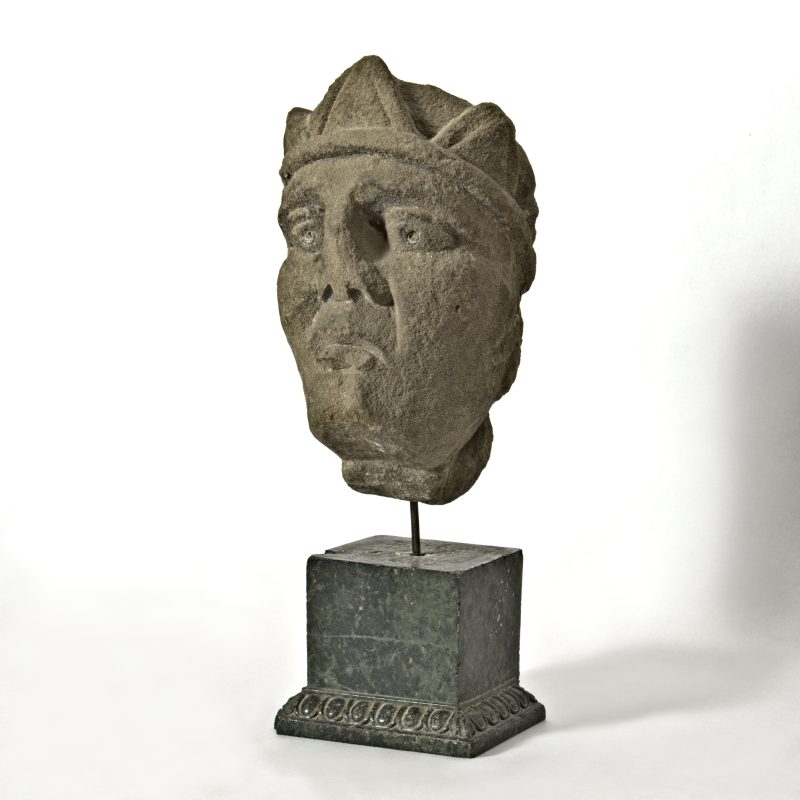 Sandstone Corbel with the Head of a King, c. 14th century
Discover the Object →
Sandstone Corbel with the Head of a King, c. 14th century
Discover the Object →
-
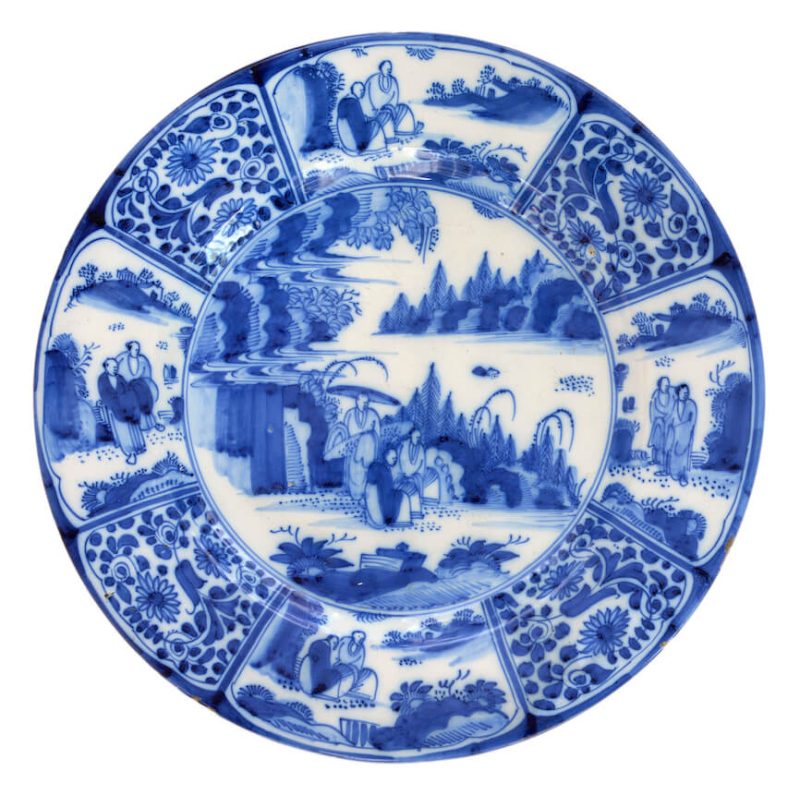 Delftware Charger, c. 1670
Discover the Object →
Delftware Charger, c. 1670
Discover the Object →
-
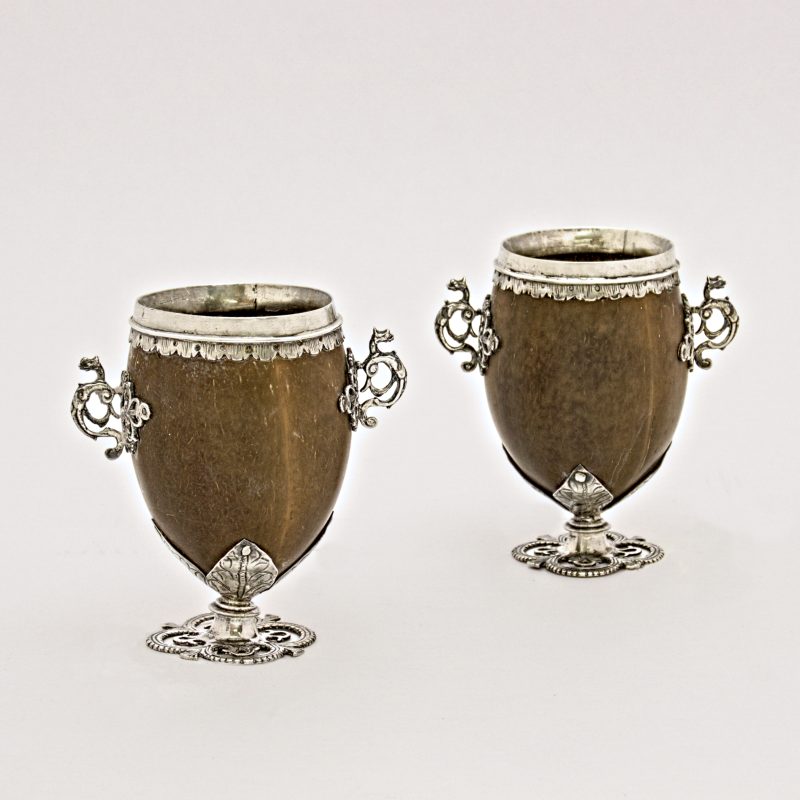 Pair of Chocolate Cups, c. 1730
Discover the Object →
Pair of Chocolate Cups, c. 1730
Discover the Object →
Reviews
There are no reviews yet.