
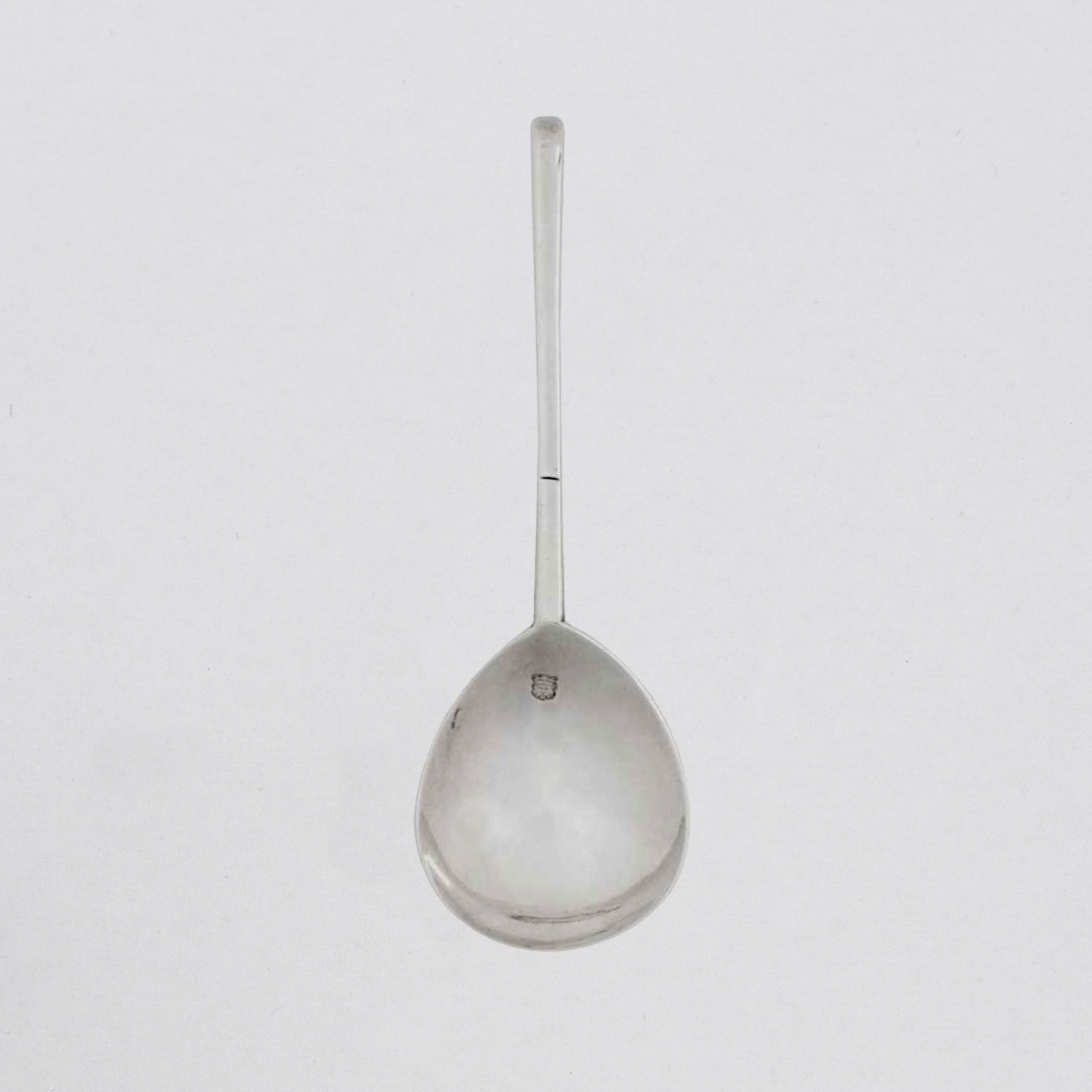
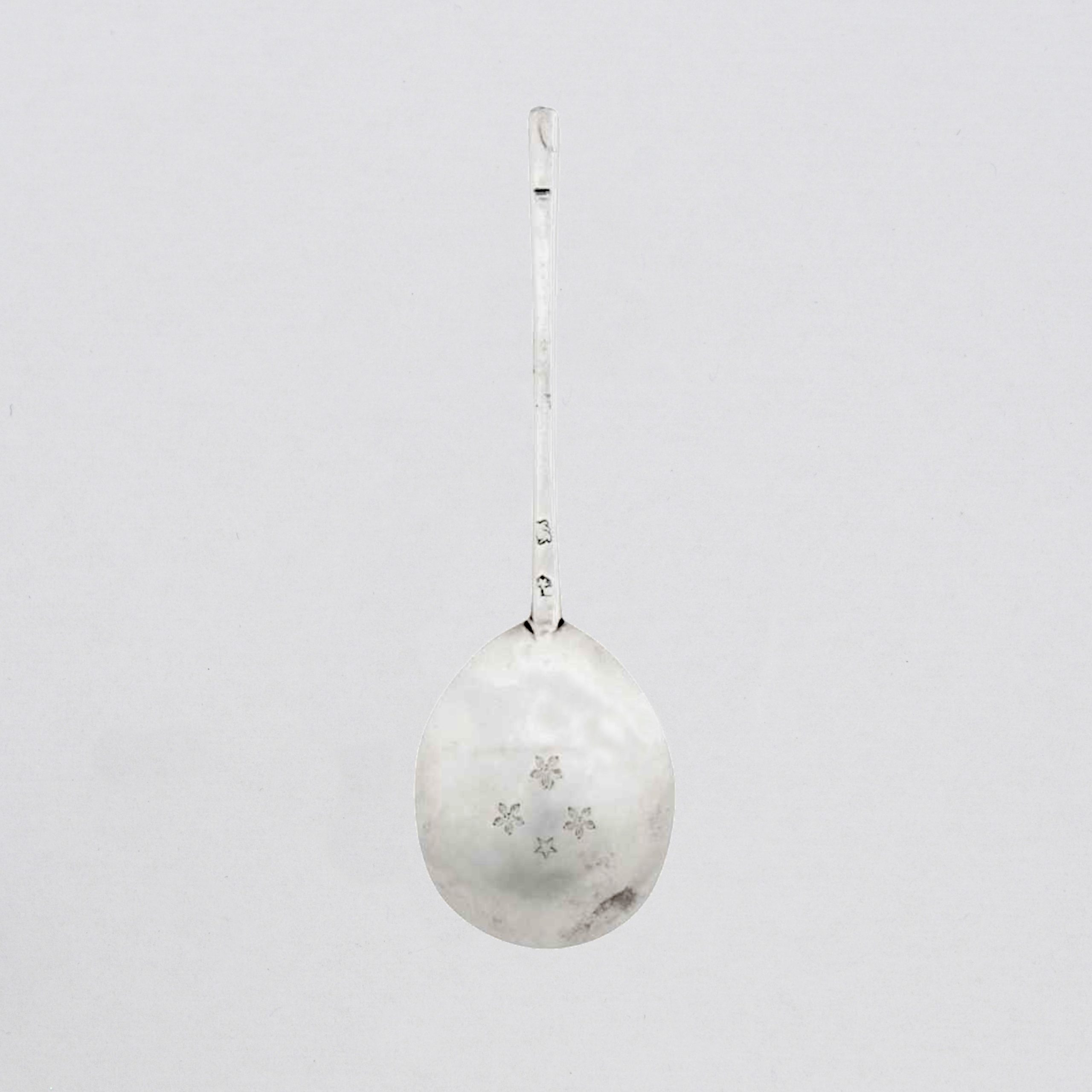
Silver Slip-top Spoon, c. 1630
London
Maker's mark attributed to Robert Jygges
Length: 6 ½ inches; Weight: 1 oz. 4 dwt.
A silver spoon in the typical slip-top form, with fig-shaped bowl and faceted stem. The reverse of the bowl bears a later heraldic engraving of three cinquefoils with a mullet cadency mark.
The heraldic engraving pertains to William Beckford (1660-1844). Beckford habitually incorporated heraldic symbols in his collected works, including engravings on silver. The Hamilton cinquefoil device with the cadency mark for a third son indicates Beckford's maternal grandfather, George Hamilton (1697-1775). The same cinquefoil motif appears prominently on a sideboard dish of 1814 made for Beckford, in the Victoria & Albert Museum collection (M.47-1980).
The maker's mark, RI with a mullet below in a plain shield, has been attributed by both Timothy Kent and David Mitchell to Robert Jygges. Jygges, free 1626, was apprenticed to the famous spoonmaker John Feake, and was himself a prolific spoonmaker. He was involved in a number of political actions concerning the goldsmiths, and he was among the numerous silversmiths of the period who was repeatedly punished for work of substandard silver content.
References:
David Mitchell, Silversmiths in Elizabethan and Stuart London: Their Lives and Their Marks, Woodbridge: Boydell Press, 2017, pp. 453-454.
Timothy Kent, London Silver Spoonmakers 1500-1697, The Silver Society 1981, p. 43.
A silver spoon in the typical slip-top form, with fig-shaped bowl and faceted stem. The reverse of the bowl bears a later heraldic engraving of three cinquefoils with a mullet cadency mark.
The heraldic engraving pertains to William Beckford (1660-1844). Beckford habitually incorporated heraldic symbols in his collected works, including engravings on silver. The Hamilton cinquefoil device with the cadency mark for a third son indicates Beckford’s maternal grandfather, George Hamilton (1697-1775). The same cinquefoil motif appears prominently on a sideboard dish of 1814 made for Beckford, in the Victoria & Albert Museum collection (M.47-1980).
The maker’s mark, RI with a mullet below in a plain shield, has been attributed by both Timothy Kent and David Mitchell to Robert Jygges. Jygges, free 1626, was apprenticed to the famous spoonmaker John Feake, and was himself a prolific spoonmaker. He was involved in a number of political actions concerning the goldsmiths, and he was among the numerous silversmiths of the period who was repeatedly punished for work of substandard silver content.
References:
David Mitchell, Silversmiths in Elizabethan and Stuart London: Their Lives and Their Marks, Woodbridge: Boydell Press, 2017, pp. 453-454.
Timothy Kent, London Silver Spoonmakers 1500-1697, The Silver Society 1981, p. 43.
-
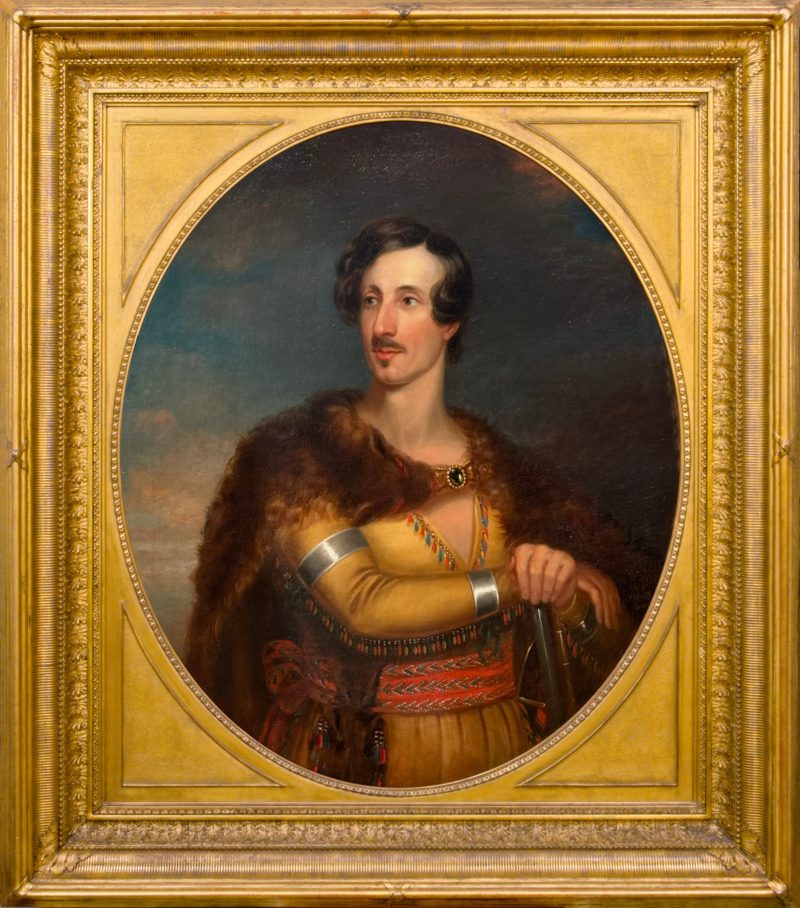 Portrait of Edward Seguin, 1840
Discover the Object →
Portrait of Edward Seguin, 1840
Discover the Object →
-
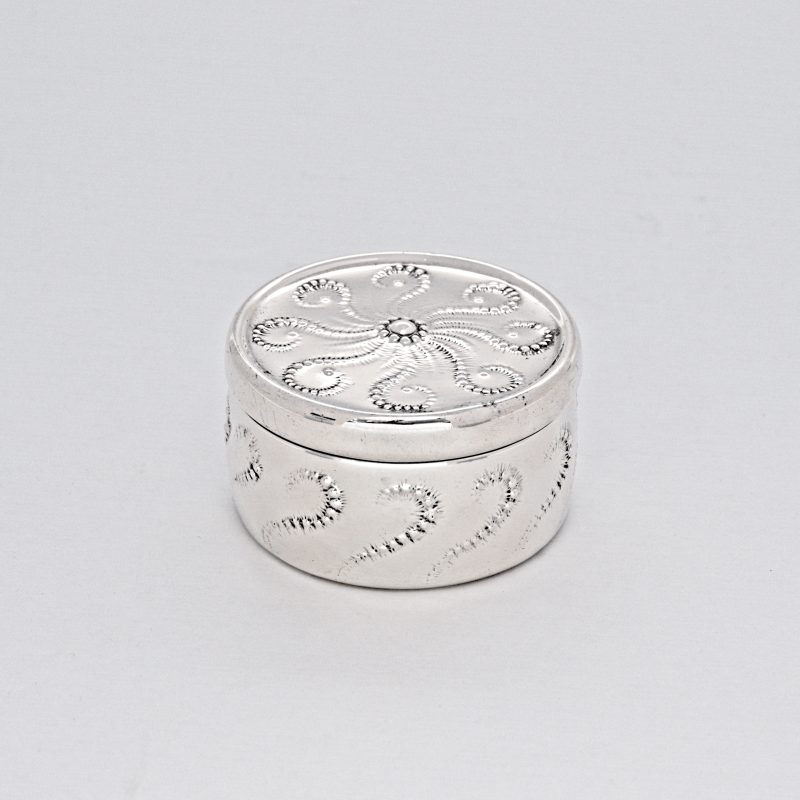 Aesthetic Movement Silver Box, c. 1883
Discover the Object →
Aesthetic Movement Silver Box, c. 1883
Discover the Object →
-
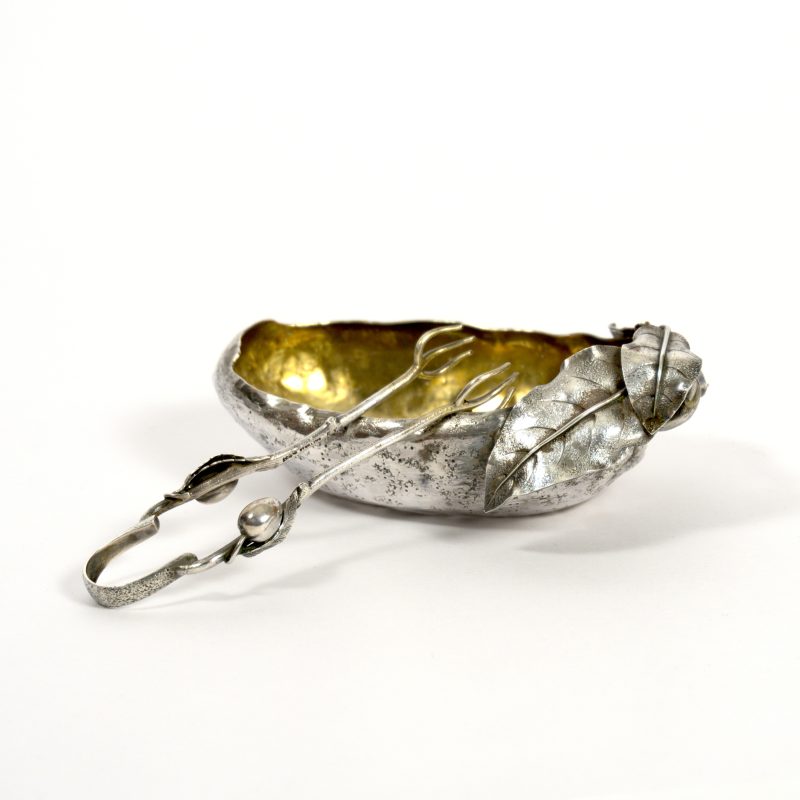 Silver Olive Dish and Tongs, 1884
Discover the Object →
Silver Olive Dish and Tongs, 1884
Discover the Object →
Reviews
There are no reviews yet.