
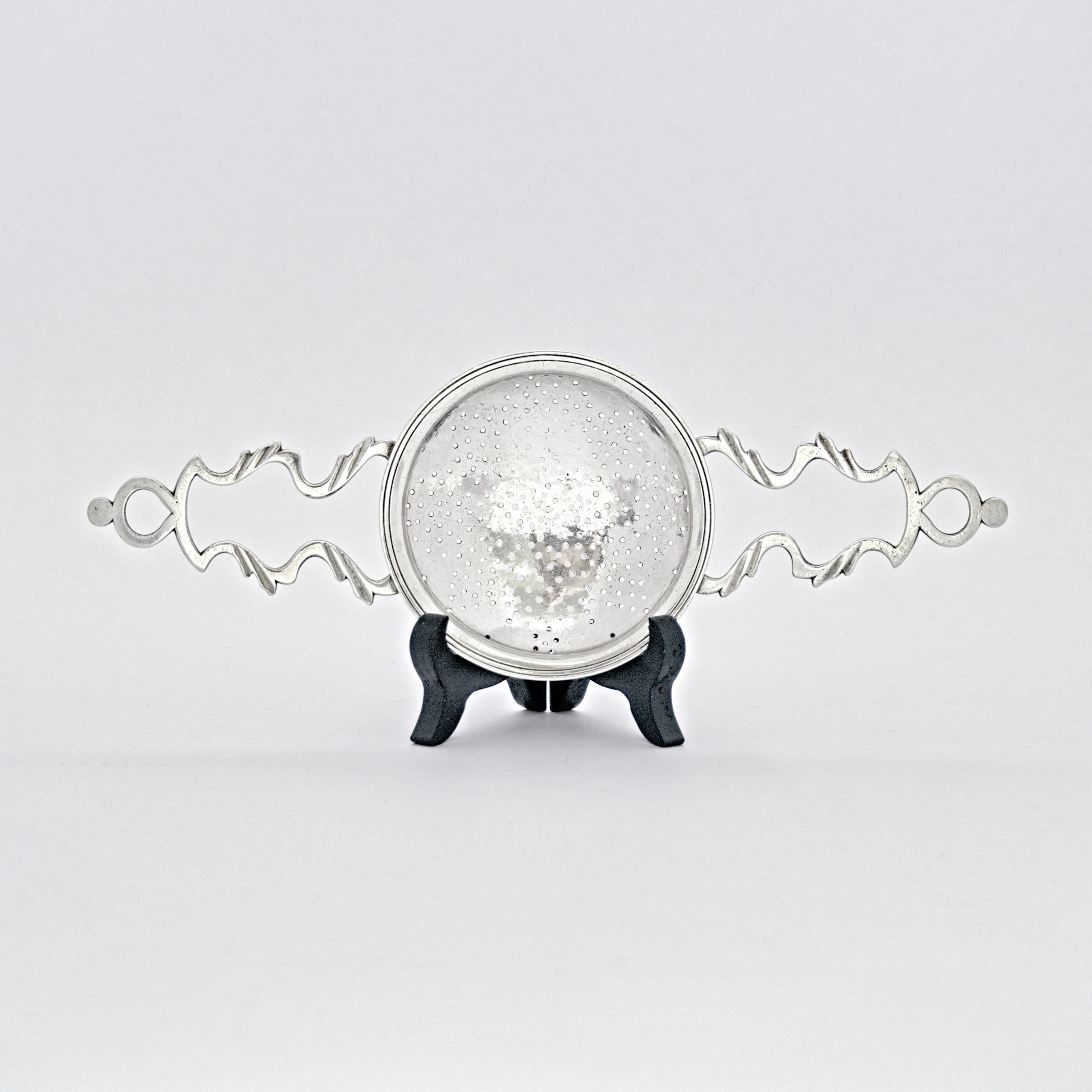
Silver Punch Strainer, c. 1765
Boston, by Daniel Parker
Length: 11 1/4 in.
Weight: 4 oz. 16 dwt.
This strainer is a notable survival from the workshop of Daniel Parker, a Boston silversmith whose career spanned the professional heights of the colonial era and the political fervor of the Revolution. The punch strainer is an exceptionally rare form in early American silver. As a member of the Sons of Liberty and a colleague of Paul Revere, Parker was deeply embedded in the social and political circles that utilized such vessels for communal gatherings.
Born in Charlestown and having probably trained under Samuel Edwards, Daniel Parker opened his shop by 1750 and would establish himself as one of Boston's most commercially successful silversmiths. His shop at the "Sign of Admiral Vernon" and later locations near the Golden Ball became hubs not just for his own silver, but for imported jeweler’s and watchmaker’s tools that he retailed to other craftsmen. Parker’s civic involvement was extensive; he served the town of Boston as a market clerk, warden, and tax collector. He was one of the fifteen Sons of Liberty who commissioned Paul Revere's famed 1768 bowl to protest the Townshend Acts.
In the 18th century, punch was a central fixture of both domestic and tavern life, served in large communal bowls to signify shared purpose and conviviality. Unlike individual drinks, punch was an elaborate concoction of citrus, sugar, spices, and spirits. The strainer was an essential tool for this ritual, used to catch seeds and pulp while pouring the liquid into the bowl. It was an object that facilitated the slow, conversational pace of colonial entertainment.
The form is quite uncommon. Pat Kane identifies only six extant punch strainers bearing Parker’s mark (the present example not included), four of which are held in permanent museum collections. The design of the handles—notably similar to an example by Paul Revere in the Garvan collection at Yale University (no. 1930.971, https://artgallery.yale.edu/collections/objects/35098)—reflects the common sharing and exchange of inventory and components among the elite silversmiths of Boston's North End. A nearly identical piece with a differing piercing pattern was advertised by Roland B. Hammond, North Andover, MA, in The Magazine Antiques, Nov. 1970, p. 739.
This strainer is a notable survival from the workshop of Daniel Parker, a Boston silversmith whose career spanned the professional heights of the colonial era and the political fervor of the Revolution. The punch strainer is an exceptionally rare form in early American silver. As a member of the Sons of Liberty and a colleague of Paul Revere, Parker was deeply embedded in the social and political circles that utilized such vessels for communal gatherings.
Born in Charlestown and having probably trained under Samuel Edwards, Daniel Parker opened his shop by 1750 and would establish himself as one of Boston’s most commercially successful silversmiths. His shop at the “Sign of Admiral Vernon” and later locations near the Golden Ball became hubs not just for his own silver, but for imported jeweler’s and watchmaker’s tools that he retailed to other craftsmen. Parker’s civic involvement was extensive; he served the town of Boston as a market clerk, warden, and tax collector. He was one of the fifteen Sons of Liberty who commissioned Paul Revere’s famed 1768 bowl to protest the Townshend Acts.
In the 18th century, punch was a central fixture of both domestic and tavern life, served in large communal bowls to signify shared purpose and conviviality. Unlike individual drinks, punch was an elaborate concoction of citrus, sugar, spices, and spirits. The strainer was an essential tool for this ritual, used to catch seeds and pulp while pouring the liquid into the bowl. It was an object that facilitated the slow, conversational pace of colonial entertainment.
The form is quite uncommon. Pat Kane identifies only six extant punch strainers bearing Parker’s mark (the present example not included), four of which are held in permanent museum collections. The design of the handles—notably similar to an example by Paul Revere in the Garvan collection at Yale University (no. 1930.971, https://artgallery.yale.edu/collections/objects/35098)—reflects the common sharing and exchange of inventory and components among the elite silversmiths of Boston’s North End. A nearly identical piece with a differing piercing pattern was advertised by Roland B. Hammond, North Andover, MA, in The Magazine Antiques, Nov. 1970, p. 739.
-
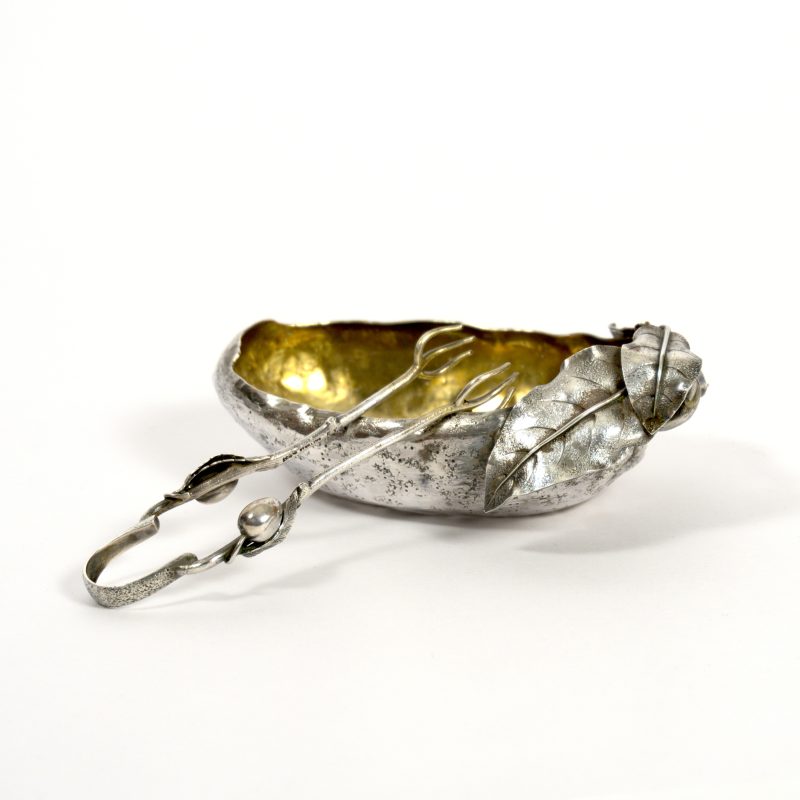 Silver Olive Dish and Tongs, 1884
Discover the Object →
Silver Olive Dish and Tongs, 1884
Discover the Object →
-
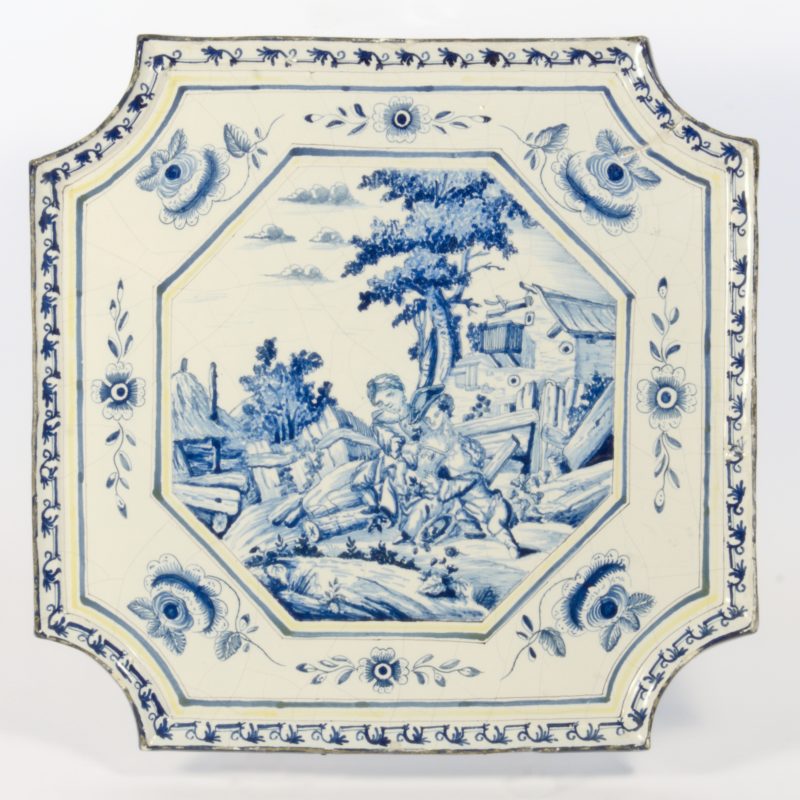 Delftware Plaque, c. 1885
Discover the Object →
Delftware Plaque, c. 1885
Discover the Object →
-
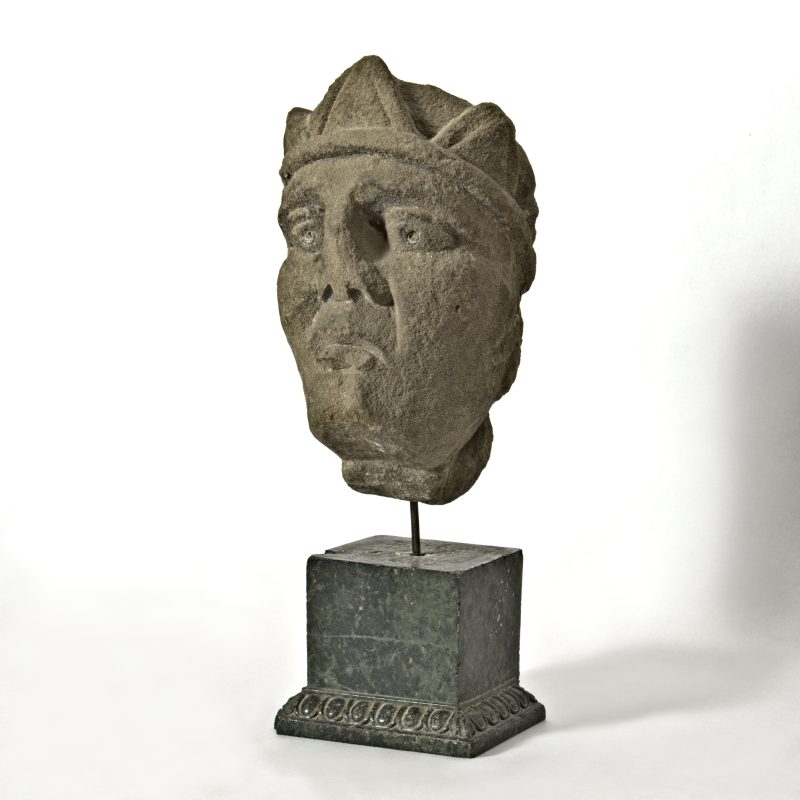 Sandstone Corbel with the Head of a King, c. 14th century
Discover the Object →
Sandstone Corbel with the Head of a King, c. 14th century
Discover the Object →
Reviews
There are no reviews yet.