
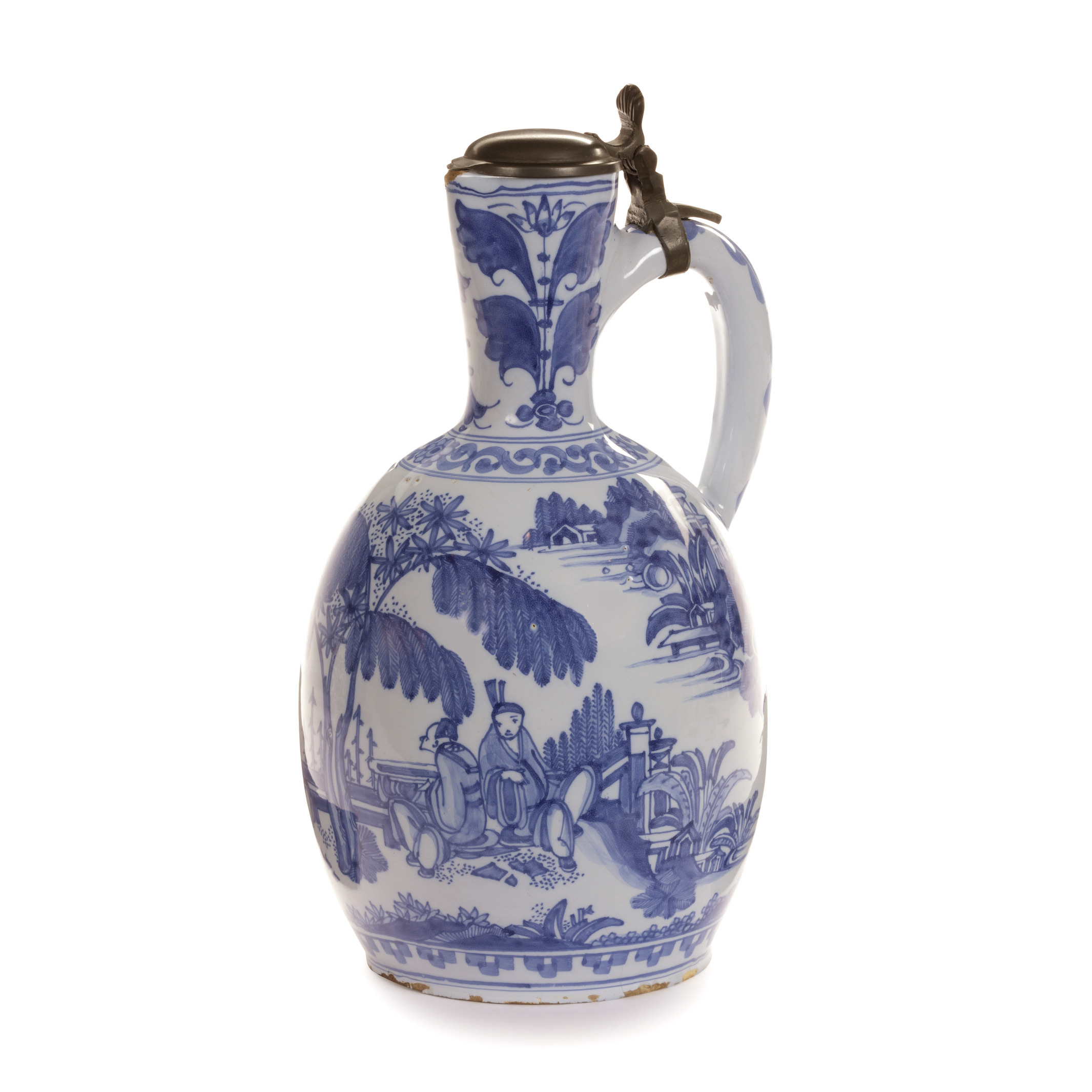
Delftware Jug
Price on request
This elegant jug, or pul, illustrates the ingenuity of 17th-century Delft potters who sought to capture the prestige of Chinese porcelain within a traditional European form. Fitted with a functional pewter lid, this vessel would have been a prized domestic object, signaling the owner’s connection to the burgeoning global trade networks of the Dutch Golden Age.
Between 1630 and 1640, superior quality porcelain wares were imported into Holland from China. Known as ‘transitional wares,’ this porcelain supplied a source of inspiration for Delft potters. The term "transitional" refers to the political changes in China that transpired after the death of emperor Wanli (1619), which ultimately led to the fall of the Ming and the establishment of the Qing Dynasty (1644). In contrast to the earlier Kraak pieces, transitional wares were not divided into panels. Instead, the entire area was covered with a continuous scene that often consisted of landscapes with animals or figures either conversing or in a moment of spirited action.
Early jugs like the present can be attributed to a group of faience that is decorated with chinoiserie scenes of figures seated in a landscape of rocks and trees and was manufactured between 1660 and 1680. During the period between about 1920 and 1990, objects of this type of decoration were attributed to the relatively small faience manufactory in Frankfurt-am-Main in Germany. However, on the basis of art, archaeology and other supporting evidence, we can re-attribute such pieces confidently to Delft.
Provenance:
Belgian Private Collection
This elegant jug, or pul, illustrates the ingenuity of 17th-century Delft potters who sought to capture the prestige of Chinese porcelain within a traditional European form. Fitted with a functional pewter lid, this vessel would have been a prized domestic object, signaling the owner’s connection to the burgeoning global trade networks of the Dutch Golden Age.
Between 1630 and 1640, superior quality porcelain wares were imported into Holland from China. Known as ‘transitional wares,’ this porcelain supplied a source of inspiration for Delft potters. The term “transitional” refers to the political changes in China that transpired after the death of emperor Wanli (1619), which ultimately led to the fall of the Ming and the establishment of the Qing Dynasty (1644). In contrast to the earlier Kraak pieces, transitional wares were not divided into panels. Instead, the entire area was covered with a continuous scene that often consisted of landscapes with animals or figures either conversing or in a moment of spirited action.
Early jugs like the present can be attributed to a group of faience that is decorated with chinoiserie scenes of figures seated in a landscape of rocks and trees and was manufactured between 1660 and 1680. During the period between about 1920 and 1990, objects of this type of decoration were attributed to the relatively small faience manufactory in Frankfurt-am-Main in Germany. However, on the basis of art, archaeology and other supporting evidence, we can re-attribute such pieces confidently to Delft.
Provenance:
Belgian Private Collection
-
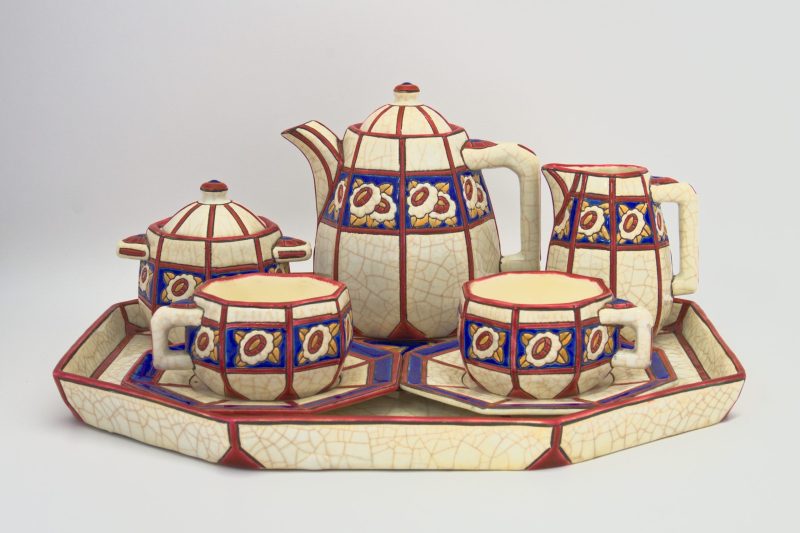 French Ceramic Tea Service, c. 1920
Discover the Object →
French Ceramic Tea Service, c. 1920
Discover the Object →
-
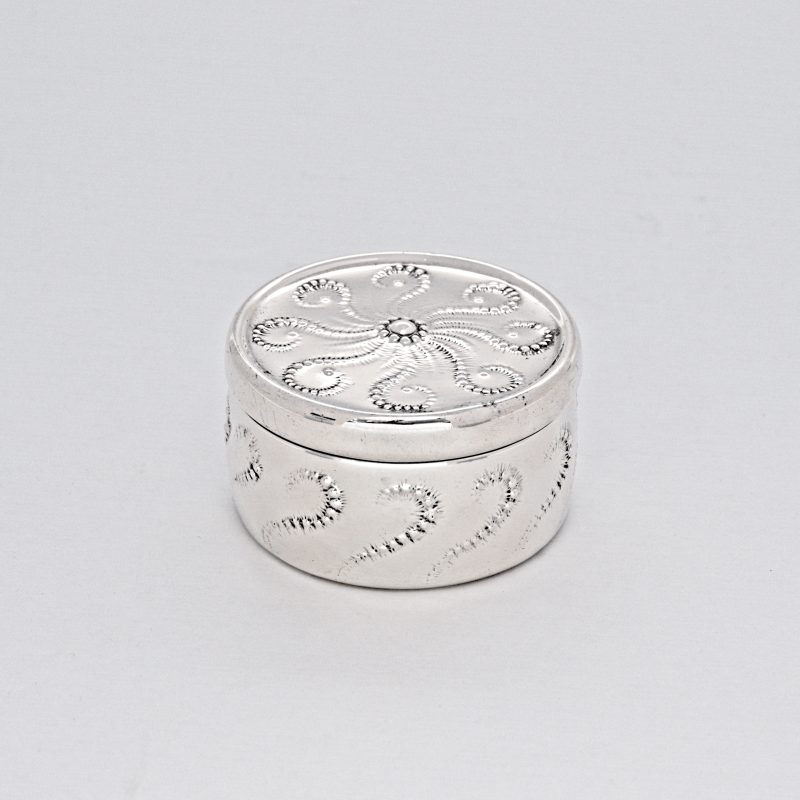 Aesthetic Movement Silver Box, c. 1883
Discover the Object →
Aesthetic Movement Silver Box, c. 1883
Discover the Object →
-
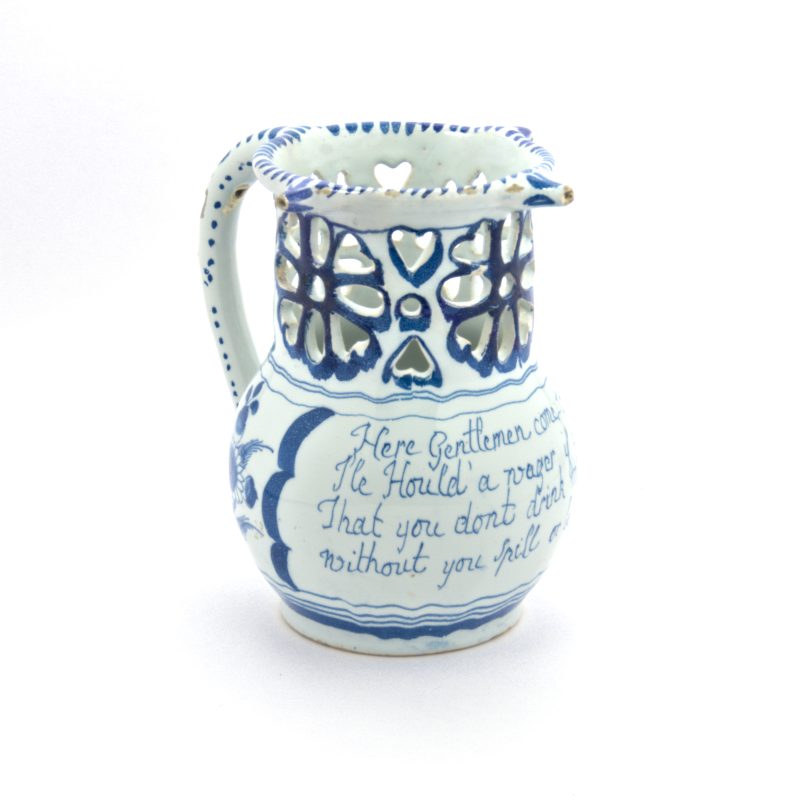 Puzzle Jug, c. 1760
Discover the Object →
Puzzle Jug, c. 1760
Discover the Object →
Reviews
There are no reviews yet.