
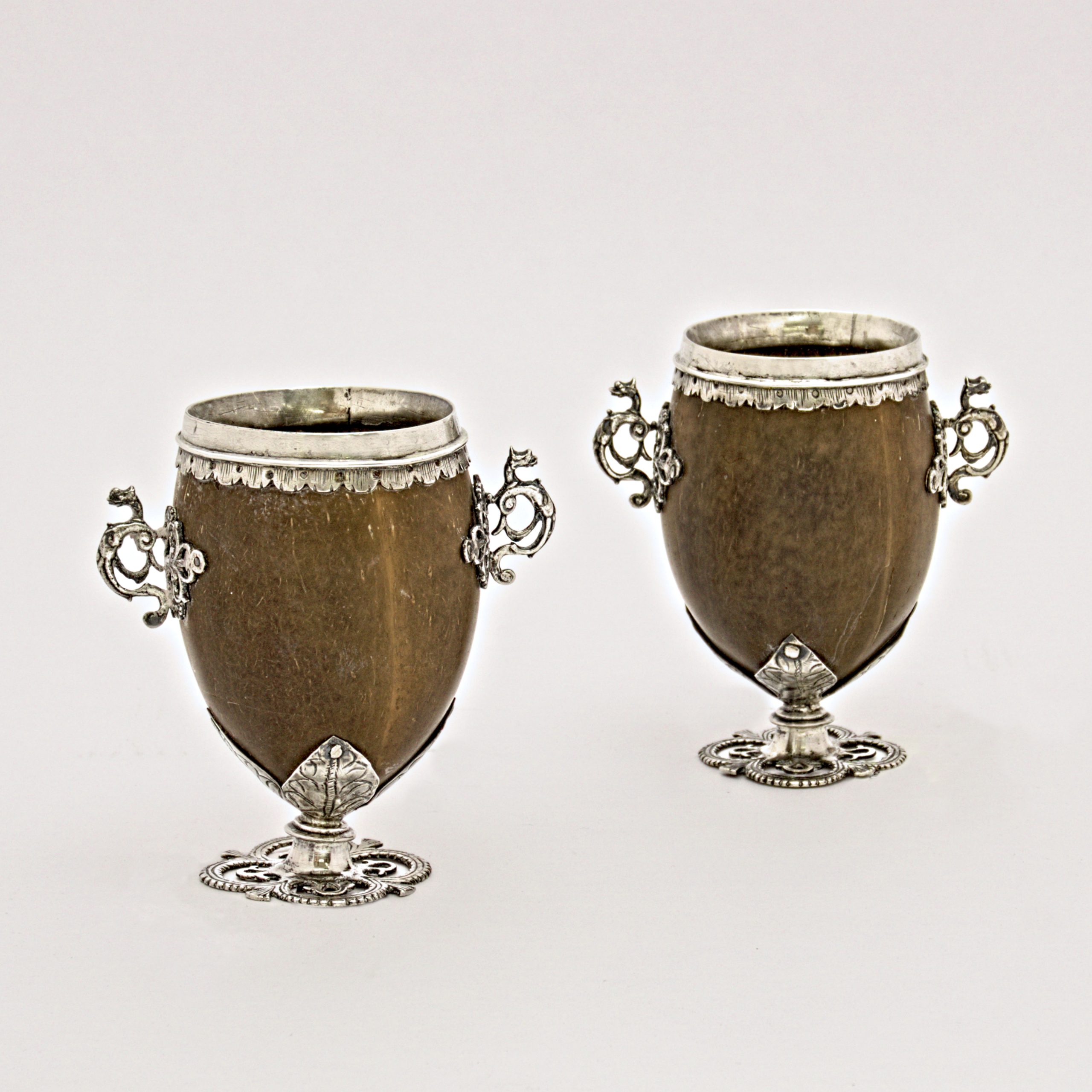
Pair of Chocolate Cups, c. 1730
$2,800
In the 18th-century Spanish colonies, the consumption of chocolate was a highly codified social ritual that signaled both wealth and status. These jícaras represent a unique material fusion of indigenous American tradition and European luxury. While chocolate was originally a sacred Aztec and Mayan beverage, the Spanish elite in New Spain elevated its service by mounting humble organic shells in precious silver, creating a sophisticated centerpiece for the colonial drawing room.
The choice of coconut shell was as much about status as it was about sensory experience. Coconuts were prized for their durability, their ability to hold heat without burning the hands, and their deep, lustrous grain, which was often polished to a high sheen to mimic expensive imported lacquer. The silver mounts on these examples—characterized by the delicate, rhythmic scalloping and scrolled handles typical of the 1730s—provided the necessary stability for the rounded shells to stand upright on a table.
The term jícara comes from the Nahuatl word xicalli, which originally referred to cups made from the calabash fruit. Because the shape and use were identical, the name was eventually applied to these coconut versions as well. By the mid-18th century, these "coco-plata" vessels had become iconic artifacts of the Vice-royalties, exported back to Europe as curiosities of the "New World" and retained locally as essential components of the aristocratic chocolate service.
Similar examples of silver-mounted coconuts from this period are preserved in the Museo de América in Madrid and the Hispanic Society of America in New York, enduring testaments to the complex intercultural exchange of the colonial era.
In the 18th-century Spanish colonies, the consumption of chocolate was a highly codified social ritual that signaled both wealth and status. These jícaras represent a unique material fusion of indigenous American tradition and European luxury. While chocolate was originally a sacred Aztec and Mayan beverage, the Spanish elite in New Spain elevated its service by mounting humble organic shells in precious silver, creating a sophisticated centerpiece for the colonial drawing room.
The choice of coconut shell was as much about status as it was about sensory experience. Coconuts were prized for their durability, their ability to hold heat without burning the hands, and their deep, lustrous grain, which was often polished to a high sheen to mimic expensive imported lacquer. The silver mounts on these examples—characterized by the delicate, rhythmic scalloping and scrolled handles typical of the 1730s—provided the necessary stability for the rounded shells to stand upright on a table.
The term jícara comes from the Nahuatl word xicalli, which originally referred to cups made from the calabash fruit. Because the shape and use were identical, the name was eventually applied to these coconut versions as well. By the mid-18th century, these “coco-plata” vessels had become iconic artifacts of the Vice-royalties, exported back to Europe as curiosities of the “New World” and retained locally as essential components of the aristocratic chocolate service.
Similar examples of silver-mounted coconuts from this period are preserved in the Museo de América in Madrid and the Hispanic Society of America in New York, enduring testaments to the complex intercultural exchange of the colonial era.
-
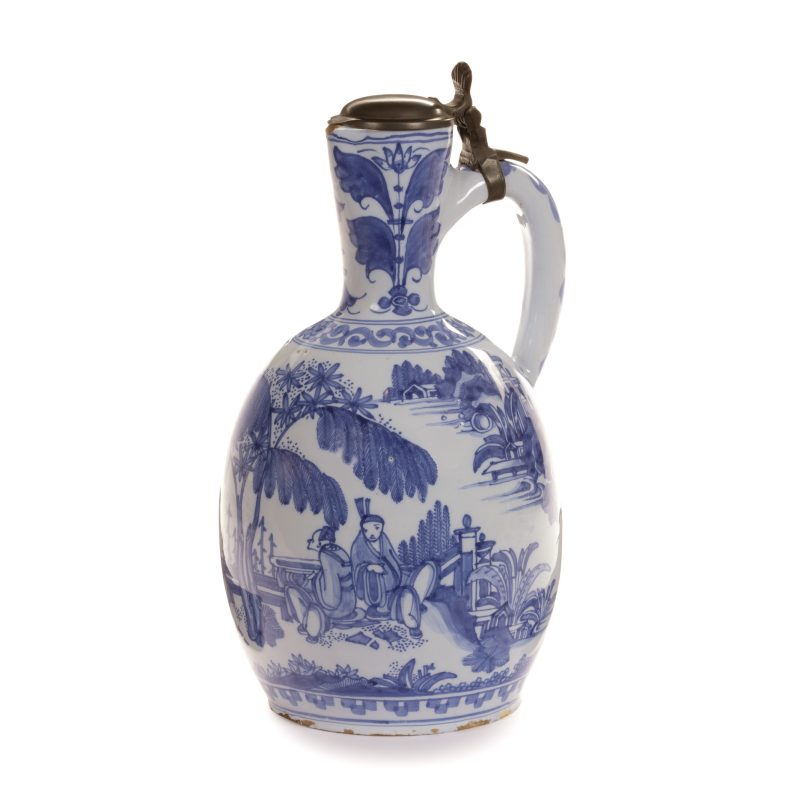 Delftware Jug
Discover the Object →
Delftware Jug
Discover the Object →
-
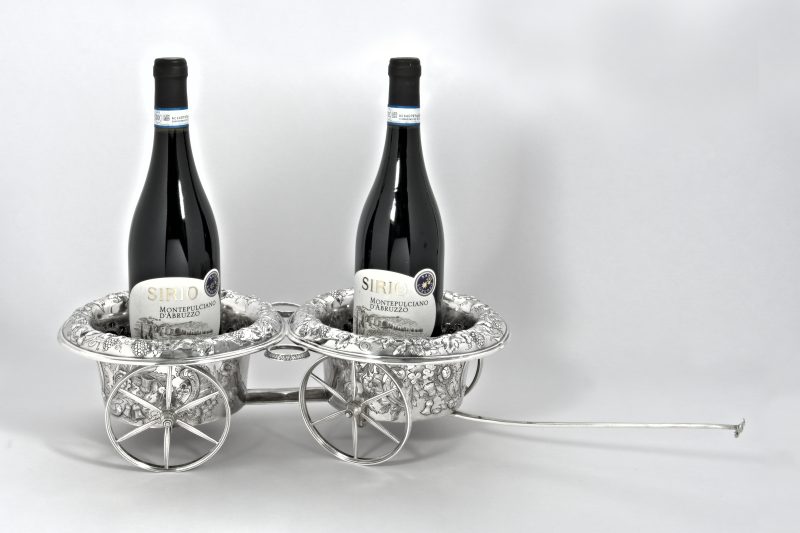 Silver Wine Wagon, c. 1850
Discover the Object →
Silver Wine Wagon, c. 1850
Discover the Object →
-
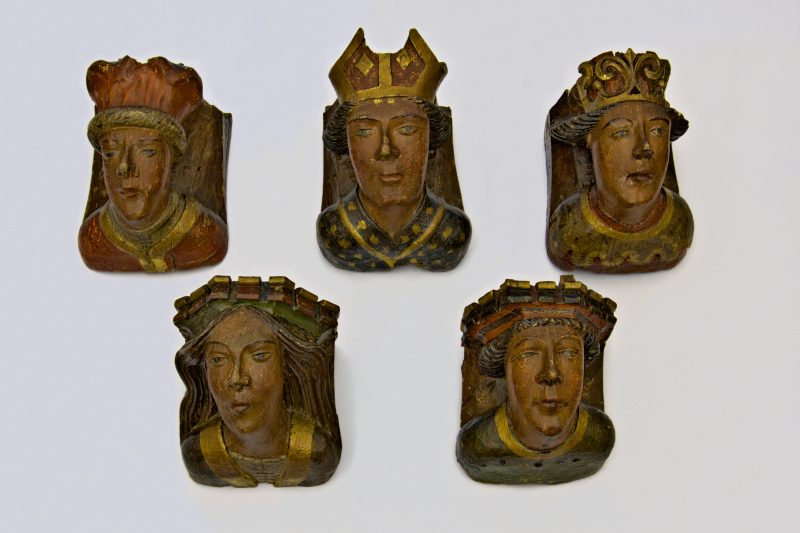 Set of Five Medieval Corbels, c. 1450-1500
Discover the Object →
Set of Five Medieval Corbels, c. 1450-1500
Discover the Object →
Reviews
There are no reviews yet.