
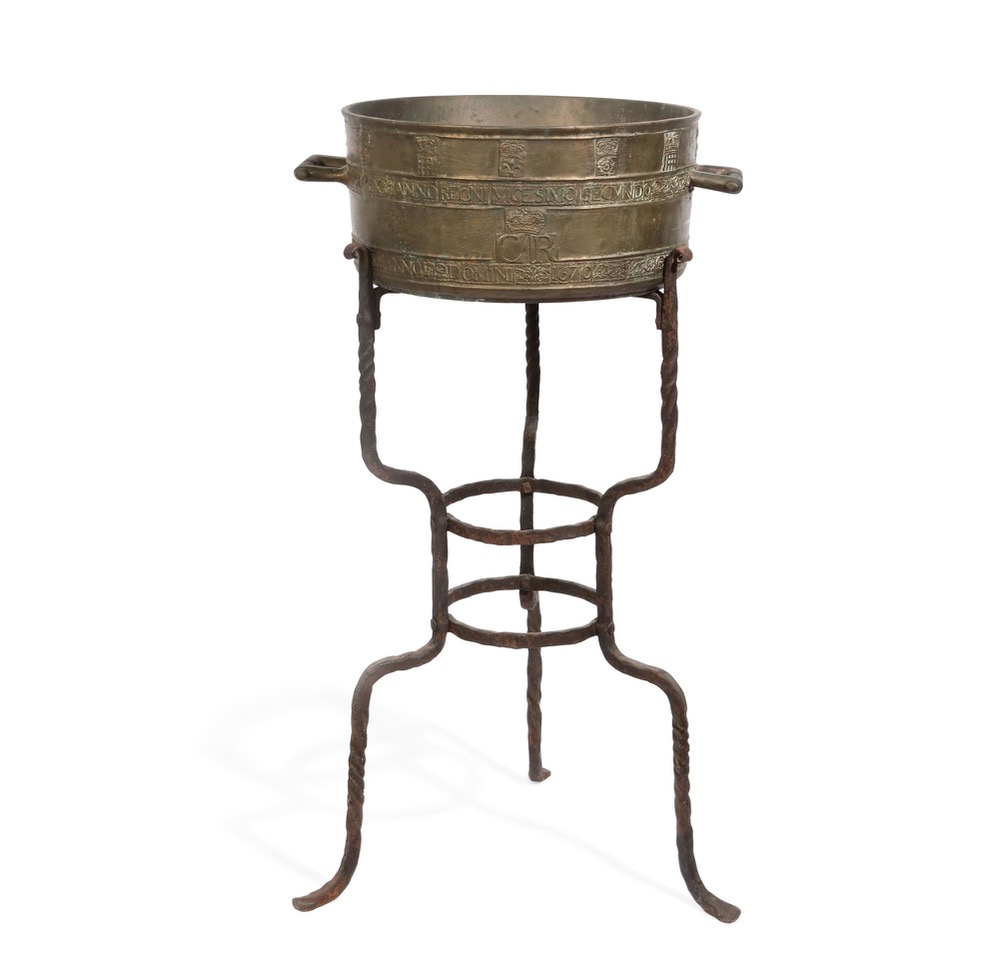
Bushel Measure, 1670
$35,000
York, England
Bronze, on wrought iron stand
Diameter: 19¾ in. (without handles); height of measure: 9¾ in.; height including stand: 40½ in.
It is accorded and assented, That all the Measures, that is to say, Bushels, Half-bushels, Peck, Gallon, Pottle, and Quart, throughout England, within the Franchises and without, shall be according to the King's Standard; and the Quarter shall contain Eight Bushels by the Standard, and no more.
- Magna Carta
Standards of weights and measures were a critical matter in medieval and Renaissance England. Commerce suffered without consistent and reliable measures, and a series of laws beginning with the Magna Carta attempted to standardize the quantities used by merchants across the realm. One such law was enacted by King Charles II in 1670, the very year this bronze bushel measure was made. It set forth the penalties for using non-standard bushels and required a standard measure to be "chained" in every public marketplace.
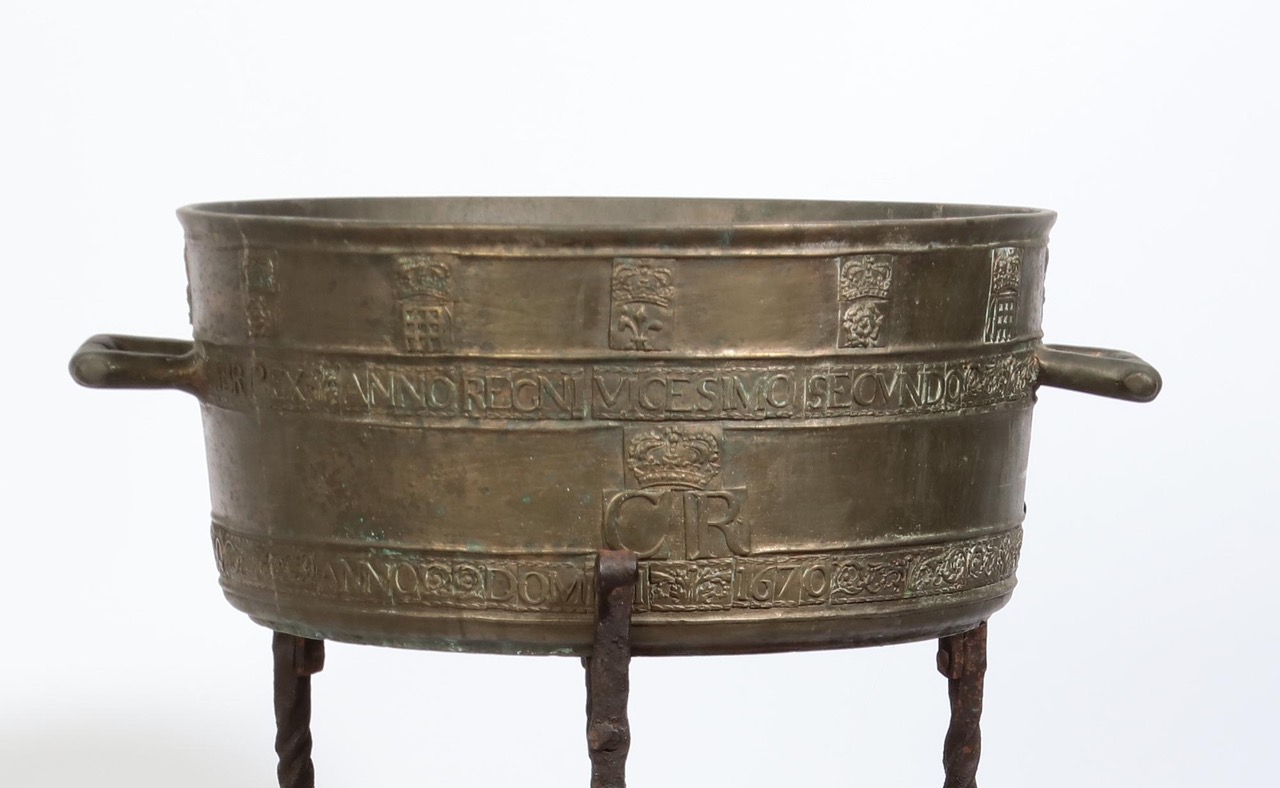
This extremely rare measure bears cast and applied lettering reading:
ROBERT DOLMAN OF POCKLINGTON ESQ
HIBR: REX CAROLUS SECUNDUS DEI GRATIA MAG: FRA:
ANNO DOMINI 1670
As well as Royal devices of crowned portcullis, roses and fleurs d’lys, and a crowned “CR” for King Charles II.
Robert Dolman of Pocklington (c. 1626 - 1685) was a Royalist and, judging from this piece, was likely charged with local regulation of weights and measures. The stand may have been made for the piece at the same time that five small holes were drilled in the center to make it useful as a planter.
17th century measures are scarce, with only a handful of bushel measures surviving. This example in the Science Museum Group collection dates to 1673; while Christie's sold this undated example in 2000 ("The Contents of Grimshaw Hall", London, 8 Mar 2000, lot 92, £8050).
It is accorded and assented, That all the Measures, that is to say, Bushels, Half-bushels, Peck, Gallon, Pottle, and Quart, throughout England, within the Franchises and without, shall be according to the King’s Standard; and the Quarter shall contain Eight Bushels by the Standard, and no more.
– Magna Carta
Standards of weights and measures were a critical matter in medieval and Renaissance England. Commerce suffered without consistent and reliable measures, and a series of laws beginning with the Magna Carta attempted to standardize the quantities used by merchants across the realm. One such law was enacted by King Charles II in 1670, the very year this bronze bushel measure was made. It set forth the penalties for using non-standard bushels and required a standard measure to be “chained” in every public marketplace.
This extremely rare measure bears cast and applied lettering reading:
ROBERT DOLMAN OF POCKLINGTON ESQ
HIBR: REX CAROLUS SECUNDUS DEI GRATIA MAG: FRA:
ANNO DOMINI 1670
As well as Royal devices of crowned portcullis, roses and fleurs d’lys, and a crowned “CR” for King Charles II.
Robert Dolman of Pocklington (c. 1626 – 1685) was a Royalist and, judging from this piece, was likely charged with local regulation of weights and measures. The stand may have been made for the piece at the same time that five small holes were drilled in the center to make it useful as a planter.
17th century measures are scarce, with only a handful of bushel measures surviving. This example in the Science Museum Group collection dates to 1673; while Christie’s sold this undated example in 2000 (“The Contents of Grimshaw Hall”, London, 8 Mar 2000, lot 92, £8050).
-
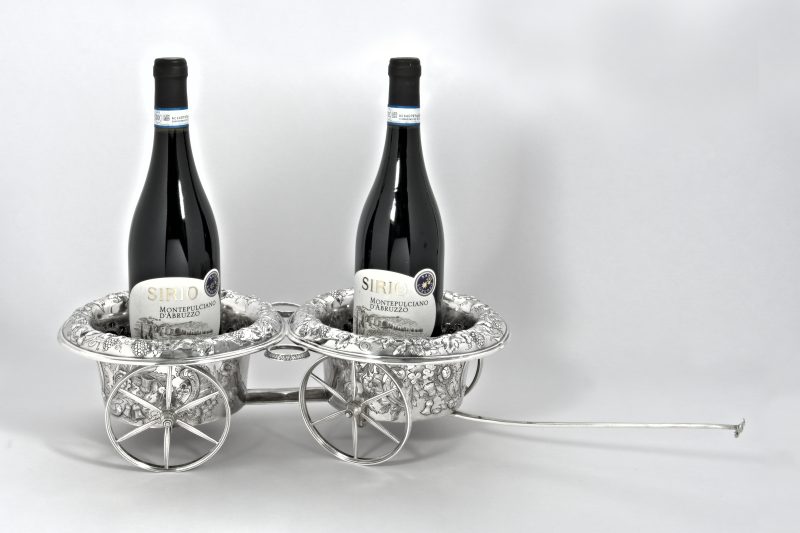 Silver Wine Wagon, c. 1850
Discover the Object →
Silver Wine Wagon, c. 1850
Discover the Object →
-
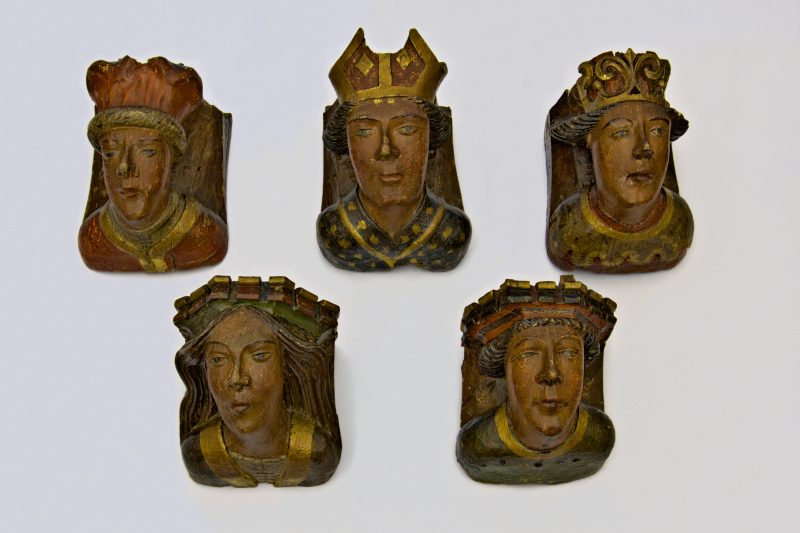 Set of Five Medieval Corbels, c. 1450-1500
Discover the Object →
Set of Five Medieval Corbels, c. 1450-1500
Discover the Object →
-
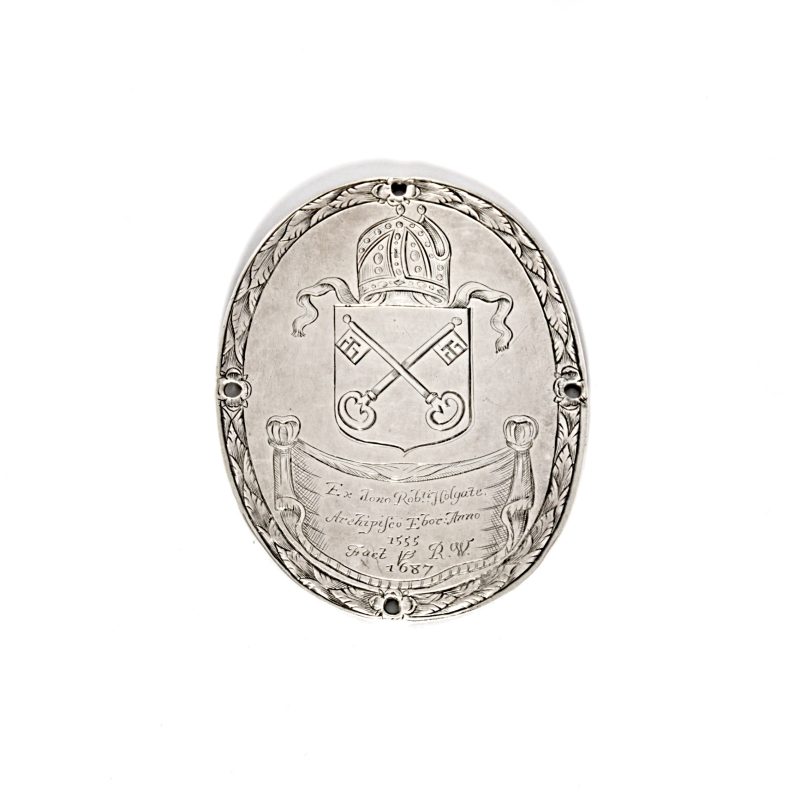 Silver Alms Badge, 1687
Discover the Object →
Silver Alms Badge, 1687
Discover the Object →
Reviews
There are no reviews yet.