
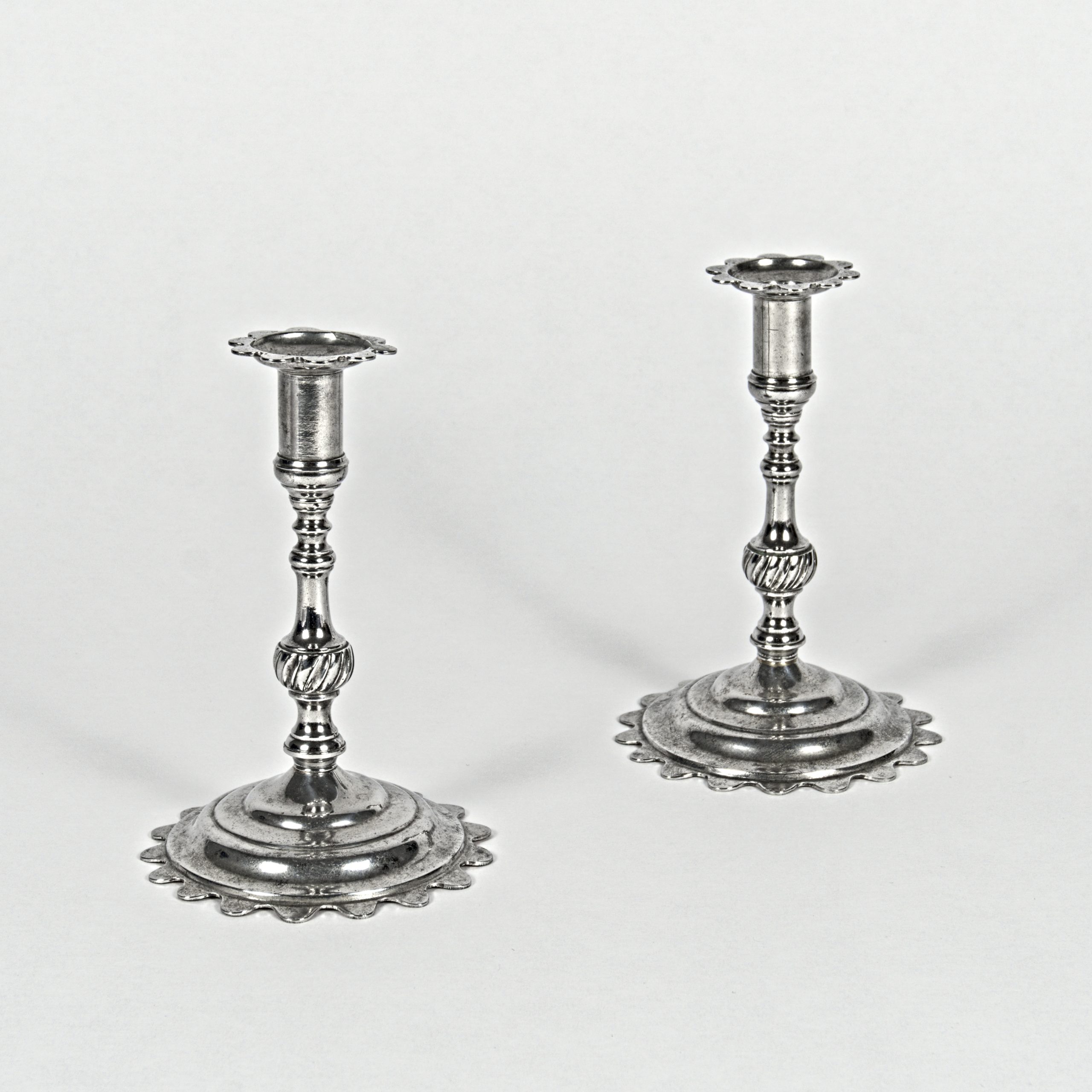
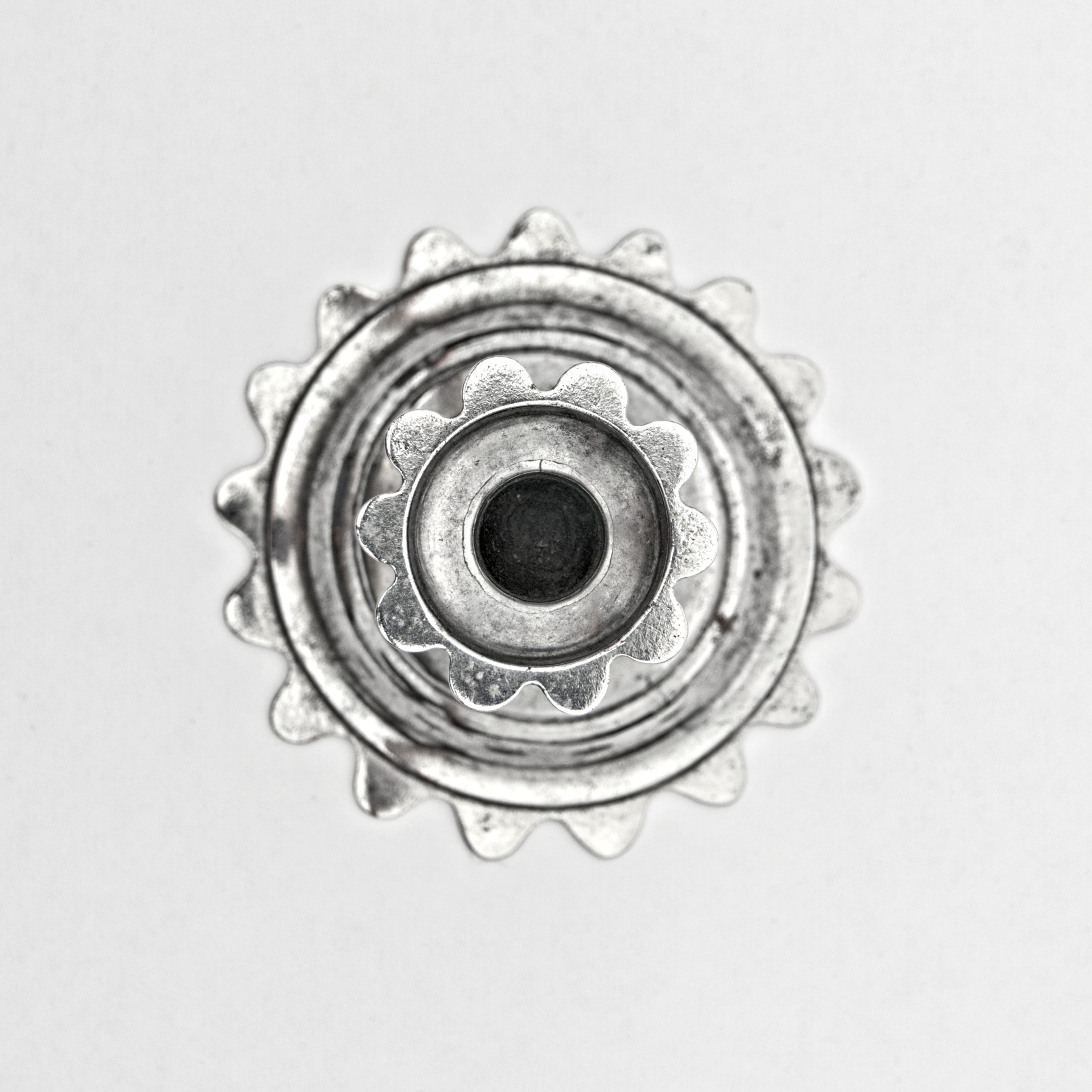
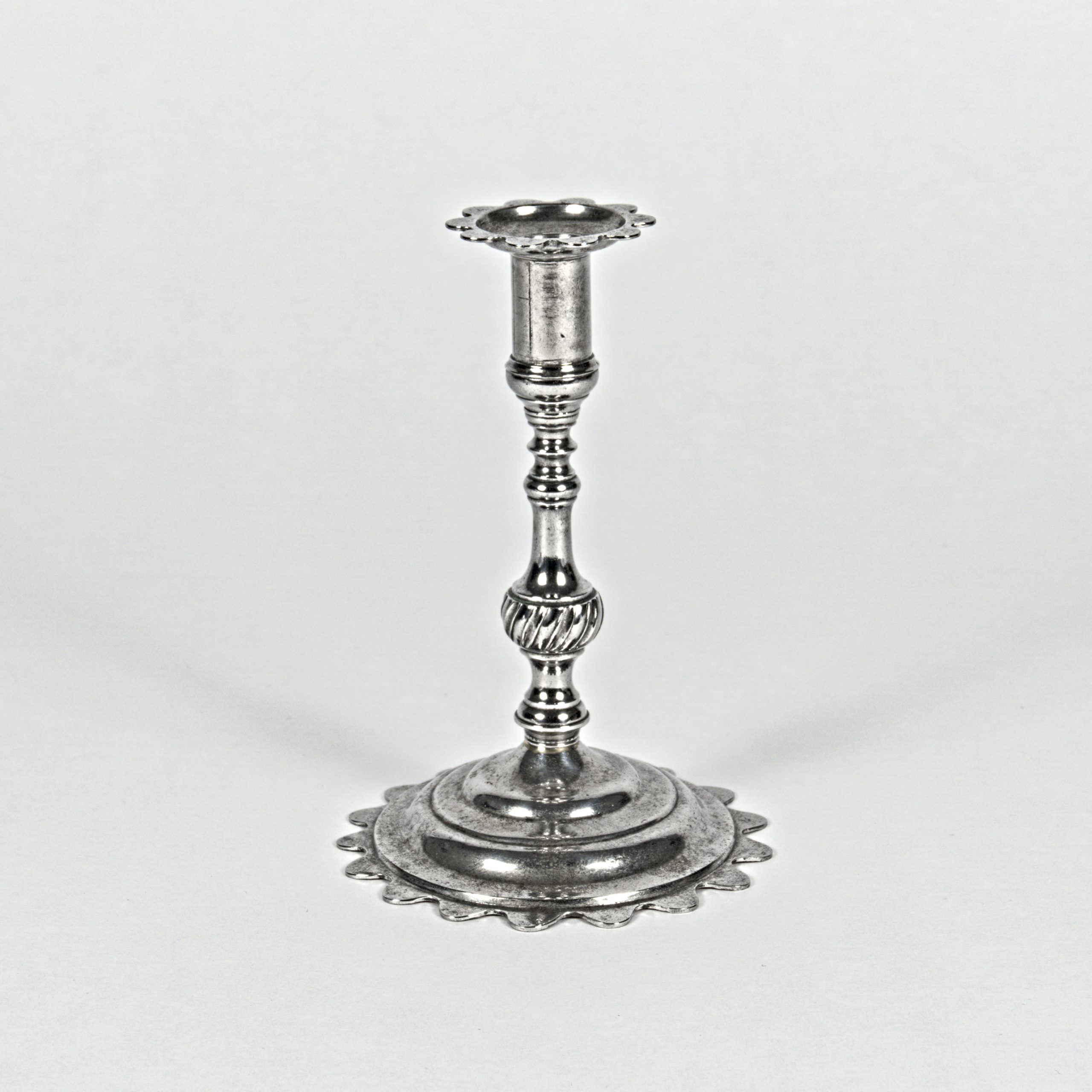
Pair of Steel Tapersticks, c. 1780
$11,500
Probably American
Height: 5 in.
A vanishingly rare survival of steel decorative arts from the 18th century.
Tapersticks (small candlesticks used to hold thin tapers for melting wax seals) are well known in brass and silver, but this pair's execution in steel is a mark of luxury and significant technical difficulty. They represent a complex intersection of early industrial capability and the high-status aesthetics of the Federal elite.
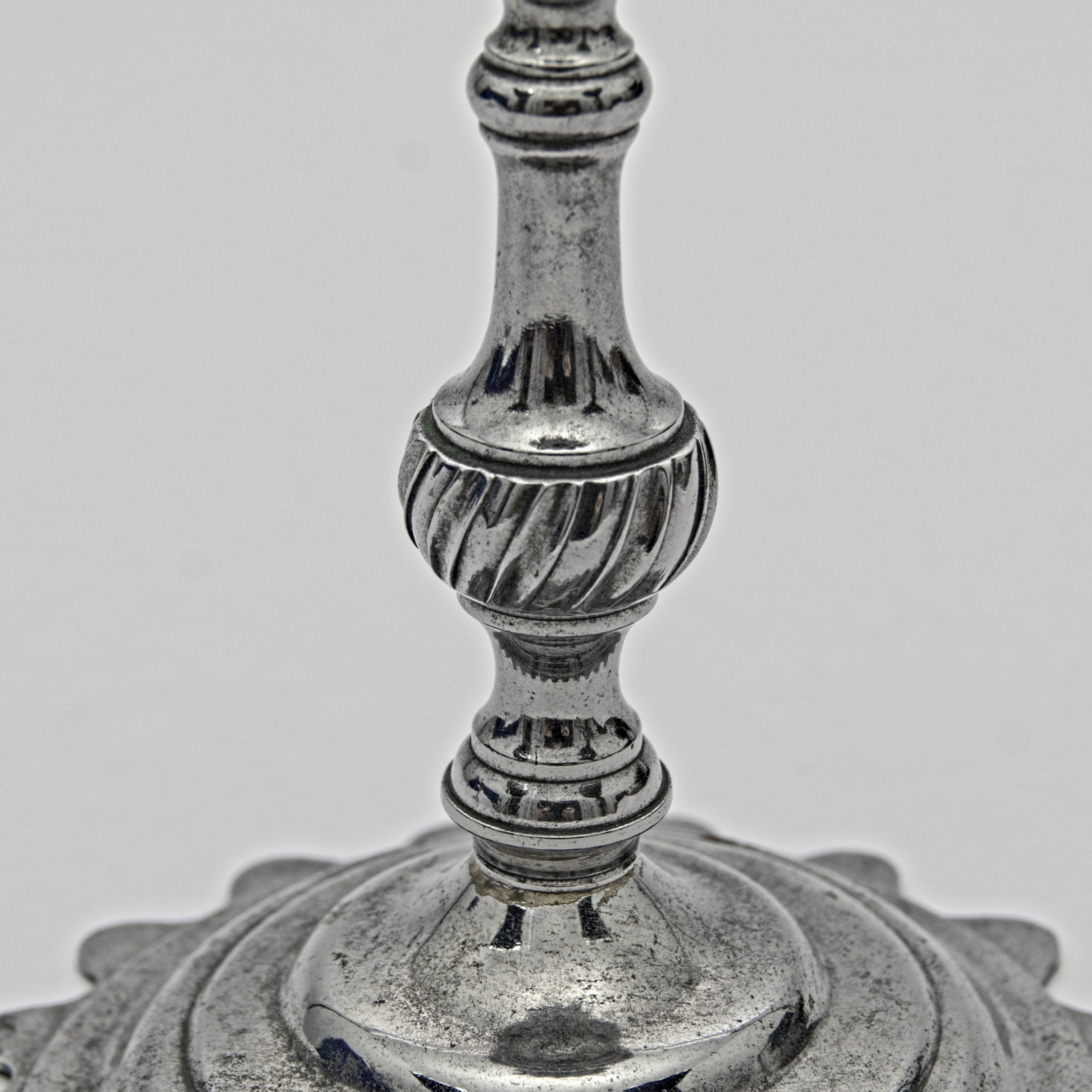
Prior to the mid-19th century, steel was a high-status material that was difficult to work and prone to oxidation. To achieve a mirror-like finish, craftsmen required "crucible steel," a refined alloy produced by melting blister steel in clay pots to remove slag. This process resulted in a fully liquid state that was homogeneous in its carbon content, allowing for an unblemished polish that signaled the owner's participation in the technological spirit of the age.
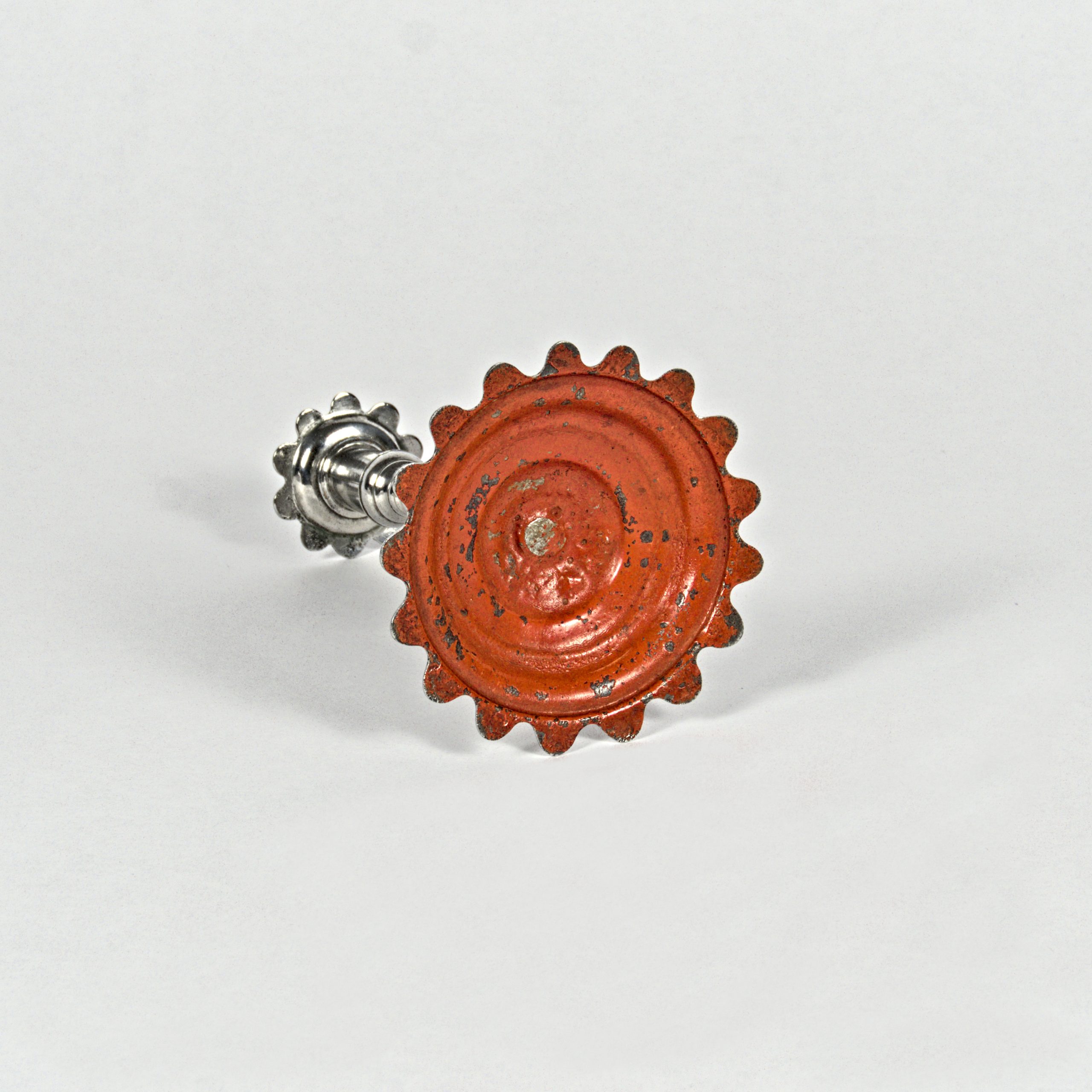
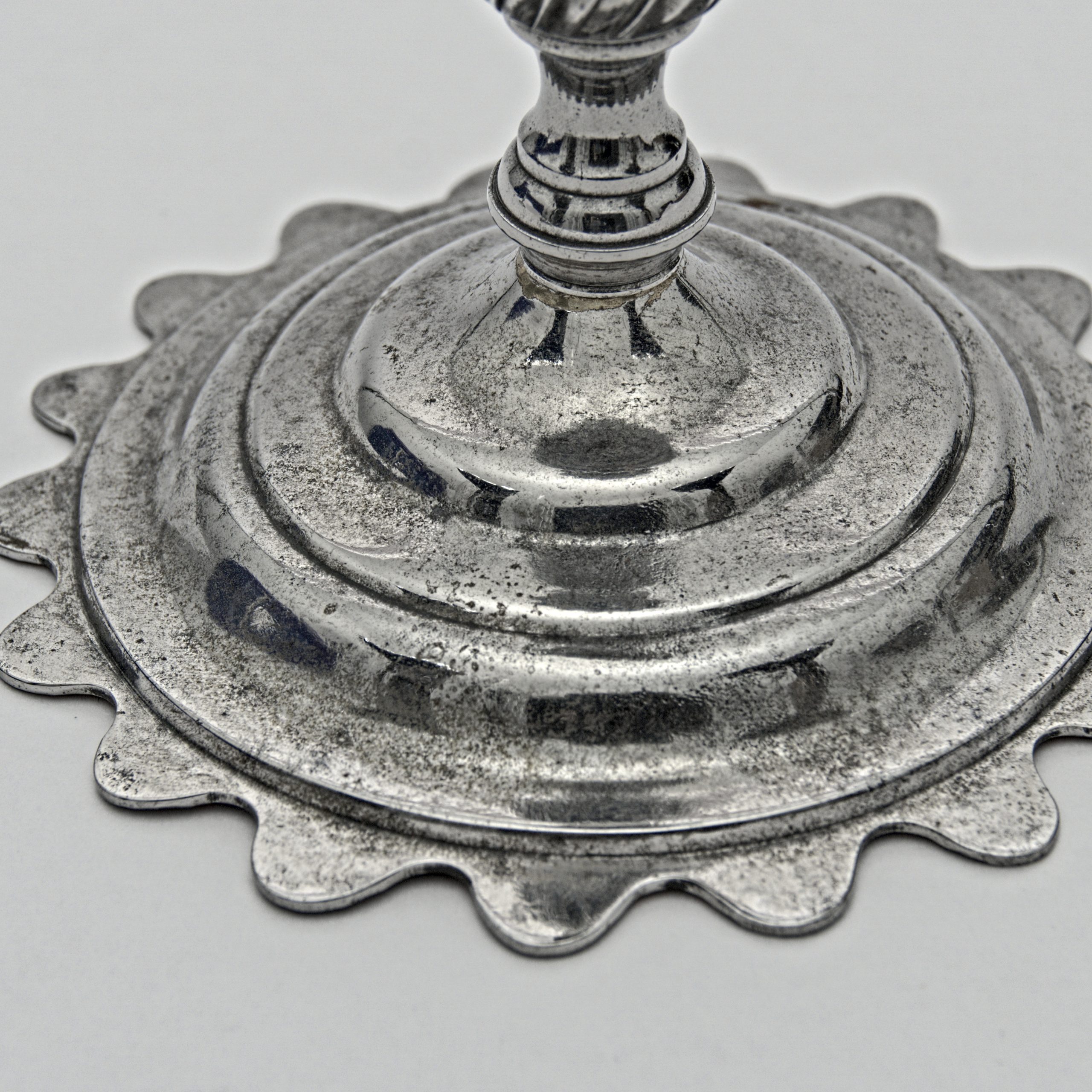
A telling feature of these tapersticks is the presence of "tinner’s red" paint on the undersides of the bases. This mixture of red lead and linseed oil was a standard 18th-century rust inhibitor. The scalloped design was a sophisticated 18th-century form popular in both England and America. While English imports from Sheffield were common, the use of traditional red lead preservatives and the absence of a manufacturer's mark point toward a likely American origin, possibly crafted by a smith working within the traditional ironworking trades of the mid-Atlantic or South.
Provenance:
Elizabeth Stvan, Williamsburg, Virginia
A vanishingly rare survival of steel decorative arts from the 18th century.
Tapersticks (small candlesticks used to hold thin tapers for melting wax seals) are well known in brass and silver, but this pair’s execution in steel is a mark of luxury and significant technical difficulty. They represent a complex intersection of early industrial capability and the high-status aesthetics of the Federal elite.
Prior to the mid-19th century, steel was a high-status material that was difficult to work and prone to oxidation. To achieve a mirror-like finish, craftsmen required “crucible steel,” a refined alloy produced by melting blister steel in clay pots to remove slag. This process resulted in a fully liquid state that was homogeneous in its carbon content, allowing for an unblemished polish that signaled the owner’s participation in the technological spirit of the age.
A telling feature of these tapersticks is the presence of “tinner’s red” paint on the undersides of the bases. This mixture of red lead and linseed oil was a standard 18th-century rust inhibitor. The scalloped design was a sophisticated 18th-century form popular in both England and America. While English imports from Sheffield were common, the use of traditional red lead preservatives and the absence of a manufacturer’s mark point toward a likely American origin, possibly crafted by a smith working within the traditional ironworking trades of the mid-Atlantic or South.
Provenance:
Elizabeth Stvan, Williamsburg, Virginia
-
 French Ceramic Tea Service, c. 1920
Discover the Object →
French Ceramic Tea Service, c. 1920
Discover the Object →
-
 Silver Cream Pitcher, c. 1800
Discover the Object →
Silver Cream Pitcher, c. 1800
Discover the Object →
-
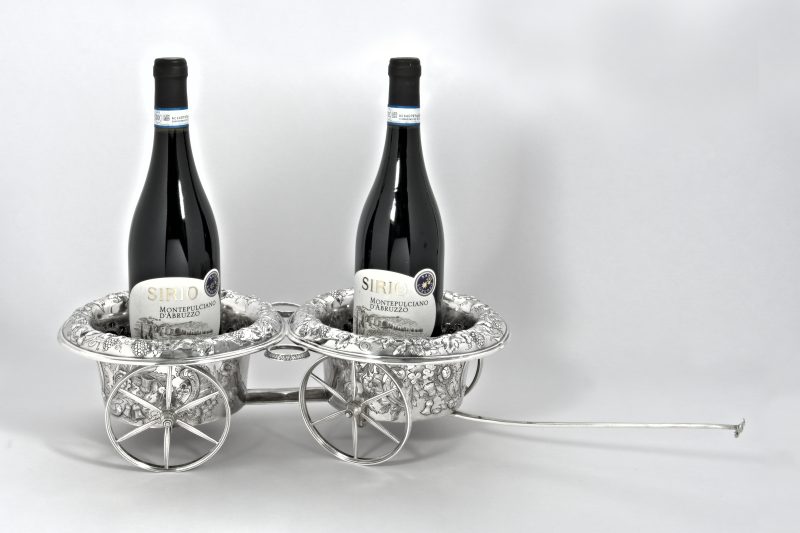 Silver Wine Wagon, c. 1850
Discover the Object →
Silver Wine Wagon, c. 1850
Discover the Object →
Reviews
There are no reviews yet.