
Delftware Plaque, c. 1885
$8,000
Willem ten Zweege, Tichelaar factory
Width: 18 in.
A Frisian masterwork reviving the pastoral romance of the Dutch Golden Age.
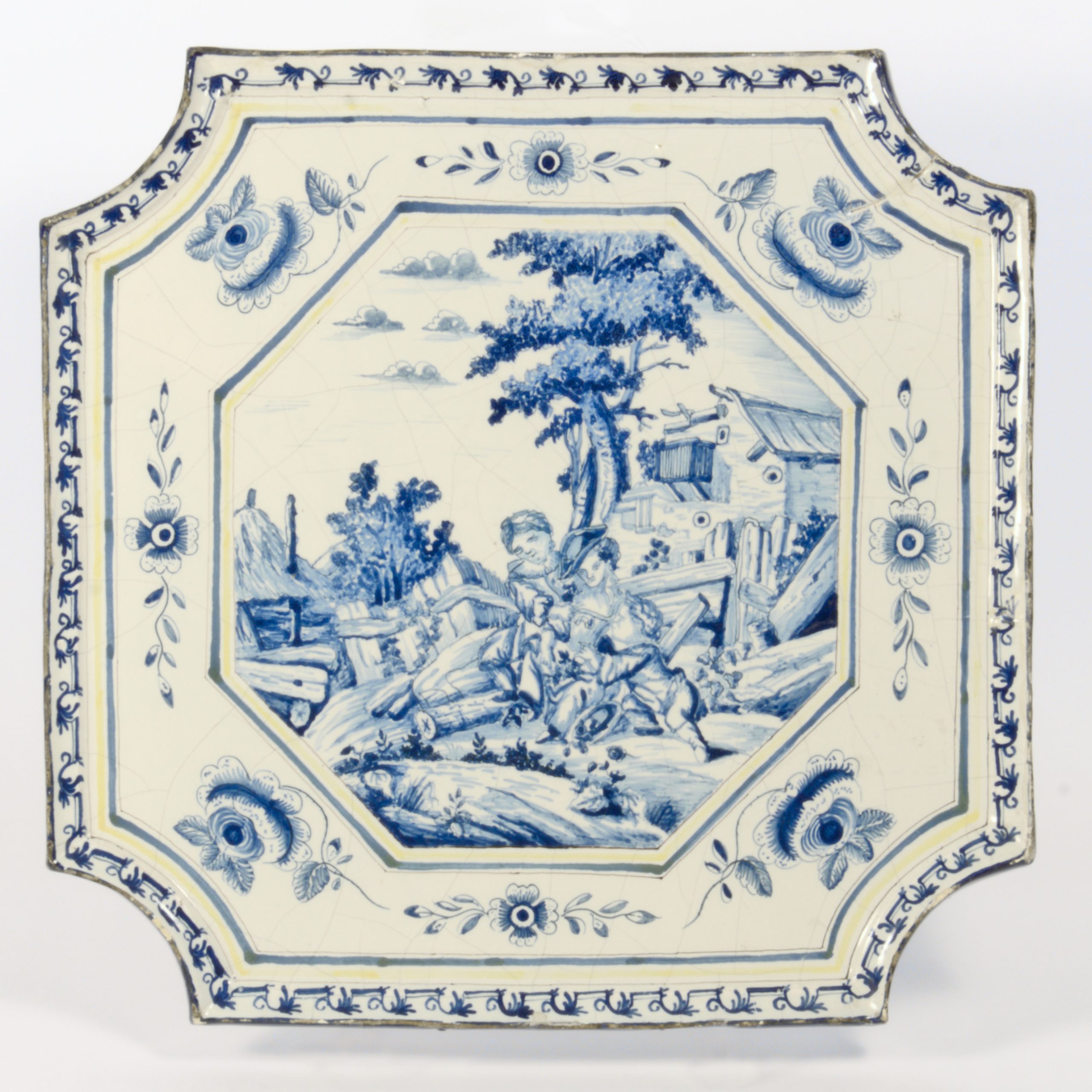
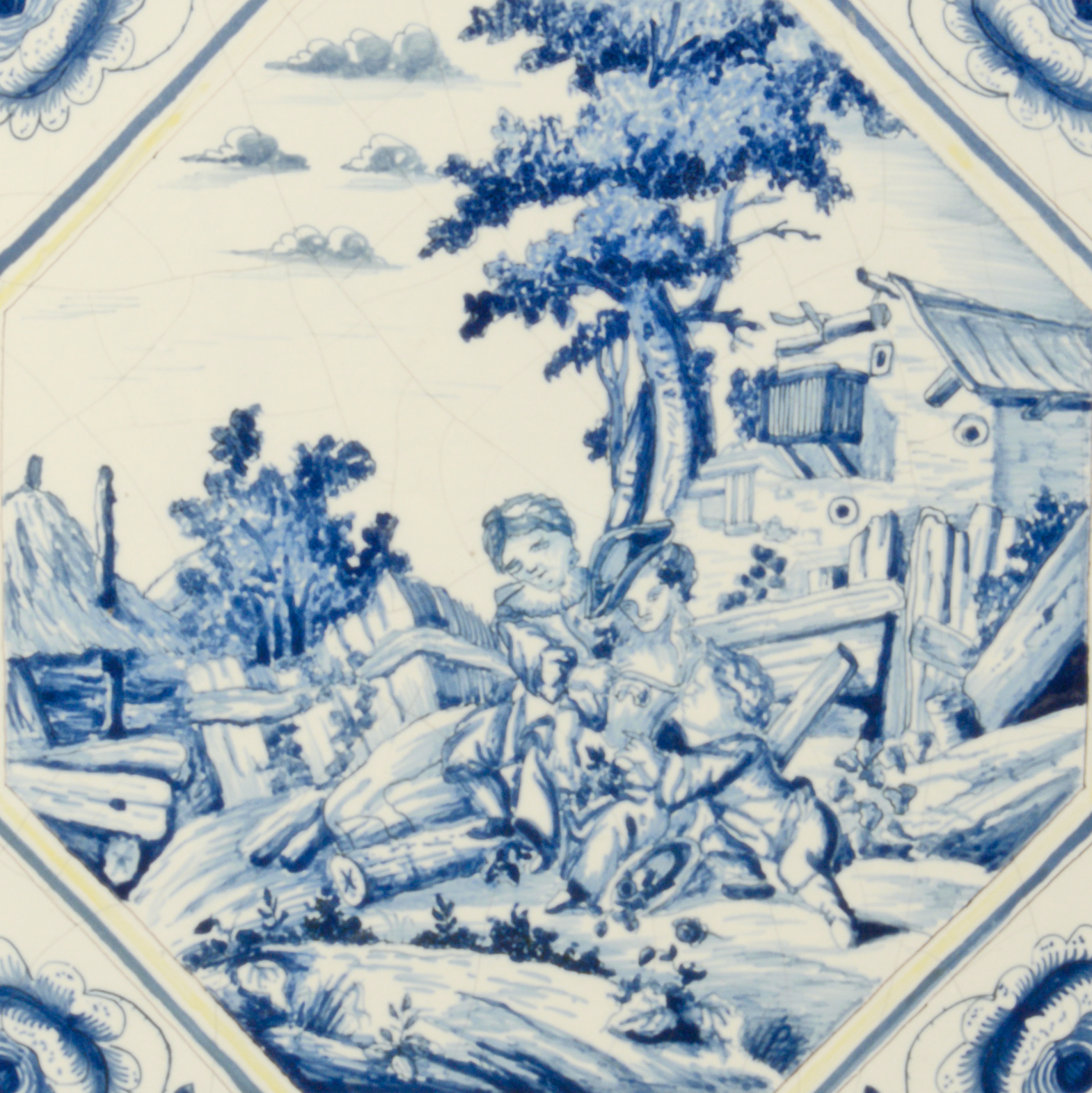
While the city of Delft eventually moved toward industrial production and transfer-printing in the 19th century, the Tichelaar factory in Makkum remained a bastion of the traditional, hand-painted tin-glaze technique. This plaque represents a sophisticated historicism, a late Victorian-era longing for the artistry of the 17th century. Master painter Willem ten Zweege captures a nostalgic vision of the Dutch countryside, where figures in rustic attire linger in a landscape of weathered cottages and wind-swept trees.
The Koninklijke Tichelaar Makkum is the oldest ceramic company in the Netherlands, with roots stretching back to 1572. In the late 1800s, the factory experienced a creative renaissance, led by master painters like Willem ten Zweege. These artists were tasked with elevating Makkum’s output from utilitarian tiles and bricks to high-art decorative plaques that could compete with the finest European porcelain.
The central scene is a classic pastoral "gallant" composition, expertly framed within a central octagon. The use of varied shades of cobalt blue creates a sense of atmospheric depth, particularly in the billowing clouds and the textured foliage of the central tree.
The use of vivid yellow and blue bands surrounding the central image is a hallmark of Makkum production, providing a warmer, more vibrant contrast to the monochromatic blue-and-white center. The heavy crazing (crackle) visible across the surface is characteristic of traditional tin-glazed faience. This occurs as the ceramic body and the glaze expand and contract at different rates over a century, creating a delicate web. While the technique is highly refined, the floral motifs in the corners (resembling stylized roses) retain a touch of the robust, provincial charm that defined Frisian decorative arts during the 19th century.
Willem ten Zweege’s work is highly regarded by collectors of Dutch ceramics, and his signed or attributed pieces serve as a vital link between the historic traditions of the Dutch Golden Age and the modern persistence of hand-crafted pottery.
Literature:
M. van den Akker, Fries Aardewerk, Majolica, Faience, Kerfsnee, Collectie Minze van den Akker, Meppel, 2007, p. 261
Kingma, p. 88, cf. figs. 59–60
Tichelaar I, p. 197, cf. fig. 249: Allegorie van het Voorjaar
A Frisian masterwork reviving the pastoral romance of the Dutch Golden Age.
While the city of Delft eventually moved toward industrial production and transfer-printing in the 19th century, the Tichelaar factory in Makkum remained a bastion of the traditional, hand-painted tin-glaze technique. This plaque represents a sophisticated historicism, a late Victorian-era longing for the artistry of the 17th century. Master painter Willem ten Zweege captures a nostalgic vision of the Dutch countryside, where figures in rustic attire linger in a landscape of weathered cottages and wind-swept trees.
The Koninklijke Tichelaar Makkum is the oldest ceramic company in the Netherlands, with roots stretching back to 1572. In the late 1800s, the factory experienced a creative renaissance, led by master painters like Willem ten Zweege. These artists were tasked with elevating Makkum’s output from utilitarian tiles and bricks to high-art decorative plaques that could compete with the finest European porcelain.
The central scene is a classic pastoral “gallant” composition, expertly framed within a central octagon. The use of varied shades of cobalt blue creates a sense of atmospheric depth, particularly in the billowing clouds and the textured foliage of the central tree.
The use of vivid yellow and blue bands surrounding the central image is a hallmark of Makkum production, providing a warmer, more vibrant contrast to the monochromatic blue-and-white center. The heavy crazing (crackle) visible across the surface is characteristic of traditional tin-glazed faience. This occurs as the ceramic body and the glaze expand and contract at different rates over a century, creating a delicate web. While the technique is highly refined, the floral motifs in the corners (resembling stylized roses) retain a touch of the robust, provincial charm that defined Frisian decorative arts during the 19th century.
Willem ten Zweege’s work is highly regarded by collectors of Dutch ceramics, and his signed or attributed pieces serve as a vital link between the historic traditions of the Dutch Golden Age and the modern persistence of hand-crafted pottery.
Literature:
M. van den Akker, Fries Aardewerk, Majolica, Faience, Kerfsnee, Collectie Minze van den Akker, Meppel, 2007, p. 261
Kingma, p. 88, cf. figs. 59–60
Tichelaar I, p. 197, cf. fig. 249: Allegorie van het Voorjaar
-
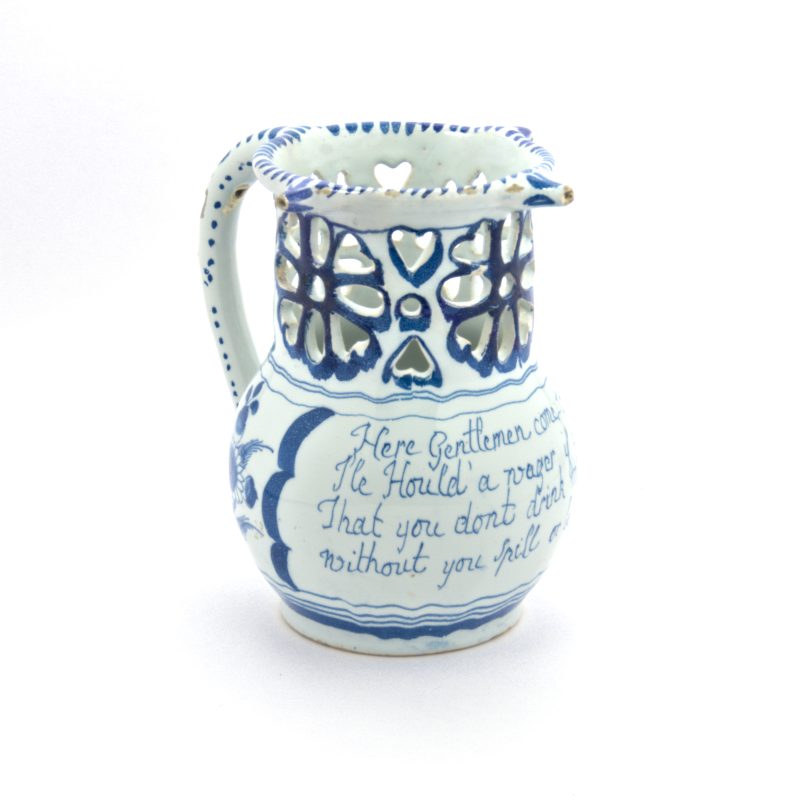 Puzzle Jug, c. 1760
Discover the Object →
Puzzle Jug, c. 1760
Discover the Object →
-
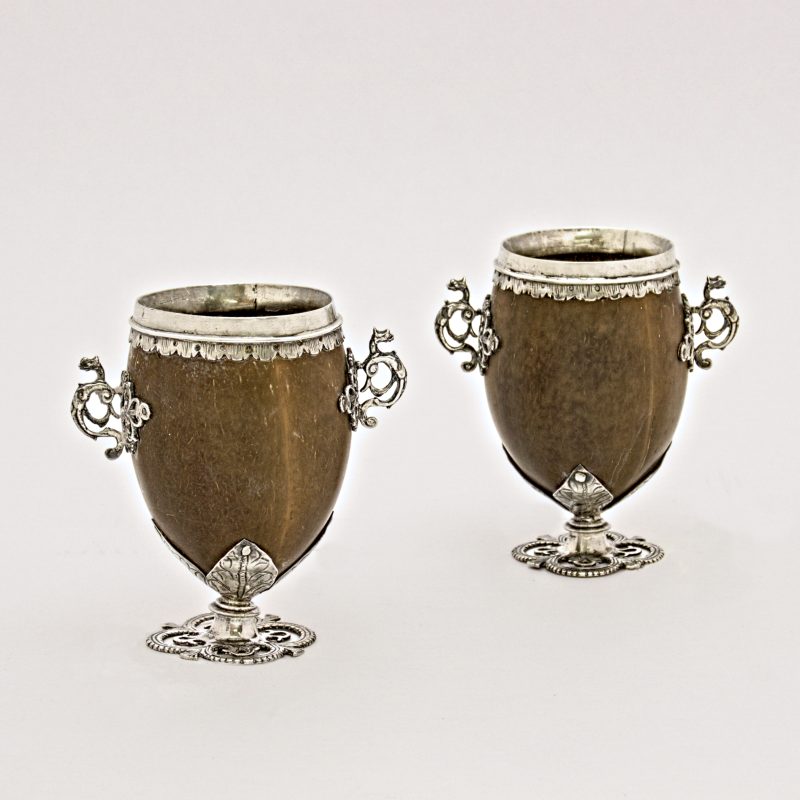 Pair of Chocolate Cups, c. 1730
Discover the Object →
Pair of Chocolate Cups, c. 1730
Discover the Object →
-
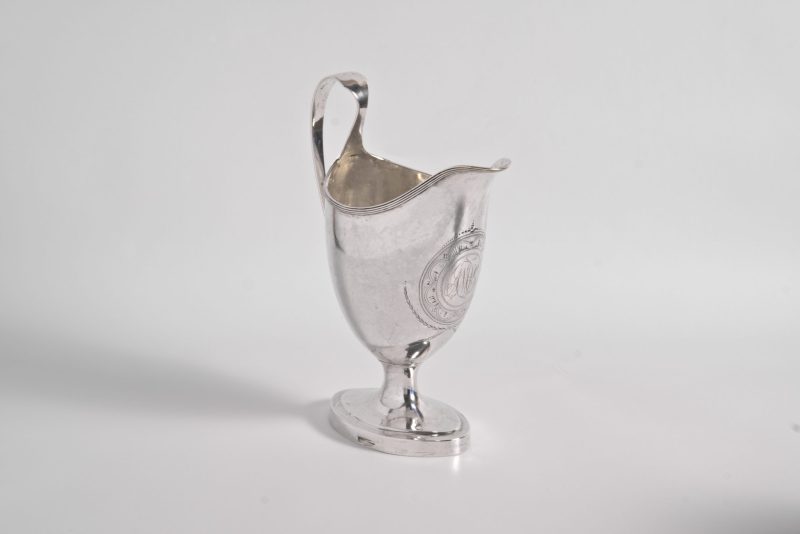 Silver Cream Pitcher, c. 1800
Discover the Object →
Silver Cream Pitcher, c. 1800
Discover the Object →
Reviews
There are no reviews yet.